
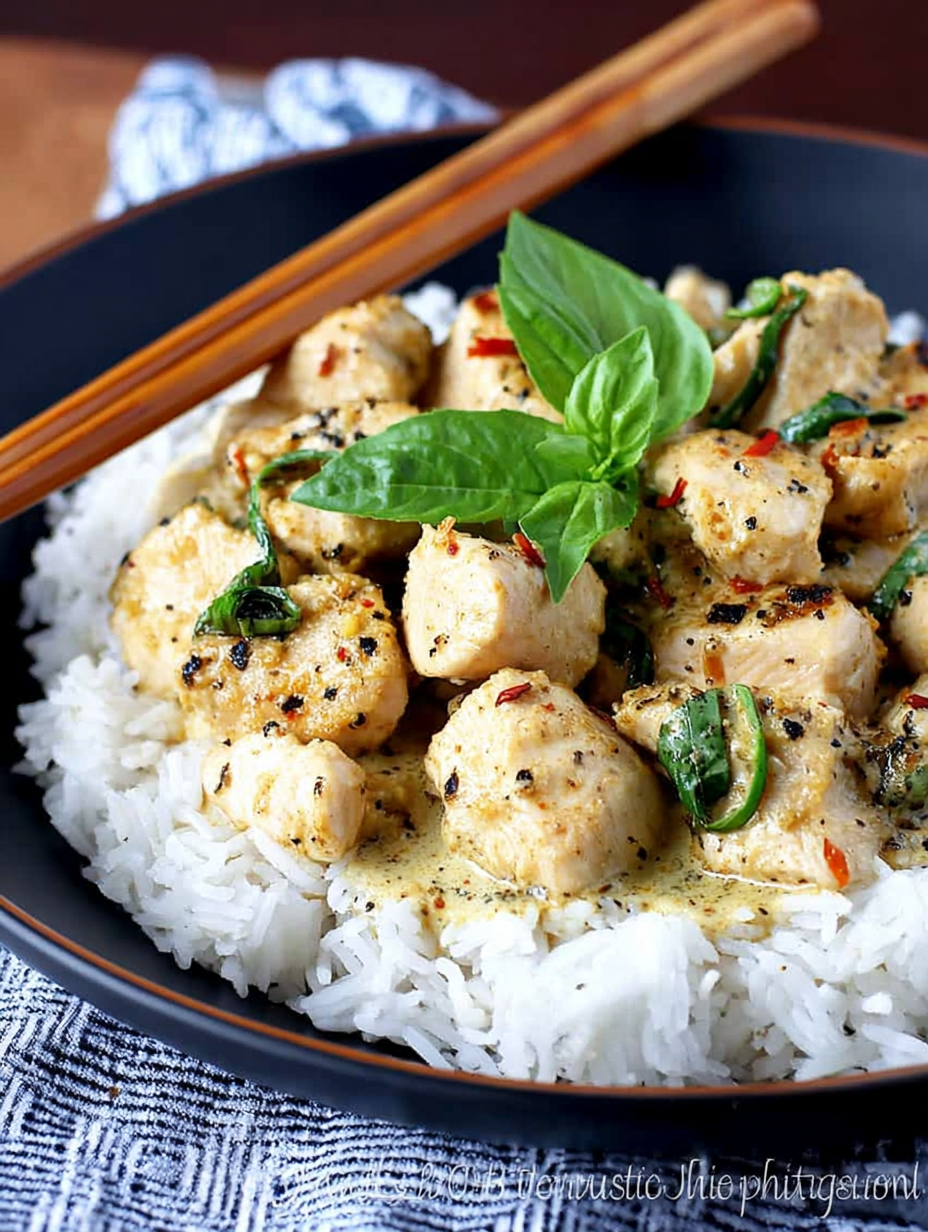
There is nothing quite like the moment a perfect curry hits the pan, unleashing an aroma that promises warmth and spice. This is precisely the kind of magic theBasil Chicken with Coconut Curry Sauceconjures, instantly transforming your kitchen from mundane reality into a five-star aromatic paradise. Forget those complicated recipes; we are here for maximum flavor with minimal fuss. Prepare yourself for a creamy, zesty explosion that will redefine your weeknight dinner rotation and impress even the pickiest eaters.
- Effortlessly achievable, this one-pan wonder requires less than 30 minutes of active cooking time, making it truly perfect for those unbelievably busy weeknights.
- The flavor profile balances fiery Thai red curry paste with sweet coconut milk and fresh, aromatic basil leaves for a truly addictive combination of tastes.
- Visually stunning, the dish offers vibrant green basil against the rich, creamy orange hue of the sauce, making the presentation incredibly appetizing and beautiful.
- This versatile chicken dish pairs beautifully with fluffy steamed jasmine rice, wholesome quinoa, or even spiralized zucchini noodles for a lighter, carb-conscious meal.
Ingredients for Basil Chicken with Coconut Curry Sauce
Here’s what you’ll need to make this delicious dish:
- Chicken Breast or ThighsWe recommend boneless, skinless chicken thighs for maximum juiciness, but breasts cut into 1-inch cubes work equally well.
- Coconut Oil or Neutral OilUsed for sautéing the aromatics and browning the chicken before the sauce takes over the pan.
- Aromatics (Garlic and Ginger)Freshly minced garlic and grated ginger are non-negotiable for building the essential aromatic foundation of the curry.
- Red Curry PasteUse a high-quality Thai red curry paste; adjust the quantity based on your preferred level of heat intensity.
- Full-Fat Coconut MilkThis provides the necessary creaminess and rich texture that defines the luxuriousness of the coconut curry sauce.
- Chicken BrothA splash of low-sodium chicken broth helps thin the sauce slightly and adds depth of savory flavor.
- Brown Sugar or Maple SyrupA small amount of sweetener balances the heat from the curry paste and the acidity of other ingredients.
- Fish Sauce (or Soy Sauce Alternative)Essential for adding that characteristic salty, umami depth that elevates Southeast Asian-inspired dishes.
- Fresh Basil LeavesA generous handful of fresh Thai basil or sweet basil is absolutely critical for the finished flavor and signature scent.
- Lime JuiceFreshly squeezed lime juice added right at the end brightens the entire dish, cutting through the richness of the coconut milk.
The full ingredients list, including measurements, is provided in the recipe card directly below.
How to Make Basil Chicken with Coconut Curry Sauce
Follow these simple steps to prepare this delicious dish:
-
Prep the Chicken and Aromatics
Cut the chicken into uniform, bite-sized pieces; seasoning them lightly with salt and pepper immediately enhances their flavor. Heat a large skillet or Dutch oven over medium-high heat, then add the oil. Once shimmering, sear the chicken until lightly browned on all sides, although it does not need to be cooked through yet. Remove the chicken and set it aside, leaving any rendered fat behind.
-
Build the Flavor Base
Reduce the heat to medium. Add the minced garlic and grated ginger to the same pan and sauté for about one minute until fragrant, making sure they do not burn. Stir in the red curry paste and cook it for two to three minutes, stirring constantly. This crucial step “blooms” the curry paste, activating its oils and deepening its overall flavor profile significantly.
-
Simmer the Coconut Curry Sauce
Pour in the full-fat coconut milk and the chicken broth, scraping up any delicious browned bits from the bottom of the pan. Stir in the brown sugar and fish sauce or soy sauce alternative. Bring the sauce to a gentle simmer, then reduce the heat to low. Allow the sauce to simmer for five minutes to slightly reduce and ensure the flavors fully meld together.
-
Return the Chicken and Finish Cooking
Return the seared chicken pieces to the simmering sauce, ensuring they are fully submerged. Continue simmering for 8 to 10 minutes, or until the chicken cooks completely through and registers an internal temperature of 165°F (74°C). Taste the sauce at this stage and adjust seasonings, adding more spice or sweetness if necessary.
-
Stir in the Fresh Elements
Remove the pan from the heat immediately. Stir in the fresh lime juice, which is vital for balancing the richness. Finally, gently fold in the generous handful of fresh basil leaves. The residual heat of theBasil Chicken with Coconut Curry Saucewill gently wilt the herbs, releasing their intoxicating perfume.
Transfer the glorious basil chicken to plates over rice or noodles and drizzle with plenty of the creamy coconut sauce for the perfect finishing touch.
The Secret to an Unforgettable Coconut Curry Sauce
Making a truly memorable curry isn’t just about throwing ingredients into a pot; it involves strategic flavor layering and understanding ingredient roles. Many home cooks struggle with achieving that restaurant-quality depth that makes every bite sing. The first secret lies in the bloom—that short period where you cook the curry paste in oil before adding the liquid. This process essentially toasts the spices and releases volatile oils, ensuring the flavor is intense rather than muted. Secondly, resisting the urge to substitute full-fat coconut milk for light coconut milk is crucial. While light versions save calories, they severely compromise the texture and richness needed to properly coat the chicken and balance the strong curry spices. Think of full-fat coconut milk as the velvet curtain necessary for this flavor performance.
We once attempted to rush this recipe, skipping the blooming stage and using up some old, dried basil we found in the back of the spice cabinet. The resulting dish was palatable, certainly, but lacked that specific vibrant punch that makes this recipe truly outstanding. It was a watery, vaguely spicy experience we vowed never to repeat. Always respect the process, especially when dealing with vibrant Southeast Asian flavors that rely heavily on fresh ingredients and proper heat application. Remember, curry is a journey, not a sprint, and your patience will yield delicious rewards.
Choosing Your Curry Paste: Heat vs. Flavor
The choice of curry paste fundamentally dictates the final character of yourBasil Chicken with Coconut Curry Sauce. Red curry paste, which we recommend, typically provides a good balance of heat and flavor complexity, derived from dried red chilies, lemongrass, galangal, and kaffir lime zest. If you prefer a milder profile, consider using slightly less paste or even switching to a yellow curry paste, which is often milder and sweeter due to the inclusion of turmeric and sometimes less chili. Conversely, if you enjoy substantial heat, look for a “hot” labeled red paste or add a small pinch of cayenne pepper during the simmering stage. Always remember that brands vary wildly in spice level; a Thai brand often packs a significantly greater punch than Western supermarket equivalents. When introducing a new paste, start with half the recommended amount and adjust incrementally until the sauce reaches your preferred level of glorious spice.
The Essential Role of Fresh Basil in this Dish
This recipe specifically calls for fresh basil, and while sweet Italian basil works beautifully and is readily available, the traditional choice would be Thai basil. Thai basil offers a distinct, slightly spicier, anise-like flavor that complements the red curry and coconut milk combination exceptionally well. The fresh herbs are more than just a garnish; they provide a high note of freshness that cuts through the creaminess of the sauce. Adding the basil at the very end, off the heat, ensures the leaves simply wilt and release their maximum flavor without darkening or becoming bitter. Never cook the basil for a long duration, as this destroys the delicate essential oils that define the aroma of this creamy basil chicken dish. If you cannot find Thai basil, ensure the sweet basil you use is vibrant green, fragrant, and recently purchased for the best possible results.
Serving Suggestions and Pairings for Creamy Basil Chicken
While the rich, saucy nature of this chicken demands something to soak up the deliciousness, you have several options beyond the standard white rice. Jasmine rice is classic and perfect, providing a fragrant, fluffy base. For a healthier alternative, try serving the basil chicken over brown rice or farro, which provide a pleasing textural contrast. If you are aiming for a low-carb meal, cauliflower rice or sautéed zucchini noodles are fantastic carriers for the savory coconut curry sauce. We particularly love scooping the leftover sauce onto slices of toasted naan bread—just be careful not to eat all the bread before the main dish is ready!
To complete the meal, consider adding a fresh element on the side. A simple cucumber salad, dressed lightly with rice vinegar and sesame oil, offers a crisp, cool counterpoint to the warmth of the curry. Alternatively, quickly steamed green beans or broccoli tossed with a pinch of salt and pepper maintains the easy, healthy profile of the meal. Garnishes are also essential for presentation; a sprinkle of chopped peanuts or cashews adds a lovely crunch, and a few thinly sliced red chilies introduce visual appeal and an extra kick of heat for the adventurous palate. Remember, a visually appealing plate always enhances the eating experience.
Troubleshooting and FAQ for Perfect Results
Even seasoned cooks encounter small snags when trying a new recipe. Fortunately, mastering thisBasil Chicken with Coconut Curry Sauceis very straightforward once you understand a few key culinary principles. Addressing common problems beforehand ensures your dinner is a success every time, eliminating guesswork and disappointment.
Why Is My Sauce Breaking?
Curry sauces break, or “split,” when the fat and water components separate, giving the sauce a grainy or oily appearance instead of the desirable smooth, creamy consistency. This usually happens for two reasons: boiling the full-fat coconut milk too vigorously or adding acidic ingredients too early. Coconut milk is delicate; always keep it at a gentle simmer, never a rolling boil, once it’s in the pan. Furthermore, always save acidic ingredients like lime juice for the very end, once the sauce is removed from the heat, ensuring the dairy component remains stable and emulsified. If your sauce starts to break, remove it from the heat immediately, vigorously whisk in a tablespoon of cold water or broth, and sometimes, a small teaspoon of cornstarch mixed with water (a slurry) can help re-emulsify the sauce back to its velvety texture.
Can I Prepare the Basil Chicken with Coconut Curry Sauce Ahead of Time?
Yes, you can certainly prepare the curry base—the chicken and coconut curry sauce—one or two days in advance. In fact, many curries taste even better the next day after the spices have fully permeated the chicken. Simply cool the dish completely, store it in an airtight container in the refrigerator, and reheat it gently on the stovetop. However, you must save the fresh basil and lime juice until the moment you serve it. Adding these delicate fresh elements during the initial preparation or reheating will cause the basil to turn black and lose its characteristic flavor. Reheat the sauce thoroughly, ensuring the chicken is piping hot, and then stir in the fresh basil and lime right before serving to achieve that peak flavor profile.
What if I don’t have fresh ginger?
While fresh ginger provides the best potency, you can substitute it with powdered ginger in a pinch, using about one teaspoon of powdered ginger for every tablespoon of fresh grated ginger required in the recipe. Adjust based on taste, remembering that powdered spices are generally stronger than their fresh counterparts.
Can I add vegetables to this curry?
Absolutely! This creamy basil chicken dish is incredibly accommodating to vegetables. Try adding sliced bell peppers, snow peas, or chunks of butternut squash. Add heartier vegetables like squash or carrots early with the chicken broth so they have time to soften completely, while tender vegetables like peppers and peas should go in during the last five minutes of simmering.
What is the best way to store leftovers?
Store any remainingBasil Chicken with Coconut Curry Saucein a sealed, air-tight container in the refrigerator for up to three days. You can also freeze portions for up to three months, although be aware that the coconut milk texture might change slightly upon thawing, sometimes becoming slightly grainier. Thaw overnight in the refrigerator and reheat gently.
We all have those nights. You stare into the refrigerator, the fluorescent light illuminating nothing but sadness, a lonely bell pepper, and maybe half a jar of pickles. Dinner feels like an administrative chore, not a joy. I’ve been there—many times, in fact. That is precisely why I perfected this incredibly vibrant, utterly addictive dish that feels simultaneously exotic and deeply comforting. This is the recipe that cures the weeknight blues and transforms a pile of humble ingredients into an absolute feast.
Forget everything you think you know about making curry from scratch. This version is fast, requires minimal specialized effort, and delivers a complexity of flavor that makes people assume you spent hours laboring over the stove. The secret weapon here is the perfect marriage of fragrant, pungent basil and the rich, velvety texture of coconut milk. ThisBasil Chicken with Coconut Curry Sauceis the ultimate crowd-pleaser, guaranteed to leave your guests speechless, or at least talking with their mouths full, which is arguably a higher compliment.
The Journey to Flavor Nirvana
My own journey to perfecting this recipe involved several comedic kitchen mishaps, including one incident where I accidentally mistook cinnamon for chili powder (don’t ask). But through the chaos, I realized that simplicity, when paired with the right fresh ingredients, always wins. We are building a dynamic base: the sweet heat of the red curry paste combined with fresh ginger and garlic. This foundational trinity ensures the final sauce is robust enough to stand up to the richness of the coconut milk and the earthy flavor of the chicken.
The beauty of this dish lies in its balance. You have the creamy, soothing coconut milk contrasting sharply with the bright, almost anise-like flavor of the fresh basil, all underpinned by a gentle, warming heat. We use tender chicken breast or thigh meat, cubed and quickly seared to maintain moisture and develop a beautiful crust. Preparing the chicken properly is the critical first step to ensuring every bite of your creamy coconut curry chicken is spectacular.
The Essential Ingredients You Need
You don’t need an overwhelming pantry to create magic. Focus on sourcing fresh, high-quality components. If you can find fresh Thai basil, grab it; its flavor is intensely aromatic and superior for Southeast Asian dishes, but regular sweet Italian basil works in a pinch if that is all you have available. The quality of your coconut milk matters greatly, so opt for a full-fat variety that is unsweetened for maximum creaminess and body.
- 1.5 lbs boneless, skinless chicken breast or thighs, cut into 1-inch cubes
- 1 tablespoon olive oil or coconut oil
- 1 medium yellow onion, thinly sliced
- 4 cloves garlic, minced
- 1-inch piece of fresh ginger, grated
- 3 tablespoons red curry paste (adjust to heat preference)
- 1 (13.5 oz) can full-fat coconut milk
- 1/2 cup chicken broth
- 1 red bell pepper, sliced
- 1 tablespoon brown sugar or coconut sugar
- 1 tablespoon lime juice
- 1 cup fresh basil leaves, loosely packed
- Salt and pepper to taste
Preparation: The Art of the Chop
Before you even turn on the burner, prep everything. This is called “mise en place,” and it dramatically reduces cooking stress. Slice the onions thinly, mince your garlic and ginger, and cube the chicken. Having everything ready ensures a seamless transition between the quick cooking stages. Curry making moves fast once the heat is on, and you do not want to be frantically slicing a bell pepper while the aromatics burn in the pan.
Step-by-Step Cooking Instructions
Searing and Aromatics
Heat the oil in a large skillet or wok over medium-high heat. Season the chicken cubes generously with salt and pepper. Add the chicken to the pan, ensuring not to overcrowd it. Sear the pieces for about 3-4 minutes per side, until they develop a nice golden exterior. The chicken does not need to be fully cooked through at this stage. Remove the chicken from the pan and set it aside on a plate. Reduce the heat slightly and add the sliced onion to the skillet. Sauté until the onions soften, about 5 minutes.
Building the Coconut Curry Sauce Base
Add the minced garlic, grated ginger, and red curry paste to the onions. Stir constantly for about 60 seconds. This step, known as blooming the curry paste, releases all the essential oils and deepens the flavor profile significantly. Pour in the full can of coconut milk and the chicken broth, stirring well to combine the liquid with the paste. Bring the mixture to a gentle simmer.
Once simmering, add the sliced red bell peppers and the brown sugar. Allow the sauce to simmer for 5–7 minutes, letting it reduce slightly and allowing the flavors to meld. The sauce should begin to thicken beautifully. The sweet warmth of the sugar balances the acidity and the chili from the paste, giving theBasil Chicken with Coconut Curry Sauceits signature rich flavor.
Finishing the Dish
Return the seared chicken pieces to the sauce. Reduce the heat to low and let the chicken simmer for another 5 minutes, or until it is cooked completely through. Stir in the fresh lime juice. Finally, remove the skillet from the heat and stir in the entire cup of fresh basil leaves. The residual heat from the sauce will wilt the basil just enough to release its potent aroma without losing its vibrant green color. Taste and adjust seasoning with extra salt or a dash more lime juice if needed. Serve immediately over jasmine rice or rice noodles.
Perfecting the Cooking Process
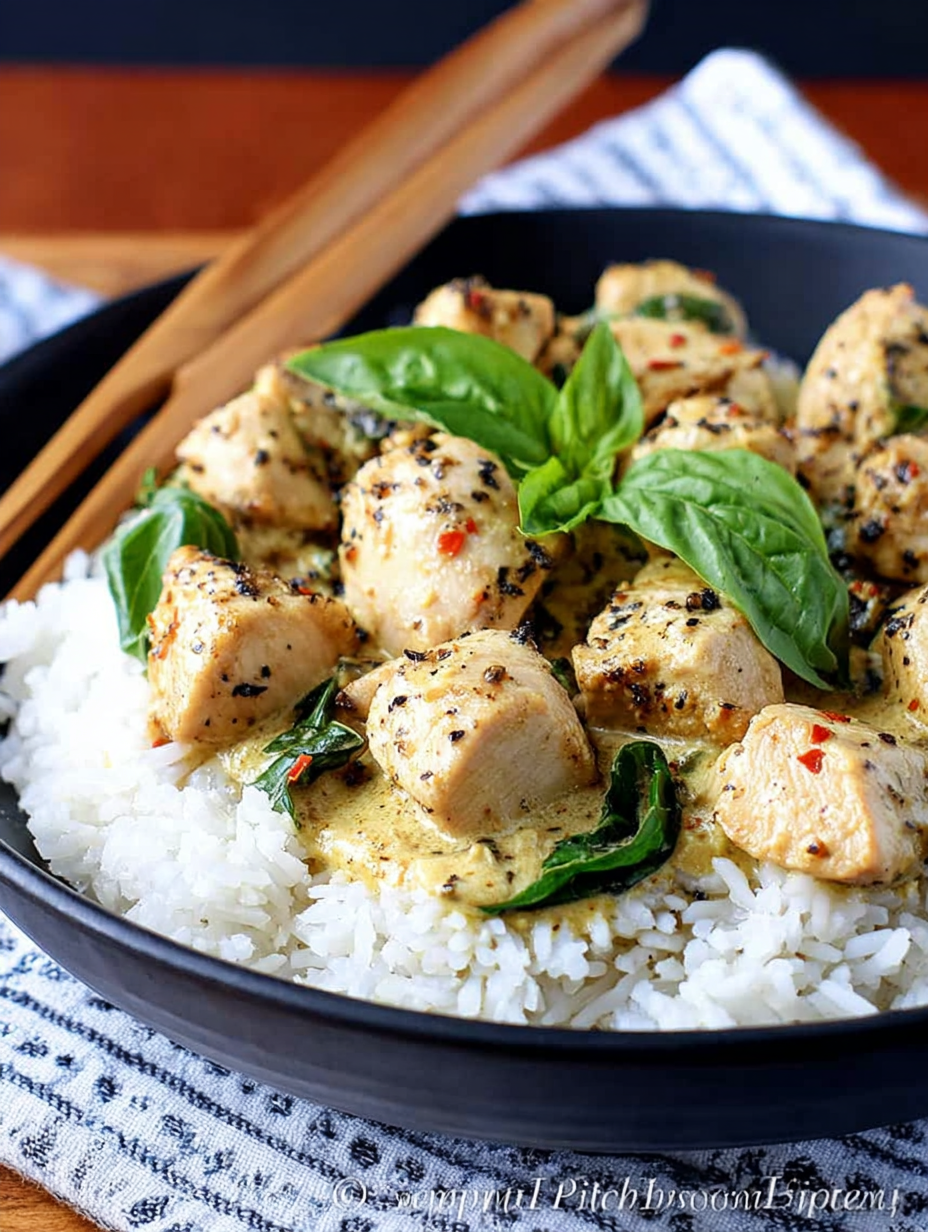
Achieve maximum flavor efficiency by first searing the seasoned chicken pieces until golden brown. Remove the chicken, then sauté the aromatics (ginger and garlic) and curry paste. Finally, add the coconut milk and simmer the sauce before returning the chicken to finish cooking. This sequence ensures perfectly tender chicken and a deeply flavoredBasil Chicken with Coconut Curry Sauce.
Add Your Touch
If you prefer less heat, halve the amount of red curry paste, or swap the chili entirely for a sweeter yellow curry. For added texture, toss in a handful of chopped cashews right before serving, or incorporate hearty vegetables like sweet potatoes or bamboo shoots for a richer mouthfeel. A squeeze of fresh orange juice can also replace lime for a subtle twist.
Storing & Reheating
Store leftovers in an airtight container in the refrigerator for up to three days. When reheating, use the stovetop over medium-low heat, adding a splash of chicken broth or extra coconut milk if the sauce seems too thick. Avoid high heat, which can cause the coconut milk to separate, ruining the creamy consistency of this dish.
My grandmother once tried this recipe, usually preferring traditional flavors, and she declared it “surprisingly vibrant.” That day, I knew I had unlocked a new level of culinary excellence in my modern kitchen.
Chef’s Expert Tips for Success
- Always bloom your curry paste in hot oil for 60 seconds before adding liquid; this technique maximizes the depth of flavor in the sauce.
- Use fresh Thai basil if possible instead of sweet basil, as its anise-like notes cut through the richness of the coconut milk beautifully.
- Slice the chicken thinly against the grain; this simple preparation step ensures quicker cooking time and incredibly tender, melt-in-your-mouth pieces.
Serving Suggestions and Pairings
This vibrant coconut curry chicken is incredibly versatile, adapting to nearly any side dish you throw its way. Traditionally, it pairs best with a simple, fluffy jasmine rice, which soaks up the creamy sauce perfectly. However, if you are looking for a lighter option, consider serving it over steamed brown rice or quinoa. For a lower-carb meal, cauliflower rice is an excellent absorbent alternative.
To enhance the texture and visual appeal, garnish the dish with a sprinkle of chopped peanuts or fresh cilantro. A squeeze of extra lime juice right before serving will boost the brightness and acidity. This savory, complex dish works best when served alongside something simple, like a light cucumber salad dressed with rice vinegar and a pinch of sugar.
Frequently Asked Questions About Coconut Curry
Can I make this Basil Chicken with Coconut Curry Sauce spicier?
Absolutely. To increase the heat, you can add more red curry paste initially, or stir in a pinch of crushed red pepper flakes along with the aromatics. Alternatively, serve the dish with fresh chopped chilies on the side for individual heat control.
What if my sauce is too thin?
If the sauce lacks body, you have a couple of options. The simplest method is to allow the sauce to simmer uncovered for an extra 5-10 minutes to reduce naturally. If you need a quicker fix, mix one teaspoon of cornstarch with one tablespoon of cold water, then whisk this slurry into the simmering sauce until it thickens.
Can I use chicken thighs instead of breasts?
Yes, and many people prefer chicken thighs. Thighs offer richer flavor and remain more tender than breasts, making them a fantastic choice for a simmering dish like this. Use the same preparation and cooking times outlined in the main recipe.
ThisBasil Chicken with Coconut Curry Sauceis more than just dinner; it’s an adventure for your taste buds. It’s spicy, sweet, fragrant, and creamy—a true culinary masterpiece you made in your own kitchen in under 40 minutes. Go ahead, reclaim your weeknights, and enjoy the praise that is guaranteed to come your way.
The Day My Blender Tried to Escape: Why You Need This Creamy Chicken Dish
We’ve all been there—standing over the stove, trying to conjure dinner magic, only to realize the recipe requires six hours of simmering or an ingredient only available on a remote mountain peak. Forget that chaos. I present the solution to your weeknight woes: a deeply aromatic, ridiculously easy Basil Chicken with Coconut Curry Sauce. This dish is so comforting it should come with a tiny cashmere blanket.
The beauty of this recipe isn’t just its speed; it’s the explosion of flavor. Fresh Thai basil brings a unique, slightly peppery anise note that dances perfectly with the rich, velvety texture of the coconut milk. We pair this heavenly sauce with perfectly seared chicken, transforming simple ingredients into something worthy of a fancy restaurant, without requiring you to change out of your sweatpants.
Gathering Your Culinary A-Team (The Ingredients)
Before we dive into the sizzling, ensure your pantry is stocked. Skip the stress and pre-measure everything. Trust me, trying to mince ginger while dodging splattering oil is a skill best left unlearned. This list is straightforward, focusing on maximum flavor with minimal fuss.
For the Chicken and Searing:
- 1.5 lbs boneless, skinless chicken breasts or thighs, cut into 1-inch cubes
- 1 tablespoon olive oil
- 1 teaspoon turmeric powder
- Salt and black pepper to taste
For the Coconut Curry Sauce:
- 1 can (13.5 oz) full-fat coconut milk
- 1/2 cup chicken broth
- 1 medium yellow onion, finely diced
- 2 cloves garlic, minced
- 1 tablespoon fresh ginger, grated
- 1 tablespoon red curry paste (check ingredients to ensure suitability)
- 1 tablespoon lime juice
- 1 tablespoon brown sugar or maple syrup
- 1 cup fresh basil leaves (Thai basil preferred, but Italian works in a pinch)
- Pinch of red pepper flakes (optional, for heat)
Cooking Instructions: From Pan to Paradise
The entire process takes less than 30 minutes, meaning you can have this stunning meal ready before the delivery guy even finds your address. We build the flavor depth layer by layer, starting with searing the chicken and ending with the glorious infusion of fresh basil.
- Prep the Poultry:Toss the chicken cubes with salt, pepper, and turmeric. Turmeric not only adds a lovely color but also a subtle earthy depth.
- Sear the Chicken:Heat the olive oil in a large skillet or Dutch oven over medium-high heat. Add the chicken and cook until nicely browned on all sides, about 5–7 minutes. It doesn’t need to be cooked through yet; we are building the crust. Remove the chicken and set it aside.
- Build the Base:Reduce the heat to medium. Add the diced onion to the skillet, scraping up any delicious brown bits (that’s flavor!). Sauté for 3 minutes until softened. Stir in the garlic, ginger, and curry paste. Cook for 1 minute until highly fragrant. If you skip this step, the depth of your coconut curry sauce suffers dramatically.
- Simmer and Thicken:Pour in the coconut milk and chicken broth. Bring the mixture to a gentle simmer. Add the brown sugar and lime juice. Return the seared chicken to the pan. Reduce the heat to low, cover, and let it simmer for 8–10 minutes, allowing the chicken to finish cooking and the sauce to thicken slightly.
- The Basil Finish:Just before serving, stir in the fresh basil leaves. The residual heat will wilt them perfectly, releasing their vibrant aroma. Serve immediately over jasmine rice or noodles.
Tips for Perfecting Your Basil Chicken
Achieving restaurant-quality curry at home is simple if you follow a few tricks. Use full-fat coconut milk—diet coconut milk will result in a thin, watery sauce that lacks the necessary luxurious texture. Also, don’t rush the simmering step; this is when the curry paste fully incorporates and blooms, giving the sauce its characteristic richness.
If you don’t have Thai basil, regular sweet basil works well, but reduce the amount slightly as it can be overpowering. To make this dish vegetarian, substitute the chicken with hearty chickpeas, firm tofu cubes, or sweet potatoes, adjusting the simmering time accordingly. This flexible dish allows for customization while maintaining that incredible flavor profile.
Conclusion for Basil Chicken with Coconut Curry Sauce
This recipe for Basil Chicken with Coconut Curry Sauce delivers an unforgettable culinary experience with minimal kitchen drama. We successfully combined savory chicken, aromatic ginger and garlic, and the luxurious texture of coconut milk, all uplifted by the fresh, peppery bite of basil. It’s quick enough for a Tuesday night yet impressive enough for company. Remember the key steps: searing the chicken for texture and adding the basil right at the end for maximum aroma. This vibrant, comforting curry proves that outstanding flavor doesn’t require hours of effort. Dive in and enjoy this bright, creamy masterpiece!
Print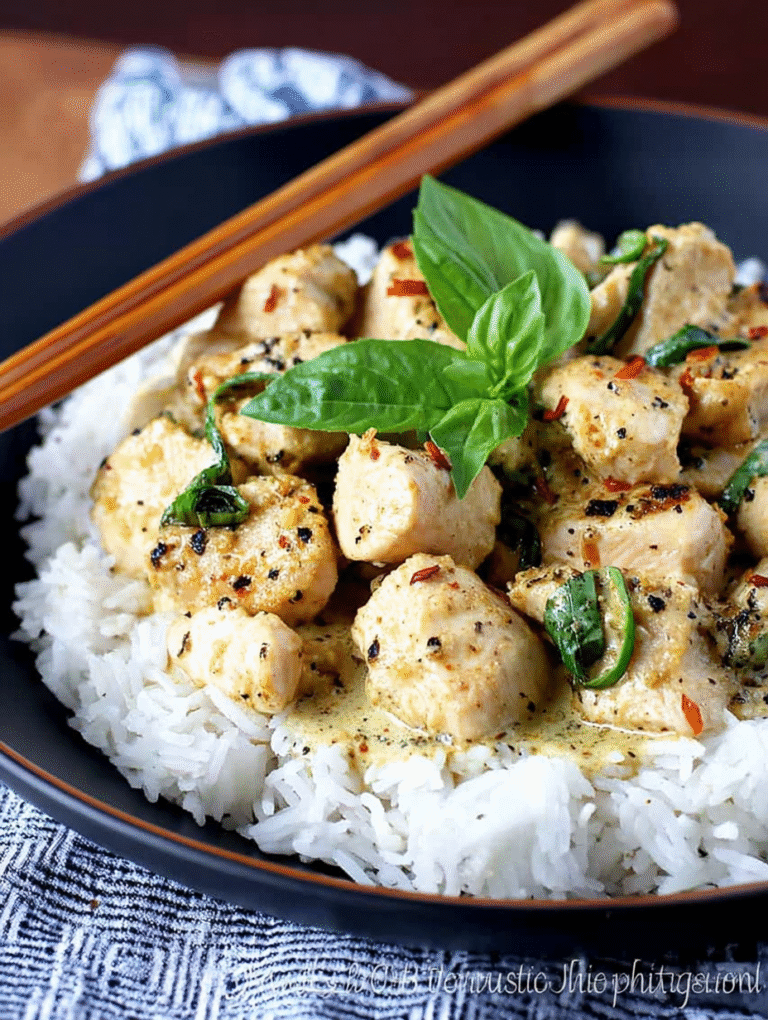
Basil Chicken with Coconut Curry Sauce
Skip takeout! Achieve explosive flavor with this quick Basil Chicken. Tender chicken seared, then simmered in rich coconut curry and fragrant Thai basil. Full instructions and nutrition facts inside.
- Total Time: 35 minutes
- Yield: 4 servings
Ingredients
- Chicken breast (1.5 lbs, sliced into bite-sized pieces)
- Full-fat coconut milk (13.5 oz can)
- Green or Red Curry Paste (2 Tbsp)
- Thai Basil leaves (1 cup, packed)
- Bell pepper (1 medium, sliced thinly)
- Garlic (3 cloves, minced)
- Fish sauce (1 Tbsp)
- Olive oil or vegetable oil (2 Tbsp)
Instructions
- Step 1: Heat the oil in a large skillet or wok over medium-high heat. Add the minced garlic and sauté for about 30 seconds until fragrant, being careful not to burn it.
- Step 2: Add the sliced chicken to the skillet and cook until it is browned and fully cooked through (about 5-7 minutes). Remove the cooked chicken from the skillet and set aside.
- Step 3: Reduce the heat to medium. Add the curry paste to the skillet and cook for 1 minute, stirring constantly. Pour in the full can of coconut milk and the sliced bell pepper, stirring until the curry paste is fully dissolved into the sauce.
- Step 4: Bring the sauce to a gentle simmer. Return the cooked chicken to the skillet, along with the fish sauce. Simmer for 3-5 minutes, allowing the sauce to thicken slightly and the flavors to fully combine.
- Step 5: Remove the skillet from the heat. Stir in the packed Thai Basil leaves until they wilt slightly (about 1 minute), then serve the Basil Chicken with Coconut Curry Sauce immediately over steamed rice.
Notes
- Leftovers keep beautifully in an airtight container for up to three days, but make sure to chill quickly and stir well before reheating as the coconut milk may separate when cold.
- Gently reheat servings over low heat on the stovetop, stirring often; avoid using high heat in the microwave, which can cause the curry sauce to split or become oily.
- For a complete meal beyond steamed rice, try serving this savory basil chicken over fluffy quinoa or alongside warm, pillowy naan bread perfect for dipping into the remaining coconut curry sauce.
- Since Thai Basil provides the dish’s signature aroma, resist the urge to cook it; adding it off-heat guarantees that the leaves simply wilt, preserving their strong, fresh, slightly anise-like flavor.
- Prep Time: 15 minutes
- Cook Time: 20 minutes
- Method: Stovetop
- Cuisine: American
FAQs
How do I ensure the Basil Chicken with Coconut Curry Sauce isn’t too spicy?
The heat level of this dish primarily depends on the red curry paste you select. To control the spiciness, start by using only half the recommended tablespoon of curry paste. Taste the sauce after the initial simmer and then gradually add more, half a teaspoon at a time, until it reaches your desired warmth. If you accidentally make the sauce too spicy, adding an extra splash of coconut milk, or a small amount of sugar or lime juice, can help balance and neutralize some of the intense chili heat, making the Basil Chicken with Coconut Curry Sauce enjoyable for everyone at the table.
Can I prepare the Basil Chicken with Coconut Curry Sauce ahead of time?
Yes, this curry is an excellent candidate for meal prep, as the flavors deepen beautifully overnight. You can cook the entire recipe, excluding the fresh basil, up to two days in advance. Store the curry in an airtight container in the refrigerator. When you are ready to reheat it, gently warm the sauce and chicken on the stovetop over low heat until thoroughly heated through. Only stir in the fresh basil leaves right before serving, as heating basil causes it to lose its vibrant flavor and bright color, ensuring your final product tastes fresh and aromatic.
What is the difference between Thai basil and regular Italian sweet basil in this coconut curry sauce?
Thai basil features distinct purple stems and smaller, tougher leaves, offering a potent, slightly spicy flavor reminiscent of anise or licorice. This intense profile cuts through the richness of the coconut milk beautifully, which is ideal for a dish like Basil Chicken with Coconut Curry Sauce. In contrast, standard Italian sweet basil is sweeter and more peppery. While you can substitute Italian basil, use about 25% less, and add it later in the cooking process to preserve its delicate flavor, recognizing that the overall taste profile will be milder.
How should I thicken my coconut curry sauce if it turns out too thin?
If your curry sauce seems too liquid after the simmering time, you have a couple of easy solutions. The simplest method is to remove the lid during the last few minutes of cooking, allowing some excess moisture to evaporate. Alternatively, create a slurry using 1 teaspoon of cornstarch mixed with 2 teaspoons of cold water. Stir this mixture slowly into the simmering sauce. Allow it to bubble gently for one minute; the sauce will thicken rapidly. This ensures your curry achieves that desired creamy consistency without altering the rich flavor of the Basil Chicken with Coconut Curry Sauce.






Leave a Comment