
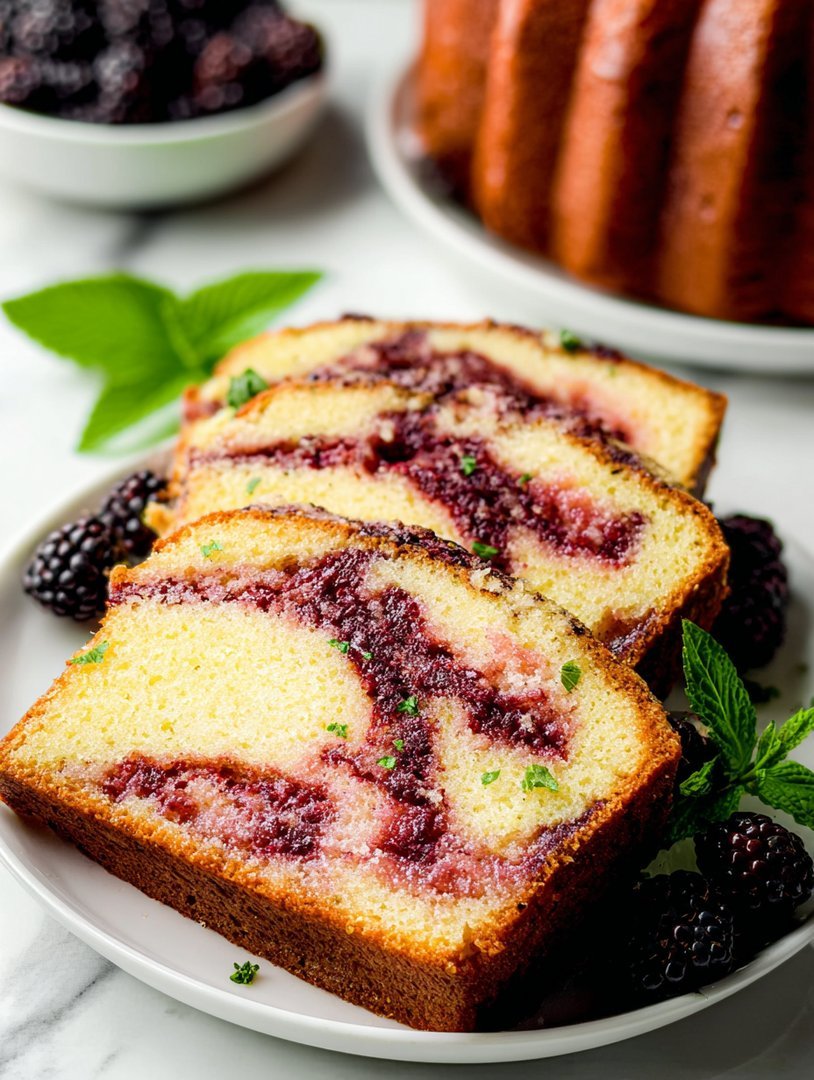
Forget everything you think you know about dry, crumbly loaves. ThisBlackberry Pound Cakeis the buttery monarch of desserts, reigning supreme with its vibrant purple swirls and irresistible aroma.
I perfected this recipe after a disastrous baking attempt that involved my smoke alarm singing opera. Get ready for a cake so moist, you’ll want to apologize to every other loaf you’ve ever baked.
- This recipe requires simple pantry staples and comes together quickly, offering maximum flavor payoff with minimal kitchen chaos.
- Enjoy a complex flavor profile where the tartness of fresh berries cuts through the rich, dense butteriness of the classic cake base.
- The stunning marbling created by the berry swirl ensures this cake is as much a centerpiece for your table as it is a treat.
- Serve this adaptable loaf sliced thick for breakfast, toasted with butter, or elevated with a dollop of fresh whipped cream for dessert.
Ingredients for Blackberry Pound Cake
Here’s what you’ll need to make this delicious dish:
- Unsalted ButterUse high-quality butter, softened to room temperature, which is essential for achieving the perfect light and fluffy creamed mixture.
- Granulated SugarThis provides sweetness and helps create structure in the pound cake batter, ensuring a delicate crumb.
- Large EggsMake sure these are also at room temperature; cold eggs can cause the batter to curdle and affect the cake’s texture significantly.
- All-Purpose FlourMeasure this accurately by spooning it into the cup and leveling it off, preventing a heavy, overly dense final product.
- Baking PowderJust a touch of leavening ensures a slight lift without compromising the traditional density expected of a classic pound cake.
- Vanilla PowderUse a good quality pure vanilla powder to enhance the rich, buttery flavor throughout the entire loaf.
- ButtermilkThe acidity of buttermilk reacts with the baking powder and tenderizes the cake, resulting in an exceptionally moist texture.
- Fresh BlackberriesSelect firm, plump berries for the best flavor and texture in the swirl and ensure they are gently washed and dried before use.
- Lemon ZestA small amount of freshly grated zest brightens the overall flavor profile, perfectly complementing the sweet and tart berries.
The full ingredients list, including measurements, is provided in the recipe card directly below.
How to Make Blackberry Pound Cake
Follow these simple steps to prepare this delicious dish:
- Prepare the Pan and OvenPreheat your oven to 325°F (160°C). Grease and flour a standard 9×5 inch loaf pan, or line it entirely with parchment paper for easy removal later.
- Cream the Fat and SugarIn a large mixing bowl or stand mixer, beat the softened butter and granulated sugar together until the mixture is light, pale, and fluffy, typically taking about 4 to 5 minutes. Scrape down the sides often.
- Incorporate Wet IngredientsAdd the room temperature eggs one at a time, beating well after each addition until fully incorporated. Stir in the vanilla powder and the lemon zest until fragrant.
- Alternate Dry and WetIn a separate bowl, whisk together the flour and baking powder. Gradually add the flour mixture alternately with the buttermilk to the creamed mixture, beginning and ending with the dry ingredients. Mix only until just combined to avoid developing too much gluten.
- Create the Blackberry SwirlGently crush about two-thirds of the blackberries with a fork to release their juices. Fold these crushed berries and the remaining whole berries into about one-third of the cake batter. Spoon the plain batter and the berry batter into the prepared pan, alternating layers. Use a knife to gently swirl the batters together 4 or 5 times, but do not overmix.
- Bake the LoafBake for 60 to 75 minutes, or until a wooden skewer inserted into the center comes out clean. If the top browns too quickly, loosely tent it with aluminum foil during the last 20 minutes of baking.
Transfer to a wire rack immediately after removal from the oven, allowing it to cool completely before slicing and serving. A light dusting of powdered sugar makes for the perfect finishing touch.
The Unlikely History of the Pound Cake Dynasty
The classic pound cake—that dense, unapologetically buttery beast—earned its name centuries ago because the original recipe called for a literal pound of everything: flour, butter, sugar, and eggs. Can you imagine grocery shopping for that? “Excuse me, I need 50 pounds of eggs, please.” Luckily, modern bakers, recognizing that not every family needs a cake the size of a small ottoman, scaled down the measurements, but they kept the spirit. We took that beloved, foundational recipe and introduced the wild, slightly dramatic cousin: the blackberry.
Adding fruit to a traditional pound cake is like giving a serious Victorian gentleman a vibrant silk tie. It retains its dignity but suddenly gains a personality. The richness of the butter and sugar provides the perfect stage for the tart, slightly earthy flavor of the blackberries. When those juices burst in the oven and marble through the golden batter, magic happens. This isn’t just baking; it’s culinary theater, starring you and a handful of perfectly ripe berries. Mastering the simple technique ensures you don’t end up with a dense, overly chewy result, which, trust me, is easily avoidable if you follow a few essential rules of engagement.
Essential Techniques for a Perfect Moist Cake
Baking a successful pound cake is 80% patience and 20% paying attention to temperature. The biggest rookie mistake? Using cold ingredients straight from the refrigerator. If your butter is too cold, it won’t trap enough air when you cream it with the sugar, leading to a cake that is disappointingly flat and heavy. If your eggs or buttermilk are chilly, they shock the creamed mixture, causing it to separate and look chunky, which means your beautiful crumb structure is ruined before it even hits the oven. Always plan ahead. Pull the butter, eggs, and buttermilk out at least an hour before you plan to bake. Seriously, set a timer. This loaf appreciates organization.
Mastering the Creaming Process
Creaming the butter and sugar is the crucial first step. You need to beat them vigorously until the mixture is almost white and significantly increased in volume. This isn’t about simply mixing them; it’s about whipping microscopic air bubbles into the fat. These air bubbles are your primary leavening agent, responsible for the cake’s final tender rise. Don’t rush this step. If the recipe says 5 minutes, give it 5 minutes. The difference between 3 minutes and 5 minutes can be the difference between a sad, squat loaf and a soaring, majesticBlackberry Pound Cake.
The Golden Rule of Mixing Flour
Once you introduce the flour and buttermilk, switch your mixer speed to low and mix only until the streaks of flour disappear. Overmixing develops gluten, turning your fluffy cake into something tough and rubbery—perfect for making tire treads, terrible for dessert. As soon as the last bit of dry ingredient is incorporated, stop the mixer. I usually finish folding by hand just to be extra careful, avoiding that fateful moment of gluten activation. Remember, the goal is barely mixed, not thoroughly thrashed. This attention to detail ensures the resulting loaf has that signature melt-in-your-mouth tenderness.
Selecting the Best Blackberries and Flavor Pairings
The star of this show is undoubtedly the berry component. While fresh blackberries offer the best texture and tartness, you can certainly use frozen ones if they are unavailable. If you opt for frozen, do not thaw them first; folding frozen berries directly into the batter prevents them from bleeding too much color into the mix, ensuring a more distinct swirl pattern. However, ensure you increase the baking time by about five to ten minutes if using frozen fruit, as they drop the overall temperature of the batter. Using a gentle hand when folding the crushed berries into the batter is also crucial for maintaining that desirable striped look.
While this buttery loaf is spectacular on its own, it plays well with others. For an easy weeknight treat, slice it thick and serve it alongside a scoop of vanilla bean ice cream. If you are aiming for elegance, whip up a simple lemon glaze by mixing powdered sugar with a splash of fresh lemon juice, drizzling it lavishly over the cooled loaf. The sharp lemon enhances the natural tang of the berries beautifully, cutting through the richness perfectly. You might also consider adding a slight hint of spice, like a quarter teaspoon of ground cardamom, into the dry ingredients to give the flavor profile an unexpected complexity that elevates the classic pound cake experience. Alternatively, serving slices of this moist cake with a side of lightly sweetened, plain Greek yogurt provides a healthier, yet equally satisfying, option.
Storage and Serving Tips for Your Berry Loaf
One of the best qualities of a dense pound cake is its superb shelf life. If wrapped tightly in plastic wrap or stored in an airtight container at room temperature, this sweet loaf will remain wonderfully fresh for up to four days. To maximize freshness, ensure the cake is completely cool before wrapping, as trapping residual heat will cause condensation and make the crust soggy. You can also store individual slices this way if you know you will be eating them piecemeal over the week. This makes the recipe ideal for meal prepping sweet treats or having a ready-made snack for unexpected guests.
If you want to keep it longer, pound cakes freeze exceptionally well. Once the cake is completely cooled, wrap it tightly in plastic wrap, followed by a layer of aluminum foil, and it will last in the freezer for up to three months. Labeling the loaf with the date is highly recommended so you don’t discover a mysterious, freezer-burned cake years later. When you are ready to serve the frozen cake, remove it from the freezer and let it thaw overnight on the counter while still wrapped. This slow thawing process ensures the moisture stays locked inside, resulting in a cake that tastes just as fresh as the day you baked it. This makes the beautiful purple-swirled loaf an ideal dessert to prepare in advance for sudden cravings for a slice of the perfect moist cake.
Troubleshooting Common Baking Issues
Even seasoned bakers occasionally face hiccups, especially when incorporating delicate fruit into a dense batter. If your fruit sank to the bottom, the batter might have been too loose, or the fruit too heavy. Try tossing your berries with a small spoonful of flour before folding them into the batter. That light coating helps suspend them in the thick, buttery mix, ensuring even distribution and preventing a heavy, soggy bottom layer. Also, ensure your oven temperature is accurate by using an external oven thermometer. Oven hot spots or inaccurate readings are silent killers of baked goods, causing uneven browning and unexpected sinking.
Frequently Asked Questions About Pound Cake
Can I use other berries instead of blackberries?
Absolutely! This recipe works beautifully with raspberries, blueberries, or a combination of mixed berries. Ensure that any substituted berries are firm and dry before folding them into the batter, which minimizes excess moisture and prevents the cake from becoming waterlogged.
Why did my pound cake sink in the middle?
Cakes usually sink if they are underbaked, if the oven door was opened too soon during the baking process, or if the leavening agents were incorrectly measured. Ensure your oven temperature is accurate and resist the urge to peek until the minimum bake time has passed, especially during the critical first 45 minutes of baking.
How do I get a nice marble effect, and not just a purple cake?
To achieve distinct marbling, only swirl the batters gently with a knife about 4 to 5 times. Overmixing the two batters blends the colors completely, resulting in a monochromatic purple loaf instead of the beautiful swirled effect you are aiming for. Less is definitely more when creating a gorgeous blackberry swirl.
Is buttermilk necessary, or can I substitute milk?
Buttermilk is highly recommended because its acidity tenderizes the cake, contributing significantly to the signature moist texture of this buttery loaf. If you must substitute, you can create a quick buttermilk by stirring one tablespoon of white vinegar or lemon juice into one cup of regular milk and letting it sit for five minutes before using it.
The Quest for the Ultimate Moist Crumb
There are two types of bakers in this world: those who fear the dense, dry brick of failed baking attempts, and those who have mastered the pound cake. I used to belong firmly in the former category. My early attempts at baking were, frankly, disastrous. One year, I tried to make a loaf for a family reunion, and when I took it out of the oven, it had the structural integrity of a paving stone. My Aunt Mildred tried to cut it and bent her favorite serving knife. She still brings it up every Autumn Feast.
But fear not! Years of tragic baking failures led me to perfect the art of moisture retention, culminating in this glorious recipe. This isn’t just a cake; it’s an edible cloud, rich yet impossibly soft, studded with bursts of tart, juicy fruit. When you bite into this magnificentBlackberry Pound Cake, you understand why the classic recipe has endured for centuries—it’s pure comfort, elevated by the bright zing of fresh blackberries and a hint of lemon zest.
The secret lies in the creaming process and the careful balance of fat and liquid. We are chasing that velvety texture that melts in your mouth, leaving behind just the sweet, slightly tangy essence of late summer berries. Prepare your stand mixer, grab your apron, and let’s banish dry baking forever. This recipe is surprisingly simple, yielding results that taste incredibly gourmet.
Why This Cake is Your New Favorite
Traditional pound cakes are famous for demanding equal amounts of butter, flour, sugar, and eggs (hence, a pound of each). While delicious, that formula often leans toward dryness if not handled exactly right. Our optimized version respects that tradition while incorporating sour cream and fresh fruit, ensuring a spectacularly moist crumb that stays tender for days. The tanginess of the sour cream also acts as a perfect counterpoint to the sweetness of the sugar and the richness of the butter.
Blackberries are the unsung heroes here. Unlike some softer berries that dissolve entirely into the batter, blackberries maintain their shape and provide gorgeous dark purple streaks throughout the cake, adding visual drama and intense flavor. We enhance this natural beauty with a simple, shimmering lemon glaze that sets up beautifully, sealing in the moisture and adding a final touch of bright acidity.
Gathering Your Ingredients
Ensure all cold ingredients—butter, eggs, and sour cream—are brought to room temperature before you start. This is crucial for achieving that silky, emulsified batter necessary for a light texture. Room temperature ingredients blend evenly, trapping air efficiently during the creaming stage. Trust me, cold butter is the enemy of a fluffy cake.
- 3 cups all-purpose flour, spooned and leveled
- 1 teaspoon baking powder
- 1/2 teaspoon salt
- 1 cup (2 sticks) unsalted butter, softened
- 2 cups granulated sugar
- 4 large eggs, room temperature
- 1 teaspoon pure vanilla powder
- 1/2 cup full-fat sour cream, room temperature
- 1/4 cup whole milk
- 1 tablespoon lemon zest
- 1 1/2 cups fresh or frozen blackberries (do not thaw if frozen)
For the Simple Lemon Glaze
- 2 cups powdered sugar
- 1/4 cup fresh lemon juice
Baking Instructions: Achieving Pound Cake Perfection
Preheat your oven to 325°F (160°C). Grease and flour a standard 10-inch tube pan or a Bundt pan. Prepare your dry ingredients first, whisking together the flour, baking powder, and salt in a medium bowl. Set this mixture aside, ready for incorporation into the wet mixture later.
In the bowl of a stand mixer fitted with the paddle attachment, cream the softened butter and sugar until the mixture becomes pale, light, and fluffy—this should take about 5 to 7 minutes. This extended creaming time is essential for incorporating air, which provides the lift and tender structure the cake needs. Next, add the eggs one at a time, mixing well after each addition. Scrape down the sides of the bowl often.
Stir in the vanilla powder and lemon zest. In a separate small bowl, lightly whisk the sour cream and milk together. Alternate adding the flour mixture and the sour cream mixture to the butter mixture, beginning and ending with the dry ingredients (Flour, Sour Cream, Flour, Sour Cream, Flour). Mix only until just combined; overmixing develops gluten, which results in a tough cake.
Toss the blackberries gently with one tablespoon of flour (this helps prevent them from sinking) and fold them into the batter by hand using a rubber spatula. Pour the batter evenly into the prepared pan. Bake for 65 to 75 minutes, or until a wooden skewer inserted into the center comes out clean. Let the cake cool in the pan for 15 minutes before inverting it onto a wire rack to cool completely.
While the cake cools, whisk together the powdered sugar and lemon juice until smooth to create the glaze. Drizzle the glaze generously over the cooled cake. Allow the glaze to set for about 15 minutes before slicing and serving. This delicate structure of the baked good demands a patient approach to guarantee its stunning presentation and perfect crumb.
Perfecting the Cooking Process

Always prioritize creaming the butter and sugar thoroughly for five to seven minutes; this incorporates essential air, ensuring a light texture despite the dense ingredients. Next, handle the wet and dry ingredient integration delicately, alternating additions and mixing minimally to preserve the cake’s structural integrity.
Add Your Touch
For extra richness, substitute half of the sour cream with full-fat Greek yogurt. Alternatively, swap out the blackberries for raspberries or sliced strawberries, or add a handful of chopped pecans for a lovely crunch. Try adding a teaspoon of alcohol-free almond extract for a deeper, more complex flavor profile.
Storing & Reheating
Store leftover pound cake tightly wrapped at room temperature for up to four days, or refrigerate for up to a week. For longer storage, freeze slices wrapped individually for up to three months. Thaw frozen cake at room temperature; reheating is not recommended, as it can dry out the moist crumb.
I remember the first time I nailed this recipe. My neighbor, who is a notoriously harsh critic of all things baked, tried a slice and simply paused, closed her eyes, and nodded slowly. That silence was the highest praise I’ve ever received for aBlackberry Pound Cake.
Expert Tips for Flawless Baking
- Ensure the oven temperature is accurate by using an external thermometer; temperature fluctuations often cause the center of a dense cake to sink unexpectedly.
- Sifting the dry ingredients is key for incorporation, preventing pockets of baking powder and ensuring the batter remains light and airy when mixed.
- Use parchment paper strips to line the bottom of the tube pan; this guarantees an easy release, preventing the tragic scenario of a stuck and crumbling masterpiece.
Troubleshooting Common Pound Cake Mistakes
Baking a perfect pound cake is a science, and slight deviations can lead to less-than-ideal results. Dealing with a sunken middle or a too-dense crumb requires addressing the culprits of temperature and mixing technique. If your cake sinks, it usually means the oven was too hot initially or the cake was removed before the center fully set.
Another common issue is separation, where the butter seems to split from the sugar mixture when the eggs are added. If this happens, try adding one tablespoon of flour from the measured amount; this helps emulsify the fat and liquid back together, saving your precious batter.
The beauty of homemade baking is that even imperfect results usually taste incredible. If your glaze runs too thin, simply whisk in a little more powdered sugar until it reaches that thick, drizzly consistency that clings perfectly to the golden crust. Mastering this recipe builds confidence in the kitchen and provides a reliable treat for any occasion.
Serving Suggestions and Pairings
While this pound cake is undeniably delicious on its own, a few additions can elevate the experience. Serve slices slightly warmed, perhaps with a dollop of freshly whipped cream that is lightly sweetened with maple syrup. A simple side of fresh berries, dusted with a touch of sugar, enhances the fruity notes within the cake.
For a spectacular dessert presentation, consider serving it alongside a scoop of vanilla bean ice cream or a warm, quick-made berry compote. The robust structure of the pound cake handles rich accompaniments beautifully, making it the perfect end to any meal, from a casual weeknight dinner to a celebratory gathering.
Frequently Asked Questions About Baking
Can I use frozen blackberries instead of fresh ones?
Yes, absolutely. If you use frozen blackberries, do not thaw them first, and toss them with flour just as you would fresh berries to ensure they disperse evenly throughout the batter and prevent excess moisture.
Why did my pound cake crack on top?
Cracking is entirely normal and often desirable in a traditional pound cake! It happens because the outside edge sets quickly while the middle continues to rise. If you want to minimize cracking, use a heating core or loosely tent the top with aluminum foil halfway through the baking time.
What is the difference between a pound cake and a regular cake?
Pound cakes are typically denser and richer than standard layer cakes because they traditionally contain a much higher ratio of fat and eggs, and often use baking powder sparingly or not at all, relying instead on creaming for leavening.
How do I ensure my cake doesn’t stick to the pan?
Generously grease the pan with solid vegetable shortening or butter, ensuring every crevice is coated. Then, lightly flour the greased pan, tapping out any excess. This double defense guarantees a clean release of your finished dessert.
How can I make the cake less sweet?
If you prefer a less sweet profile, you can reduce the granulated sugar in the recipe by up to 1/4 cup without drastically affecting the texture. However, the sugar is crucial for moisture retention, so avoid cutting back too much.
A Sweet Conclusion
This recipe transforms a classic dessert into a showstopper, blending buttery richness with the vibrant taste of summer berries. Whether you are baking for a special occasion or simply craving a sophisticated afternoon treat, this reliably moist and flavorful recipe delivers every time. Enjoy the process, share the results, and remember that even bending Aunt Mildred’s serving knife was worth the journey to this perfect slice of sunshine.
Conclusion for Blackberry Pound Cake
This spectacular Blackberry Pound Cake is truly the definition of comfort baking elevated to an art form. We’ve covered everything from the crucial creaming technique that gives the cake its signature tight crumb, to ensuring those tart, juicy blackberries are perfectly suspended throughout the rich, buttery batter. Remember, success lies in patience and careful measurement, transforming simple pantry staples into something extraordinary. Whether you serve it sliced simply with a light dusting of powdered sugar or generously covered in a luxurious citrus glaze, this sturdy yet wonderfully tender berry cake is guaranteed to steal the show at your next gathering. Go ahead, grab your apron, and let the irresistible aroma of this phenomenal loaf fill your kitchen—you’ve certainly earned that thick, delicious slice!
Print
Blackberry Pound Cake
Master the classic Southern Bundt. This Blackberry Pound Cake delivers a perfect buttery crumb thanks to precise creaming and buttermilk. Low oven temperature ensures moist results.
- Total Time: 35 minutes
- Yield: 4 servings
Ingredients
- All-purpose flour (3 cups)
- Granulated sugar (2 cups)
- Unsalted butter (1 cup, softened)
- Large eggs (4)
- Buttermilk (1/2 cup)
- vanilla powder (1 teaspoon)
- Baking powder (1 teaspoon)
- Fresh blackberries (1 1/2 cups)
Instructions
- Step 1: Preheat your oven to 325°F (160°C). Grease and flour a 10-inch Bundt pan thoroughly, ensuring all crevices are coated.
- Step 2: In a large bowl or stand mixer, cream the softened butter and granulated sugar until light and fluffy. Beat in the eggs one at a time, followed by the vanilla bean paste.
- Step 3: In a separate bowl, whisk together the flour and baking powder. Gradually add the flour mixture to the wet ingredients, alternating with the buttermilk, mixing only until just combined. Do not overmix.
- Step 4: Gently fold the fresh blackberries into the batter using a spatula. Pour the batter evenly into the prepared Bundt pan.
- Step 5: Bake for 65 to 75 minutes, or until a long wooden skewer inserted into the center comes out clean.
- Step 6: Let the cake cool in the pan for 15 minutes before inverting it onto a wire rack to cool completely before slicing or glazing.
Notes
- To prevent the fresh blackberries from sinking to the bottom, toss them gently with 1 teaspoon of the measured flour before folding them into the batter.
- Keep this rich pound cake tightly wrapped at room temperature for up to four days; refrigeration tends to dry out the texture prematurely.
- If the cake has been refrigerated, revive its crumb texture by wrapping individual slices in foil and warming them gently in a 300°F oven for about 10 minutes.
- Serve warm slices drizzled with a simple lemon glaze or alongside vanilla bean ice cream for an impressive dessert spread.
- Prep Time: 15 minutes
- Cook Time: 20 minutes
- Method: Stovetop
- Cuisine: American
FAQs
How long does a freshly baked Blackberry Pound Cake stay delicious?
People often worry that their meticulously crafted pound cake will turn into a brick overnight. Fear not! If you store your blackberry loaf properly, it remains wonderfully moist for up to four days at room temperature. Always use an airtight container to prevent drying out and keep that signature texture intact. If you plan on extending its life beyond a few days, wrap the cake tightly in plastic wrap followed by aluminum foil and store it in the refrigerator for up to a week. Just remember to let this stunning Blackberry Pound Cake come back to room temperature before serving—the flavors truly blossom when they aren’t fridge-cold.
Can I substitute the blackberries with other berries in this recipe?
Absolutely! Baking is about joyful experimentation, not rigid adherence to rules. While the tangy burst of blackberries complements the rich butteriness of the pound cake perfectly, you can easily swap them out for raspberries, blueberries, or even a delightful mix of diced strawberries. Keep the total volume of fruit the same to maintain the correct batter consistency. If you decide to use frozen berries instead of fresh ones, make sure you toss them lightly in a spoonful of flour before folding them into the batter. This small trick helps prevent the fruit from sinking to the bottom of the pan and ensures even distribution throughout your final baked treat.
Why did my Blackberry Pound Cake come out dense or dry?
Ah, the classic pound cake predicament! A disappointingly dense or dry texture usually stems from one of two main culprits: over-mixing or an incorrect oven temperature. Over-mixing develops too much gluten, resulting in a tough cake instead of a tender one, so once the flour is added, mix only until the streaks of flour disappear. Secondly, baking at too high a temperature can evaporate the moisture quickly. Ensure your oven thermometer is accurate and follow the instructions precisely. Remember, the real key to the perfect, airy crumb in any Blackberry Pound Cake is the slow, steady creaming of the butter and sugar, which incorporates essential air for optimal lift.
What is the best way to make a vibrant, easy glaze for this pound cake?
A glossy drizzle elevates any pound cake from simply good to absolutely glorious. The easiest method involves simply whisking powdered sugar with a very small amount of fresh lemon juice or milk until you achieve a thick, pourable consistency. For an extra pop of natural color and flavor that complements the fruit, try using a tablespoon of reserved blackberry juice mixed with the powdered sugar instead. If you need a slightly thicker, more stable glaze that sets up quickly, use slightly less liquid. Apply the glaze while the cake is completely cooled to allow it to set into a beautiful, crackly sheen.




Leave a Comment