
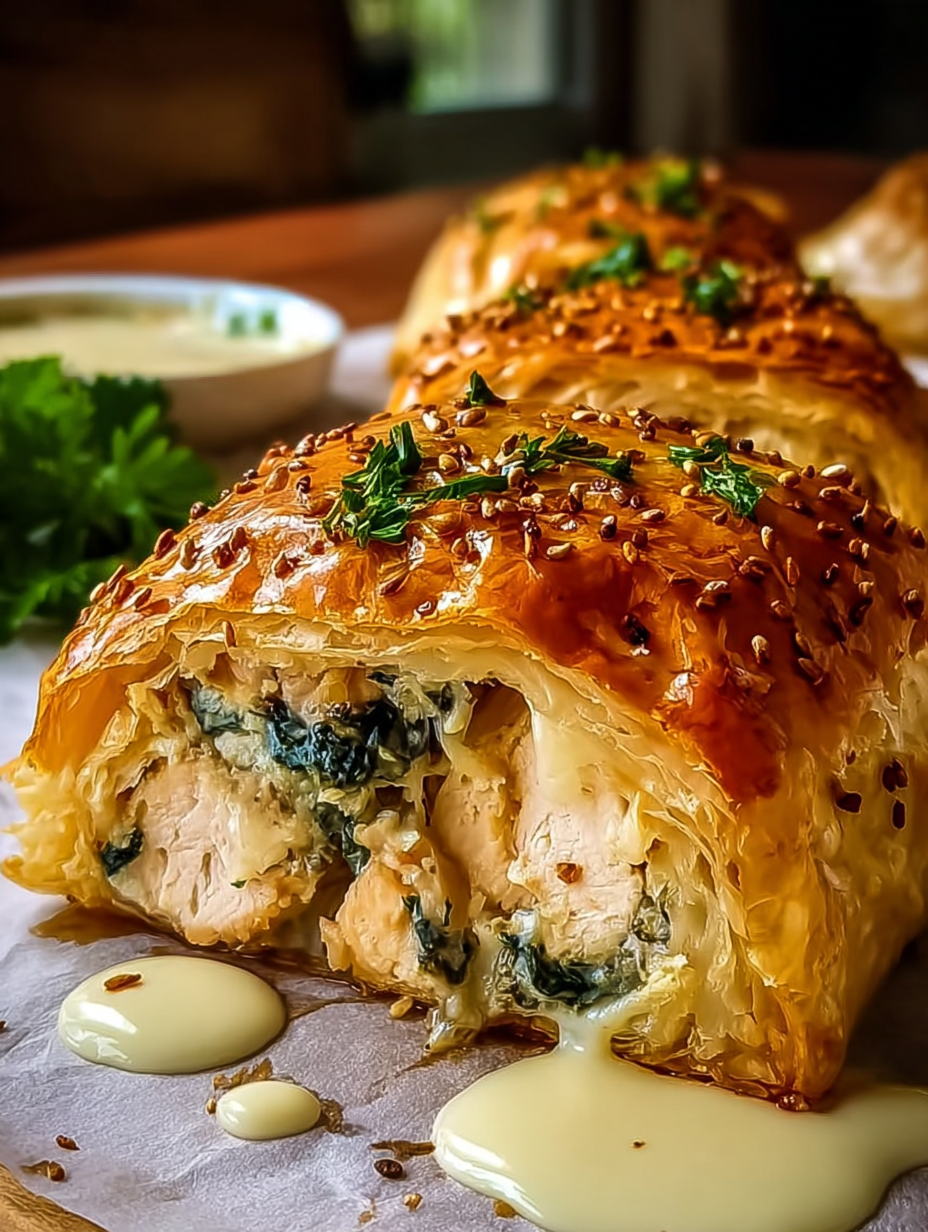
The first time I attempted to makeChicken Wellington, it resembled a golden, flaky spaceship that had crash-landed onto my dinner plate. Forget Beef Wellington—this magnificent poultry-in-a-pastry requires bravery, butter, and a healthy dose of dramatic flair. This dish is the culinary equivalent of wearing a tuxedo to a picnic: completely unnecessary, utterly fabulous, and guaranteed to make an impression on even your most critical dinner guests.
- This recipe offers a deeply savory filling of mushrooms and herbs encased in shatteringly flaky golden puff pastry for supreme flavor.
- Achieve restaurant-quality visual appeal with minimal fuss, transforming a simple chicken breast into an elegant, impressive centerpiece dish.
- The flavor profile is earthy and rich, utilizing high-quality chicken and aromatic shallots blended perfectly with creamy, decadent duxelles.
- This versatile dish is perfect for festive gatherings, holiday dinners, or when you simply wish to feel exceptionally fancy on a Tuesday evening.
The Epic Saga of Puff Pastry and Poultry Perfection
There is a certain hierarchy of impressive dinners, and somewhere near the top, nestled right next to the seven-layer chocolate cake and a perfectly roasted whole turkey, sits the majestic Wellington. Traditionally, it’s beef, intimidatingly rare, but let’s be honest: handling an entire beef tenderloin requires a mortgage payment and nerves of steel. My version, the elevated but approachableChicken Wellington, swaps the beef for tender chicken breasts, resulting in something equally stunning but infinitely more manageable for the home cook.
My first attempt, which led to the aforementioned spaceship incident, involved forgetting the critical step of searing the chicken first. I was left with a beautiful crust but a filling that tasted suspiciously like sad, damp socks. This taught me the cardinal rule of pastry-wrapped meats: moisture is your sworn enemy. If the filling is too wet, the pastry steams instead of browning, and your culinary masterpiece turns into a soggy tragedy. I learned to use every trick in the book, from drying the mushrooms thoroughly to creating a tight envelope of pastry around the protein.
The secret to success is the duxelles—a fancy French word for finely chopped mushrooms sautéed until they release all their liquid and achieve maximum earthy flavor concentration. Think of duxelles as the flavorful security blanket protecting your delicate puff pastry from the chicken juices. Once you master this core element, the rest is just assembly. Making a fabulous Wellington is less about being a Michelin-starred chef and more about excellent organizational skills, which, as a busy home cook, often feels like the real challenge!
The Anatomy of a Perfect Chicken Wellington
Achieving that glorious, golden-brown, puffed exterior requires attention to detail, but don’t fret; it’s not rocket science—unless you forget the egg wash, in which case, see my previous spaceship analogy. The quality of your puff pastry truly matters. If you are not making it from scratch (and honestly, who has time for that unless you are auditioning for a baking show?), ensure you buy all-butter puff pastry. The flavor payoff is enormous, delivering richness that margarine-based alternatives simply cannot match.
Handling Puff Pastry Like a Pro
Temperature control is absolutely vital. Puff pastry must remain icy cold until it hits the oven. If it warms up, the layers of butter melt prematurely, preventing the steam from creating those wonderful, airy pockets we crave. Work quickly, especially when sealing the packages. Use a sharp knife to score the top for ventilation and decoration, but be careful not to cut all the way through the final piece.
When preparing the chicken, ensure it is pounded thin and uniform. This guarantees that the chicken cooks evenly and quickly inside its pastry blanket. Uneven chicken means some parts dry out while others remain slightly undercooked—a culinary nightmare we must avoid. Seasoning is another non-negotiable step; you are seasoning four layers—the chicken, the duxelles, the crêpe or binder (if used), and the pastry itself, subtly, with the egg wash. Don’t be shy with salt and freshly cracked black pepper before you wrap the chicken. Remember, flavor doesn’t magically multiply; it must be built layer by glorious layer.
Pairing Your Wellington
What complements such a rich, impressive dish? Since the Wellington itself is buttery and savory, pair it with something bright and acidic to cut through that richness. A simple side of roasted asparagus drizzled with lemon juice or a vibrant green salad tossed with a sharp vinaigrette works wonders. Alternatively, try preparing some fluffy mashed potatoes infused with roasted garlic, which will absorb any delicious pan juices that leak out during baking. This beautiful presentation deserves an equally beautiful ensemble on the plate.
Ingredients for Chicken Wellington
Here’s what you’ll need to make this delicious dish:
- Chicken BreastsFour boneless, skinless breasts, pounded thin for quick and even cooking within the pastry casing.
- Puff PastryTwo sheets of high-quality, all-butter puff pastry, kept chilled until ready to use for maximum lift and flakiness.
- MushroomsOne pound of cremini or button mushrooms, crucial for making the earthy, moisture-free duxelles filling.
- Shallots and GarlicFinely minced, providing the aromatic base for the duxelles and adding depth to the overall flavor.
- Fresh ThymeEssential herb for the Wellington filling, lending a classic, savory, and slightly peppery note.
- Dijon MustardA thin coating applied to the chicken, acting as a flavor barrier and helping the duxelles adhere tightly to the protein.
- Egg YolkMixed with a splash of water to create an egg wash, ensuring a deep golden-brown, glossy crust during baking.
- Olive Oil and ButterUsed for sautéing the mushroom duxelles, enhancing the richness and helping to draw out excess moisture.
The full ingredients list, including measurements, is provided in the recipe card directly below.
How to Make Chicken Wellington
Follow these simple steps to prepare this delicious dish:
-
Prepare the Duxelles Filling
Mince the mushrooms, shallots, and garlic very finely, almost into a paste. Sauté this mixture in butter and olive oil over medium-high heat until all the liquid has evaporated, about 15–20 minutes. The resulting duxelles must be completely dry. Season generously with salt, pepper, and fresh thyme, then set aside to cool completely.
-
Prepare the Chicken
Preheat your oven to 400°F (200°C). Pat the pounded chicken breasts extremely dry using paper towels. Season both sides of the chicken with salt and pepper. Lightly sear the chicken in a hot pan for about 30 seconds per side—this helps lock in moisture and provides better texture. Remove and let cool entirely before proceeding.
-
Assemble the Wellington
Lay out the chilled puff pastry sheets. Divide the duxelles mixture evenly and spread a layer over the center of each pastry square. Brush the cooled chicken breast lightly with Dijon mustard, then place one breast on top of the duxelles layer. If you desire, add a very thin layer of herbs or finely chopped chives over the chicken.
-
Wrap and Seal the Pastry
Fold the edges of the pastry up and over the chicken, sealing the edges tightly to create a package. Trim any excess dough. Place the sealed packages seam-side down on a baking sheet lined with parchment paper. If using decorative cutouts, attach them now using a dab of egg wash.
-
Bake to Golden Perfection
Brush the entire surface of the pastry packages generously with the egg wash (yolk mixed with a teaspoon of water). Use a fork to pierce a few small vent holes on the top of the pastry. Bake for 25–30 minutes, or until the pastry is deeply golden brown and the internal temperature of the chicken reaches 165°F (74°C). If the pastry is browning too quickly, loosely tent it with foil.
Allow the Wellingtons to rest for 5–10 minutes after removing them from the oven to let the juices redistribute. Transfer to plates and serve immediately with a bright, crisp side salad for the perfect finishing touch.
Troubleshooting and Preparing Ahead
One of the greatest beauties of preparingChicken Wellingtonis its suitability for advance preparation. Dinner parties are stressful enough without wrestling with raw pastry minutes before your guests arrive. You can fully assemble the entire Wellington—including the duxelles filling, the chicken, and the pastry wrap—up to 24 hours in advance. After wrapping, simply place the raw Wellingtons on a parchment-lined tray, cover them loosely with plastic wrap, and chill them thoroughly in the refrigerator.
When you are ready to bake, pull them straight from the fridge and brush with the egg wash just before they go into the hot oven. This transition from cold to hot is actually beneficial, as it helps the butter in the pastry steam rapidly, resulting in a higher, more dramatic puff. If you try to bake them at room temperature, you risk the butter melting prematurely, resulting in less lift and a denser crust. Think of the cold temperature as a necessary shock treatment for maximum pastry drama.
Common Pitfalls to Avoid
The number one mistake aspiring Wellington makers commit is impatience with the duxelles. If your mushroom mixture retains any moisture, that moisture will escape during baking, transforming the bottom layer of your puff pastry into a disappointing, chewy sheet instead of a glorious crisp base. You must cook the duxelles until they are practically dry; they should resemble concentrated mushroom dust, rich in flavor but void of water. This sometimes takes longer than you think, especially if you are processing a large batch.
Another common issue is improper sealing. If the pastry edges are not firmly pinched shut, the savory internal steam will escape, and the pastry will sag instead of rising beautifully. Use the egg wash to help glue the edges together firmly. Finally, always monitor the temperature. If your oven temperature fluctuates, or if you crowd the baking sheet, you may get uneven cooking. Give your beautiful parcels space to breathe and turn golden brown evenly. Following these straightforward guidelines ensures your beautifulChicken Wellingtonachieves the magnificent presentation and exceptional flavor it deserves, making you the hero of your next gathering.
Welcome to the dish that manages to be both ridiculously complicated-looking and surprisingly manageable: the illustrious, golden-cased masterpiece known as the *Chicken Wellington*. If you’ve ever felt intimidated by pastry work, fear not. This is not the fussy, beef-centric cousin; this is its approachable, equally delicious, and far less stressful relative. It’s the perfect centerpiece for a celebration, or simply a magnificent way to prove to your family that you absolutely know how to handle a sheet of puff pastry.
I spent years perfecting this recipe, mostly because my initial attempts resembled sad, exploding dough pockets rather than elegant poultry parcels. The secret, I finally discovered, lies not just in the ingredients, but in the meticulous management of moisture. Mushy mushrooms are the villain of this story, and we are here today to defeat them with vigorous sautéing and serious dedication to dryness. Get ready to wrap some chicken in a hug of flavor—a very flaky, savory hug.
The Accidental Discovery of Sunshine on a Plate
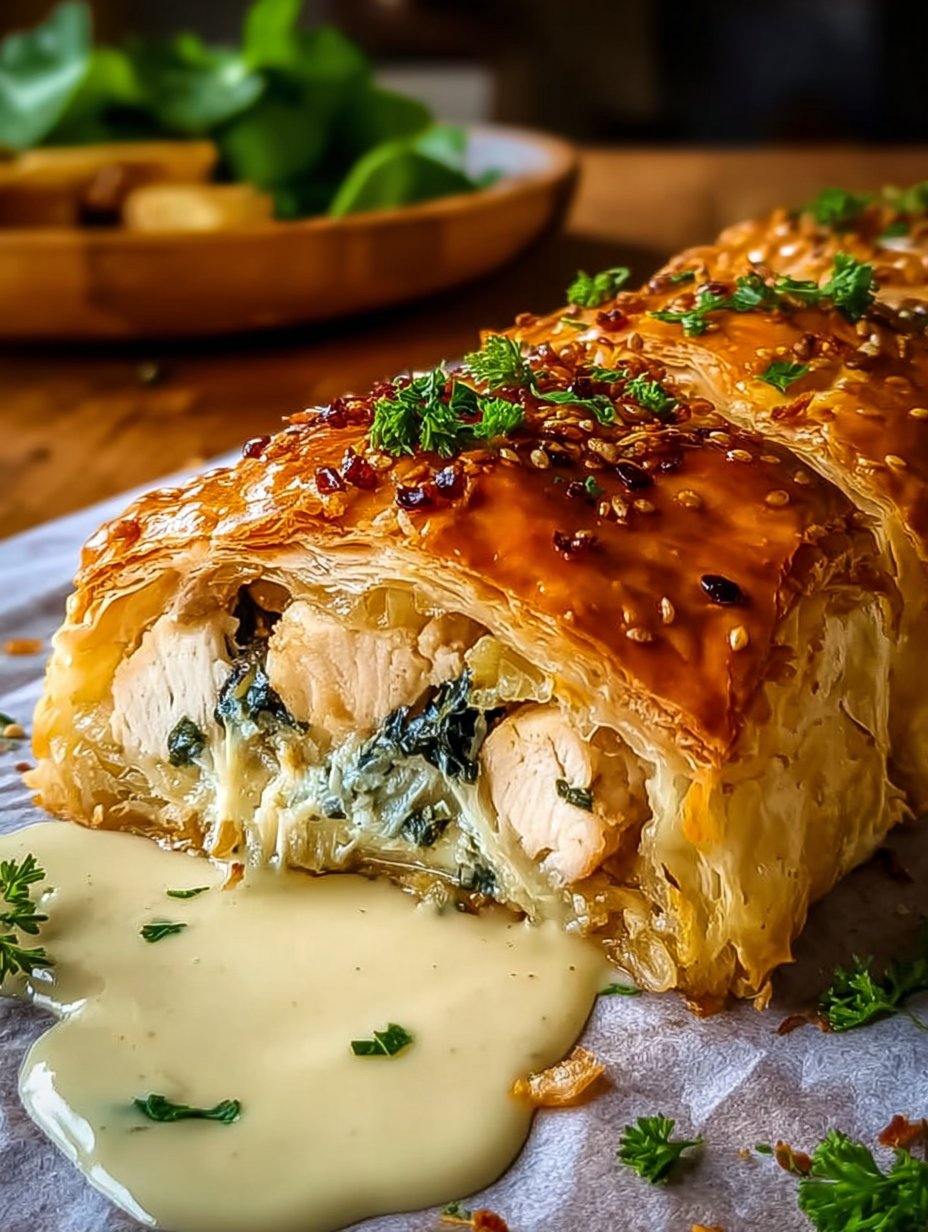
I first attempted Chicken Wellington during a catastrophic power outage, needing to impress guests with only a small propane stove. The resulting golden, crispy parcel, filled with savory mushrooms, brought an unexpected burst of sunshine, proving that elegance thrives even in chaos.
Perfecting the Cooking Process
For flawless results, sear the chicken lightly first to lock in moisture. While the chicken cools, prepare the mushroom duxelles, ensuring it is very dry. Finally, assemble and chill the Chicken Wellington parcels before baking to guarantee perfectly flaky pastry.
The Essential Building Blocks of Flavor
The magic of this elegant chicken dish lies in the components layered between the chicken and the pastry. You need a superb seasoning base and the famous mushroom duxelles. Duxelles is simply a fancy French term for intensely flavorful, finely chopped, sautéed mushrooms. This layer is crucial because it provides earthy depth and acts as a barrier, protecting the puff pastry from the chicken’s juices.
Start with chicken breasts that are uniform in thickness. I often pound them lightly between two sheets of plastic wrap to ensure even cooking. Season them aggressively with salt, pepper, and a pinch of dried thyme. A quick sear in a hot pan (about 90 seconds per side) is necessary, not to cook the chicken through, but to give it a head start and build flavor before it enters the confines of the pastry.
Crafting the Dry Duxelles
As mentioned, moisture control is paramount. If your duxelles is wet, you will end up steaming your pastry from the inside out. Use finely minced cremini and button mushrooms, shallots, and herbs. Sauté them over medium-high heat until they have released all their liquid and that liquid has evaporated. You should hear them sizzling dryly, not simmering sadly. This process takes patience, but trust me, it’s worth the arm workout.
Once the mixture is dry, stir in a spoonful of Dijon mustard for sharpness. Dijon works wonders, adding a tangy counterpoint to the rich chicken and buttery pastry. Let the duxelles cool completely. Warm filling equals warm pastry, and warm pastry means trouble. We want cold, manageable ingredients for assembly.
Puff Pastry: The Golden Wrapper
We are using store-bought puff pastry here, because life is too short to wrestle with homemade pastry when a quality frozen option exists. Ensure your pastry is fully thawed, but still cold. Working with chilled pastry is essential for achieving those beautiful, lofty layers when baked. If it gets sticky or warm, simply pop it back into the refrigerator for 15 minutes.
Roll the pastry slightly thinner than its original thickness. Cut it into squares large enough to fully envelop a single chicken breast with ample overlap for sealing. This is where your inner architect comes out; planning your wrap ensures a uniform, sealed parcel.
Assembling Your Chicken Wellington Masterpiece
Assembly is a swift layering process. Lay out a square of chilled pastry. Spread a thin, even layer of the cooled duxelles across the center, making sure the edges of the pastry remain clean. Place the seared chicken breast directly on top of the duxelles. This barrier is key.
Now, the wrap. Bring the opposite corners of the pastry up and over the chicken, pressing the edges together firmly. You can use a tiny bit of water or egg wash along the seams to help them adhere. Trim any excess pastry, but ensure the seal is robust. Flip the parcel so the seams are underneath. This provides a smoother presentation on top.
For a beautiful, professional look, you can score the top lightly with a knife, creating a pattern like cross-hatching, taking care not to cut through the pastry entirely. After assembly, put those elegant parcels back in the refrigerator for at least 30 minutes. A final chill prevents the pastry from shrinking excessively when it hits the heat and helps the shape hold perfectly.
Just before baking, brush the entire surface generously with an egg wash (one egg beaten with a splash of water or milk). This gives the pastry that signature deep golden glow. Bake the parcels until the internal temperature of the chicken reaches 165°F (74°C) and the pastry is gorgeously puffed and deeply golden brown.
Add Your Touch
Swap cremini mushrooms for finely chopped shiitake for an earthy twist. Use dried tarragon instead of thyme for an anise note. For a vibrant crust, mix paprika into the egg wash, giving the exterior a rich, reddish glow.
Tips for Flaky Success
- Ensure the mushroom duxelles is almost entirely dry before spreading it, or the excess moisture will turn your puff pastry into a disappointing sponge.
- Use the back of a fork to firmly crimp the edges of the pastry shut; this is your insurance policy against filling leaks during the crucial baking process.
- Brush the pastry with an egg wash just before baking, and again halfway through, for that enviable, deep golden-brown, professional-looking crust.
My notoriously picky niece once declared this dish tasted like “fancy chicken pie for grown-ups,” which I consider the highest culinary honor one can receive from a six-year-old food critic.
Storing & Reheating
Store cooked leftovers, tightly wrapped, in the refrigerator for up to three days. Reheat the Chicken Wellington in a 350°F oven for 10–15 minutes until the pastry re-crisps; microwaving makes it disappointingly soggy.
Conclusion for Chicken Wellington
Creating the perfect Chicken Wellington doesn’t require a culinary degree; it simply requires patience and attention to detail, particularly when managing moisture. Remember the dry duxelles rule and the importance of chilling the assembled parcels. This recipe elevates standard chicken into a truly spectacular meal, ideal for celebrations or just turning a Tuesday night into something memorable. Enjoy the delightful process of crafting this golden, savory masterpiece and watching your guests marvel at your kitchen wizardry.
Print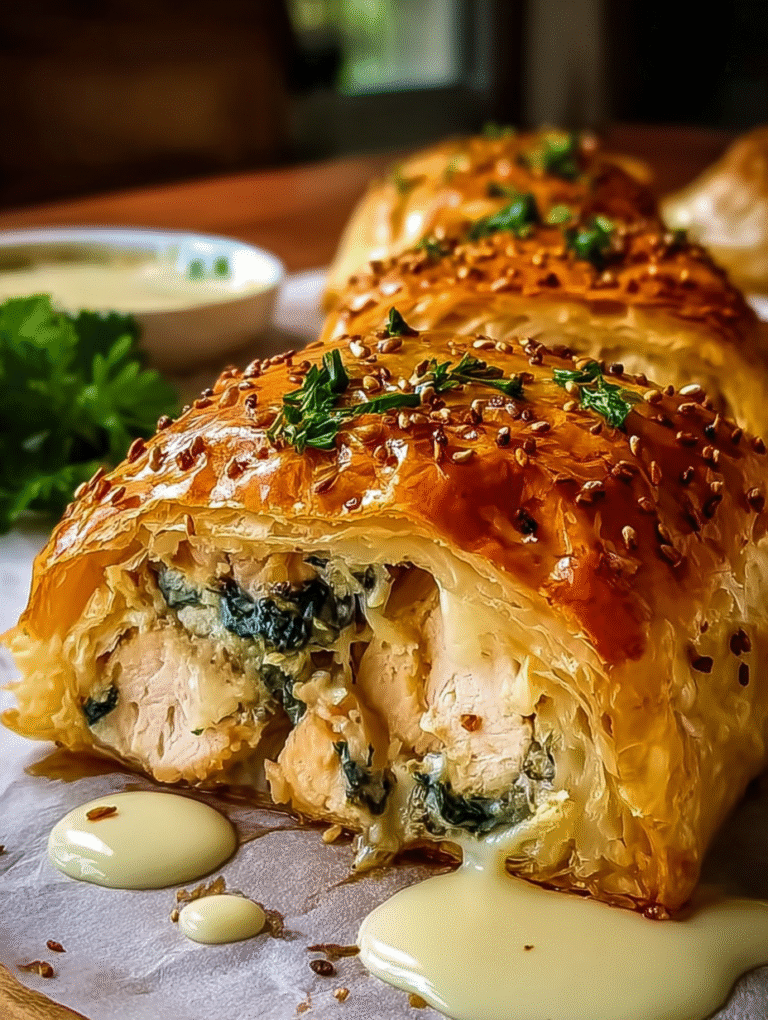
Chicken Wellington
Elegant Chicken Wellington: Seared chicken breasts are cloaked in savory cremini duxelles and delicate turkey turkey prosciutto, then baked in golden, flaky puff pastry.
- Total Time: 35 minutes
- Yield: 4 servings 1x
Ingredients
- 2 large chicken breasts
- 1 sheet (14 oz) frozen puff pastry, thawed
- 8 oz cremini mushrooms, finely chopped
- 4 slices turkey prosciutto
- 2 tablespoons butter
- 1 teaspoon fresh thyme, chopped
- 1 large egg, beaten
- Salt and black pepper to taste
Instructions
- Step 1: Season the chicken breasts generously with salt and pepper. Sear them briefly in a hot skillet for 1-2 minutes per side to lock in juices, then set aside to cool. Prepare the duxelles by melting the butter and sautéing the chopped mushrooms and thyme until all moisture has evaporated (about 8-10 minutes).
- Step 2: On a piece of plastic wrap, lay out the bresaola slices slightly overlapping to form a rectangular sheet. Spread an even layer of the cooled mushroom duxelles over the bresaola, then place the seared chicken breast on top. Use the plastic wrap to help tightly wrap the bresaola and duxelles around the chicken. Repeat for the second breast.
- Step 3: Roll out the thawed puff pastry slightly and cut it in half. Place one wrapped chicken breast in the center of a pastry half. Brush the edges of the pastry with the beaten egg wash, then fold the pastry tightly over the chicken, trimming excess and sealing all edges completely. Place the completed Wellingtons seam-side down on a parchment-lined baking sheet.
- Step 4: Brush the entire surface of both pastries with the remaining egg wash. Score the top of the pastry with a sharp knife to create a few small vent holes. Chill the Wellingtons in the refrigerator for at least 15 minutes to prevent the pastry from shrinking during baking.
- Step 5: Preheat the oven to 400°F (200°C). Bake the Chicken Wellingtons for 25–35 minutes, or until the pastry is a rich golden brown and the internal temperature of the chicken registers 165°F (74°C). Let the Wellington rest for 5-10 minutes before slicing and serving.
Notes
- Ensure your mushroom duxelles are completely dry before wrapping; any remaining moisture will create steam inside the pastry casing, resulting in a soggy bottom crust.
- Store any leftover cooked Wellington tightly wrapped in the fridge for up to three days, though the puff pastry will lose its initial flaky crispness once refrigerated.
- For reheating, place the Wellington in a 350°F (175°C) oven for 10–15 minutes until warmed through; this moderate temperature helps crisp the crust without drying out the chicken.
- Serve slices immediately after resting alongside a bright, sharp accompaniment, such as a fresh arugula salad dressed with a lemon vinaigrette, to balance the rich pastry and filling.
- Prep Time: 15 minutes
- Cook Time: 20 minutes
- Method: Stovetop
- Cuisine: American



Leave a Comment