
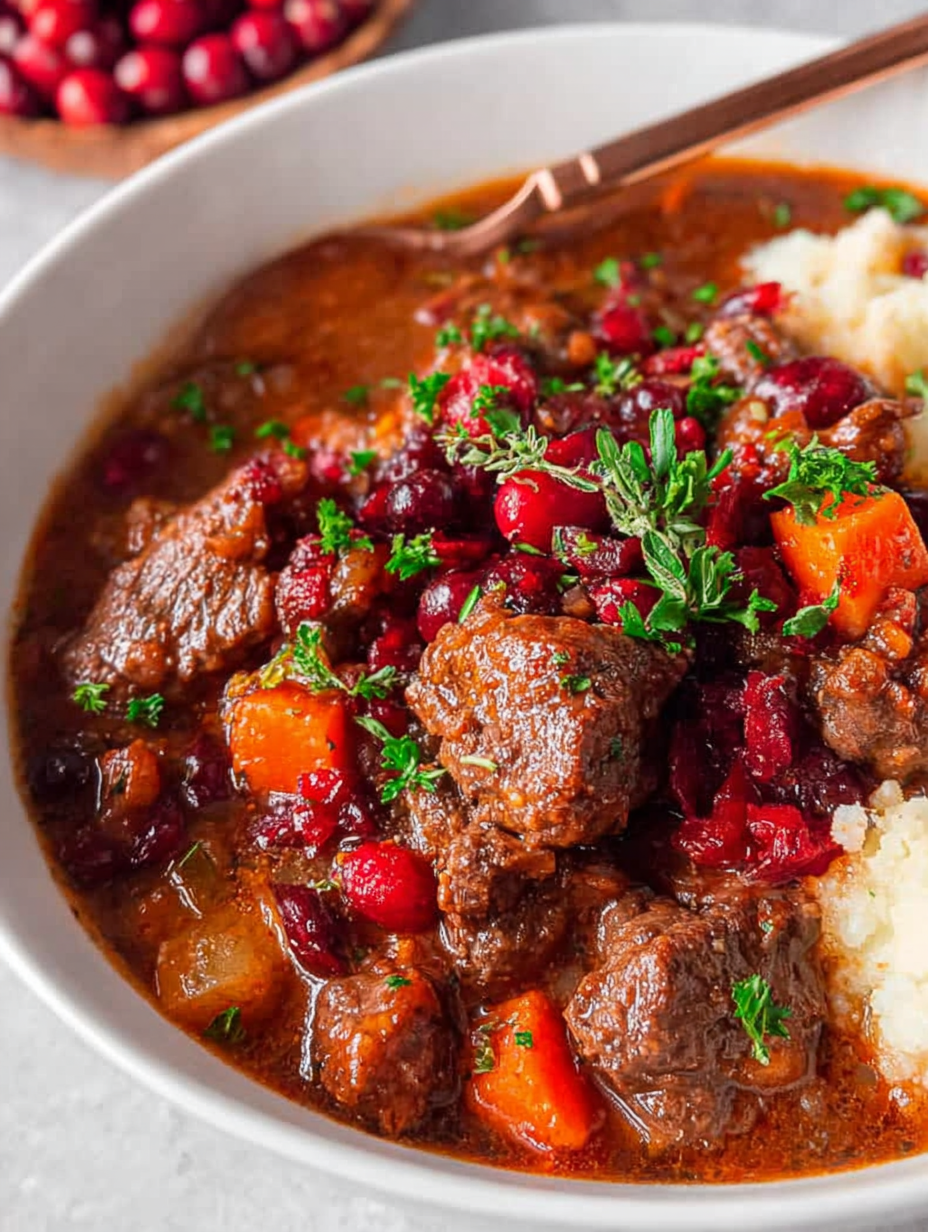
The rain is tapping a rhythm outside, and suddenly, the kitchen doesn’t just need food—it needs drama. Forget the ordinary; we are conjuring a meal that tastes like a cozy blanket and smells like a perfect autumn day.
Get ready to experience the delightful paradox of sweet and savory with this incredibleCranberry Apple Beef Stew, the ultimate comfort food upgrade your soul has been craving.
- This hearty stew offers a unique and complex flavor profile, balancing the rich savoriness of beef with the tart zing of cranberries and sweet apples.
- Preparation is surprisingly simple; this recipe relies on slow cooking magic, turning inexpensive beef cuts into fork-tender perfection with minimal fuss.
- Visually stunning with its deep mahogany sauce and bursts of bright crimson and gold, this is a beautiful dish perfect for entertaining during colder months.
- Extremely versatile, the finished stew pairs wonderfully with mashed potatoes, crusty bread, or creamy polenta, making it an ideal weeknight dinner.
I must confess, for years, my stews were boring. They were utilitarian, brown, and lacked personality. They screamed, “I am necessary nutrition!” instead of whispering, “I am a culinary masterpiece crafted by a genius.” It was a tragedy. Then, one dreary afternoon, while staring into the refrigerator abyss and contemplating a life of dull dinners, I saw them: a bag of tart cranberries and two slightly sad, forgotten Gala apples.
My initial thought was, “Why would I sabotage a perfectly good batch of pot roast with fruit?” But desperation breeds innovation, and I decided to take a calculated culinary risk. The result was revolutionary. This isn’t just beef stew; this is theCranberry Apple Beef Stewthat changes everything. It’s savory, yes, but the fruit melts down, creating a subtle sweetness and an incredible, complex tang that elevates the whole dish from Sunday dinner to showstopper status. It’s the kind of meal that makes your neighbors suspiciously peer over the fence just to sniff the air.
The Unexpected Genius of Sweet and Savory Stews
If you typically restrict fruit to desserts or breakfast smoothies, you’re missing out on a fundamental culinary truth: fruit is beef’s best friend. Think about it—why do we love pairing rich meats with chutney, compotes, or highly acidic sauces? Because the acidity cuts through the richness, balancing the heavy flavor profile and lifting the dish. In the case of this autumn beef stew, the cranberry and apple aren’t just additions; they are the secret architects of flavor.
Why Cranberries and Apples Work Magic with Beef
Cranberries bring a wonderful, bracing tartness that provides structure to the deep, earthy flavor of the beef broth. They burst open during the long, slow cooking process, infusing the liquid with a gorgeous ruby color and a bright, almost citrusy depth. The apples, on the other hand, provide necessary sweetness and body. They dissolve slightly, thickening the stew naturally while offering a mellow, comforting sweetness that harmonizes perfectly with the root vegetables and herbs. When combined with savory ingredients like thyme, bay leaves, and maybe just a hint of aged balsamic vinegar, the resulting sauce is pure gold.
This recipe is particularly forgiving. It encourages a level of laissez-faire cooking that is perfect for busy weeknights or lazy weekend afternoons. Once the initial browning is done—and trust me, you must brown the beef—the hard work is over. You simply combine the ingredients, cover them, and let time and low heat transform them into culinary excellence. You walk away, run errands, maybe even take a nap, and come back to a kitchen that smells like a gourmet lodge in the mountains. This hands-off approach makes theCranberry Apple Beef Stewa winner in my book.
Choosing the Right Cut of Beef for Maximum Tenderness
The secret to unbelievably tender stew meat isn’t magic; it’s patience and the right cut. Since this stew cooks for several hours, we want cuts high in connective tissue—like chuck roast or beef shoulder. This tissue, primarily collagen, breaks down slowly under moist heat, turning into luscious, rich carrageenan that coats the meat and thickens the sauce beautifully. Do not be tempted to use expensive, lean cuts like sirloin or tenderloin; they will dry out and become tough under prolonged exposure to heat. Aim for consistency when cubing your meat—roughly 1-inch pieces ensure even cooking. Always pat the beef cubes thoroughly dry before searing. Moisture is the enemy of a good crust, and that crust is crucial for deep flavor development.
Prep Secrets: Setting the Stage for Flavor
The first few steps of this delightful fruit and beef stew recipe are where the foundation of flavor is laid. Rushing this initial phase is the number one mistake home cooks make when tackling slow-cooked dishes. Think of it like building a house; you need a solid foundation if you don’t want the whole delicious structure to collapse later.
The Art of the Sear
Searing the beef is non-negotiable. We are not just heating the meat; we are developing the Maillard reaction—that magical chemical process that creates hundreds of complex flavor compounds, resulting in that savory, deeply browned crust. Use a heavy-bottomed pot, like a Dutch oven, and get it ripping hot. Work in batches. Overcrowding the pot is the second cardinal sin of stew making, as it lowers the temperature drastically, steaming the meat instead of searing it. Once the beef pieces are beautifully browned on all sides, remove them and set them aside. The crispy bits left on the bottom of the pot, known as the fond, hold the key to maximizing the richness of the stew.
Building the Aromatics Base
Next comes the aromatic trifecta: onions, carrots, and celery. These humble vegetables release their stored flavor into the fat, capturing the essence of the fond left by the beef. Sautéing them until they soften and the onions become translucent takes about five to seven minutes. This step is also the perfect moment to introduce your dried herbs, such as thyme and rosemary, allowing their essential oils to bloom in the hot fat. Blooming the herbs enhances their fragrance and overall impact, ensuring they don’t taste dusty or muted in the final dish.
When incorporating the fruits—the stars of our show—make sure they are prepared correctly. The apples should be firm, slightly tart varieties that can hold their shape somewhat, though they will soften dramatically (I recommend Honeycrisp or Granny Smith). The cranberries can be fresh or frozen; just toss them in directly. Their acidity will immediately start deglazing the pot, lifting those beautiful brown bits from the bottom and integrating them into the sauce base. This ensures every spoonful of the finished beef pot is packed with depth and complexity.
Mastering the Slow Cooking Technique
Whether you choose a slow cooker for maximum convenience or a Dutch oven for the traditional stovetop or oven braise, the principle remains the same: low and slow is the only way to achieve truly fork-tender meat. This method allows the tougher proteins to relax and the flavors to meld seamlessly, transforming simple ingredients into a gourmet experience.
Patience is the Primary Ingredient
If cooking on the stovetop or in the oven, maintain a gentle simmer (around 325°F or 160°C). You shouldn’t see rolling bubbles; you want small, occasional blips. For a truly rich and dark gravy, ensure you use high-quality beef broth—preferably low sodium so you can control the seasoning yourself. Liquid should mostly cover the meat and vegetables, but not completely submerge them, allowing the stew to concentrate as it reduces.
The cooking time for this hearty autumn stew typically spans three to four hours in the oven or eight hours on low in a slow cooker. You will know it is ready when the beef yields effortlessly to the touch of a spoon. If the meat offers any resistance, it simply needs more time. The key is resistance testing; don’t just trust the clock. This extended cook time allows the tartness of the cranberries and the subtle sweetness of the apples to fully integrate, creating a balanced and deeply satisfying sauce that makes thisCranberry Apple Beef Stewunforgettable.
Before serving, always perform the final seasoning adjustment. Stews, especially those cooked for long periods, often require a final sprinkle of salt and a splash of vinegar or lemon juice right at the end to brighten the flavors up. This small adjustment is the difference between a good stew and an absolutely magnificent one. Serve it up hot and watch the smiles erupt around the table.
Ingredients for Cranberry Apple Beef Stew
Here’s what you’ll need to make this delicious dish:
- Beef Chuck RoastCut into 1-inch cubes and patted dry; this cut provides the collagen needed for a tender finish.
- Yellow OnionFinely chopped to form the aromatic foundation of the stew base.
- Carrots and CeleryRoughly chopped into 1/2-inch pieces; these root vegetables add body and traditional stew flavor.
- Fresh or Frozen CranberriesThese provide the necessary tartness and acidity to balance the rich beef flavor.
- Firm ApplesUse varieties like Honeycrisp or Gala, peeled and diced; they thicken the stew while adding subtle sweetness.
- Beef BrothUse high-quality, low-sodium broth as the primary braising liquid to ensure rich flavor.
- Tomato PasteAdds depth, color, and essential umami notes to the finished gravy.
- All-Purpose FlourUsed to dredge the beef cubes, which helps create a beautiful sear and thickens the sauce slightly.
- Balsamic VinegarA small amount added near the end enhances the fruit flavors and brightens the overall profile.
- Dried Thyme and Bay LeavesEssential herbs for classic stew flavor; they infuse the liquid during the long cooking time.
- Olive OilNeeded for searing the beef and sautéing the vegetables at high heat.
- Salt and Freshly Ground Black PepperCrucial for seasoning the beef and adjusting the final taste of the stew.
The full ingredients list, including measurements, is provided in the recipe card directly below.
How to Make Cranberry Apple Beef Stew
Follow these simple steps to prepare this delicious dish:
Step 1: Prep and Sear the Beef
Pat the cubed beef chuck roast completely dry and toss it with the flour, salt, and pepper. Heat a heavy Dutch oven over high heat with olive oil until shimmering. Sear the beef in batches, ensuring pieces are not touching, until deeply browned on all sides. This process takes about 3 to 4 minutes per batch. Remove the browned beef and set it aside, leaving the remaining oil and flavorful fond in the pot.
Step 2: Build the Aromatics and Deglaze
Reduce the heat to medium. Add the chopped onions, carrots, and celery to the pot and sauté for 5 to 7 minutes until the onions are translucent and softened. Stir in the tomato paste and cook for 1 minute, scraping up the browned bits (the fond) from the bottom of the pot. Add the dried thyme and stir until fragrant.
Step 3: Combine Ingredients and Bring to a Simmer
Return the seared beef to the Dutch oven. Add the diced apples, cranberries, and bay leaves. Pour in the beef broth, ensuring the ingredients are mostly covered (if necessary, add a little water or more broth). Bring the mixture up to a gentle simmer on the stovetop.
Step 4: Slow Cook for Tenderness
Preheat your oven to 325°F (160°C). Cover the Dutch oven tightly with a lid and transfer it to the preheated oven. Cook for 3 to 4 hours, or until the beef is fork-tender and the apples have almost completely softened and dissolved into the sauce. If using a slow cooker, cook on low for 7 to 8 hours.
Step 5: Final Adjustments and Finishing Touches
Carefully remove the pot from the oven. Discard the bay leaves. Stir in the balsamic vinegar and taste the stew. Adjust the seasoning with additional salt and pepper as needed. If the stew is too thin, remove the lid and simmer gently on the stovetop for 15-20 minutes to allow it to reduce naturally.
Transfer to plates and serve piping hot over creamy mashed potatoes, or alongside a hearty piece of crusty bread, allowing the savory, complex sauce of thisCranberry Apple Beef Stewto shine.
The Accidental Discovery of Sunshine on a Plate
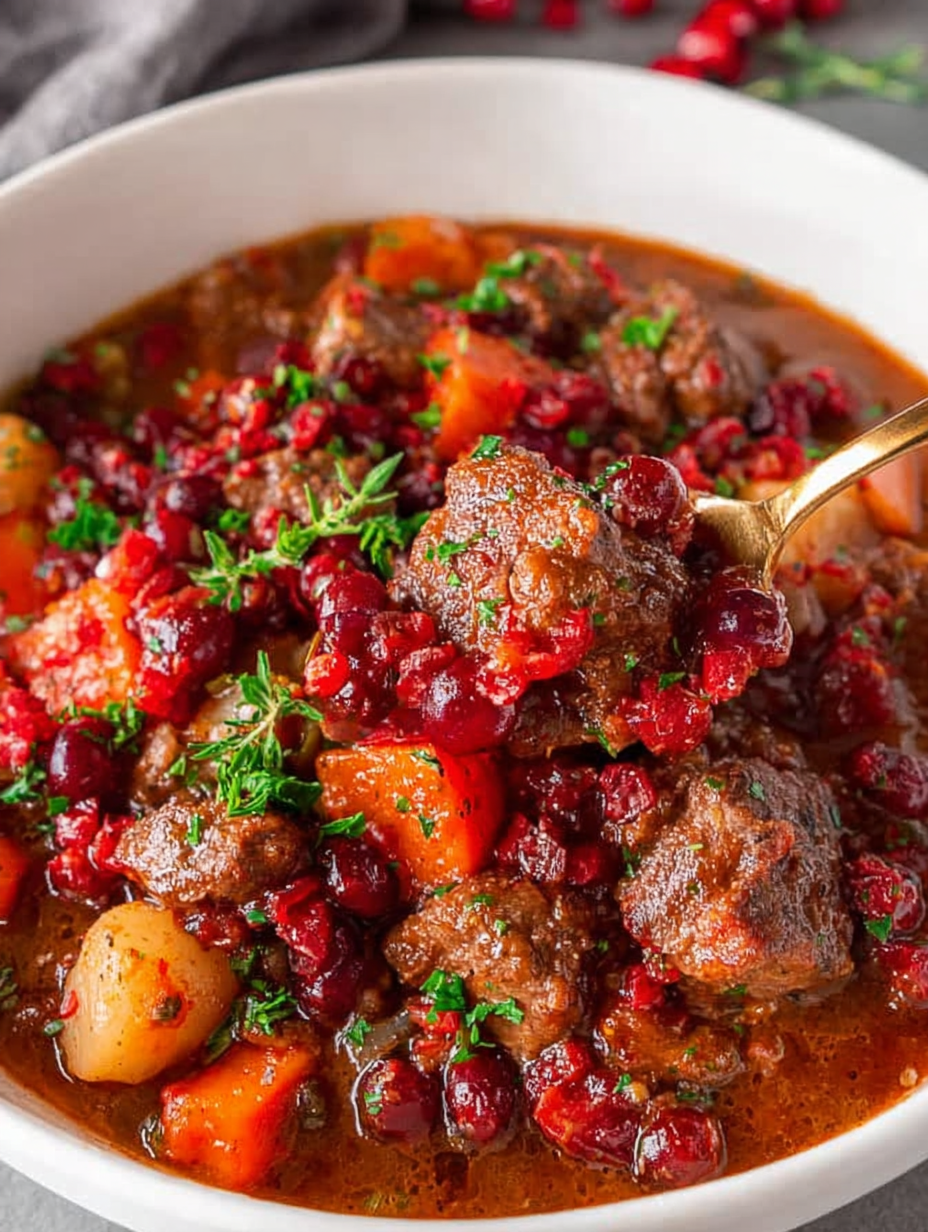
This Cranberry Apple Beef Stew wasn’t planned; it was a desperate pantry dive on a rainy Tuesday. I had apples, frozen cranberries, and a lonely chuck roast. Combining them seemed insane, but the resulting aroma—sweet, savory, and deeply comforting—transformed that dreary afternoon into pure, unexpected culinary joy.
The Case Against Boring Winter Dinners
I’ve always maintained that winter food should possess the robust personality necessary to fight off a deep, existential chill. If your stew doesn’t make you want to put on a cozy sweater, sit by a crackling (or digitally simulated) fire, and sigh deeply in satisfaction, then you’re doing it wrong. For years, I struggled with stews that were just… brown. They tasted fine, but lacked that specific zing—that culinary plot twist that makes you remember the dish weeks later.
I needed a hero, a dish audacious enough to blend the deep, hearty flavors of slow-cooked beef with the bright, unexpected tartness of seasonal fruit. Enter the accidental genius: theCranberry Apple Beef Stew. This isn’t your grandmother’s predictable pot roast, unless your grandmother was a culinary anarchist who loved surprising the dinner table. The moment the apples begin to soften and the cranberries burst, lending a gorgeous, ruby hue to the rich beef broth, you realize you’ve stumbled upon liquid gold.
The Anatomy of a Perfect Pot of Comfort
Achieving this level of flavor requires patience and a ruthless commitment to proper technique. We aren’t just dumping ingredients into a pot; we are building layers of flavor so thick you could almost slice them. The foundational flavor comes from the beef, and using good quality chuck roast, cut into uniform cubes, is essential. But the real magic happens when the unexpected guests—the cranberries and apples—join the party late in the simmering process. They introduce a necessary acidity that cuts through the richness of the meat, preventing the entire experience from becoming heavy or monotonous.
Forget everything you thought you knew about traditional beef stews. We are embracing the sweet and the sour, leaning into the autumnal bounty. This recipe is surprisingly straightforward, ideal for busy weekends when you want maximum flavor return for minimal hands-on effort. Prepare to be delighted, and prepare to field countless requests for this hearty stew from admiring, slightly jealous dinner guests.
Gathering the Arsenal: Ingredients
Before diving into the cooking process, ensure all your ingredients are prepped and ready. This is known as “mise en place,” a fancy French term that essentially means “don’t panic halfway through because you forgot to chop the onions.”
For the Cranberry Apple Beef Stew
- 2.5 lbs beef chuck roast, cut into 1-inch cubes
- 2 tablespoons olive oil
- 1 large yellow onion, diced
- 3 carrots, peeled and roughly chopped
- 3 stalks celery, roughly chopped
- 3 cloves garlic, minced
- 4 cups beef broth (low sodium preferred)
- 1 cup cranberry juice (unsweetened or slightly sweetened)
- 1 tablespoon tomato paste
- 1 teaspoon dried thyme
- 1/2 teaspoon dried rosemary
- 1 bay leaf
- 2 medium tart apples (Granny Smith or Honeycrisp), cored and chopped
- 1 cup fresh or frozen cranberries
- 1 tablespoon apple cider vinegar
- Salt and freshly ground black pepper to taste
- 1 cinnamon stick (optional, but highly recommended)
The Flavor-Building Blueprint: Instructions
Follow these steps carefully to ensure every spoonful of the stew is packed with deep, complex flavor. Remember, patience is the secret ingredient for tender beef.
Searing for Maximum Depth
Pat the beef cubes thoroughly dry with paper towels; this is non-negotiable for achieving a good sear. Season them generously with salt and pepper. Heat the olive oil in a large Dutch oven or heavy-bottomed pot over medium-high heat. Sear the beef in two or three batches, ensuring the pieces are not touching. Cook for 3 to 4 minutes per side until a deep brown crust forms. Remove the seared beef and set it aside.
Building the Aromatic Base
Reduce the heat to medium. Add the diced onion, carrots, and celery to the pot. Sauté for 5 to 7 minutes, stirring frequently, until the vegetables begin to soften and the onions become translucent. Add the minced garlic and tomato paste, stirring for one minute until fragrant. The tomato paste should darken slightly, indicating its flavor has concentrated—this is known as cooking out the tomato paste.
The Slow Dance of Braising
Return the seared beef to the pot. Pour in the beef broth and cranberry juice, scraping up any browned bits from the bottom of the pot (the deglazing step!). Add the dried thyme, rosemary, and the bay leaf, along with the optional cinnamon stick. Bring the mixture to a strong simmer, then reduce the heat immediately to low, cover the pot tightly, and let it gently simmer for 1.5 to 2 hours. The beef should be becoming wonderfully tender.
The Fruitful Finale
After the initial simmering time, stir in the chopped apples, cranberries, and apple cider vinegar. The vinegar brightens the overall flavor profile considerably. Continue to simmer, uncovered, for another 30 to 45 minutes, or until the beef is fork-tender and the apples have softened but still retain some shape. Taste the stew and adjust the seasoning with additional salt and pepper as needed.
A Moment of Rest and Reflection
Before serving, remove the bay leaf and the cinnamon stick. Allow the Cranberry Apple Beef Stew to rest off the heat for 10 to 15 minutes. This rest period allows the liquid to redistribute and thicken slightly, making the final presentation and taste even better. Serve over mashed potatoes, creamy polenta, or with crusty bread for dipping. This hearty, slightly eccentric stew truly embodies comfort cooking at its best.
Perfecting the Cooking Process
Start by searing the beef aggressively to build that deep, flavorful crust, locking in the juices. Next, sauté the root vegetables until they soften slightly, releasing their earthy essence before combining them with the beef and braising liquid for hours of slow, tender perfection.
Add Your Touch
If you prefer a deeper spice profile, swap the cinnamon stick for star anise or a pinch of ground clove. For added texture, toss in some toasted walnuts or pecans during the last hour of simmering. You can also substitute the beef with turkey or lamb for a flavorful twist.
Storing & Reheating
Cool the stew completely before transferring it to airtight containers; it keeps beautifully in the refrigerator for up to four days. Reheat gently on the stovetop, adding a splash of beef broth or water if the consistency seems too thick, ensuring the flavors remain vibrant.
- Sear the beef in batches to prevent steaming. Overcrowding the pot lowers the temperature, preventing the formation of that crucial, deep-brown, flavorful crust.
- Always deglaze the pot after searing using a splash of beef broth. Those caramelized bits stuck to the bottom are essential flavor powerhouses for the stew.
- Use firm, tart apples like Granny Smith, as softer varieties break down too quickly, which can make the stew texture mushy.
My neighbor tasted this dish and swore it was the best thing she’d ever eaten, demanding the recipe immediately. That truly cemented this Cranberry Apple Beef Stew as a cold-weather staple in my kitchen.
Conclusion for Cranberry Apple Beef Stew
The Cranberry Apple Beef Stew is a remarkable symphony of savory depth and autumnal brightness, proving that unexpected pairings often yield the greatest results. This stew transforms simple ingredients into an extraordinary meal, offering warmth and complexity with every spoonful. Remember to sear the beef properly and allow adequate time for simmering to achieve that melt-in-your-mouth tenderness. Whether you’re fighting off a chill or hosting a gathering, this bold, comforting stew is guaranteed to impress and become a treasured part of your culinary rotation.
Print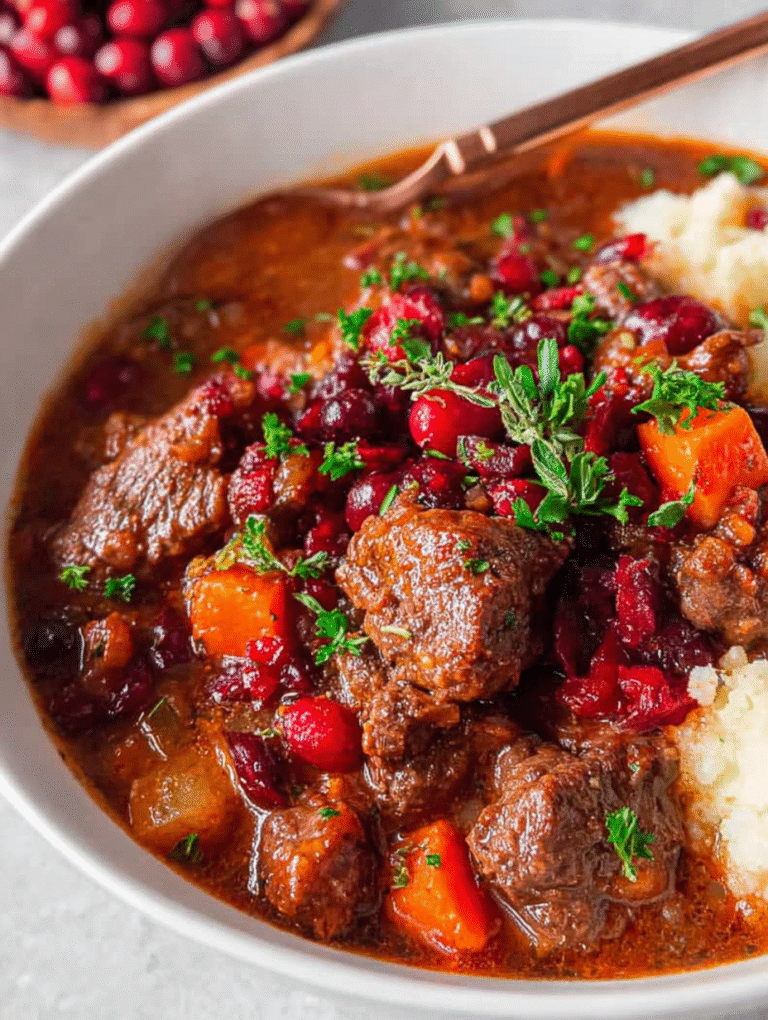
Cranberry Apple Beef Stew
Deep savory notes meet tart cranberry and sweet apple in this luxurious beef stew. We start by searing the chuck and deglazing with red grape vinegar for incredible depth.
- Total Time: 35 minutes
- Yield: 4 servings 1x
Ingredients
- 2 pounds beef chuck, cut into 1-inch cubes
- 2 tablespoons all-purpose flour
- 2 tablespoons olive oil
- 1 large yellow onion, chopped
- 4 cups beef broth
- 1/2 cup dried cranberries
- 1 large Gala apple, peeled and chopped
- 1/4 cup balsamic vinegar
Instructions
- Step 1: Season the beef cubes generously with salt and pepper, then dredge them lightly in the all-purpose flour. Heat the olive oil in a large Dutch oven or heavy-bottomed pot over medium-high heat. Sear the beef in batches until browned on all sides, then remove the beef and set it aside.
- Step 2: Add the chopped onion to the pot and sauté for 5-7 minutes until soft. Pour in the red grape vinegar and use a wooden spoon to scrape up any browned bits from the bottom of the pot (deglazing).
- Step 3: Return the seared beef to the pot. Pour in the beef broth, ensuring the meat is mostly submerged. Bring the liquid to a boil, then immediately reduce the heat to low, cover the pot, and simmer for 1.5 hours, or until the beef is fork-tender.
- Step 4: Stir in the chopped apple and the dried cranberries. Leave the pot uncovered and continue to simmer for an additional 30 minutes, allowing the apples to soften and the stew liquid to reduce and thicken slightly.
- Step 5: Taste the stew and adjust the seasoning with additional salt and pepper as needed before serving hot with crusty bread or mashed potatoes.
Notes
- This stew freezes beautifully; ensure it is completely cooled before transferring it to freezer-safe bags or containers for up to three months.
- To reheat leftovers, simmer gently on the stovetop, adding a splash of broth or water if the stew has thickened too much overnight.
- For an extra layer of richness that complements the tart cranberries, serve the stew over creamy polenta or with a dollop of sour cream.
- For the best depth of flavor, take extra care when deglazing with the balsamic vinegar; scrape up every browned bit (fond) from the pot floor.
- Prep Time: 15 minutes
- Cook Time: 20 minutes
- Method: Stovetop
- Cuisine: American





Leave a Comment