

Imagine the creamy spice of peanut sauce mingling with tender, roasted sweetness—this Delicious Thai Peanut Sweet Potato Buddha Bowl is pure flavor harmony.
I first whipped this up during a week of disastrous cooking attempts, proving that even kitchen catastrophes can lead to culinary genius.
- Lush textures combine fluffy rice, crispy cabbage, and silky sweet potatoes for a truly satisfying and diverse mouthfeel experience.
- The flavor profile delivers a perfect balance of savory, sweet, and spicy notes, ensuring every single bite remains exciting and fresh.
- This bowl offers incredible versatility; easily swap the greens, add different proteins like chicken, or adjust the heat level to suit your preference.
- Visually stunning, the vibrant colors of fresh cilantro, bright carrots, and deep red pepper make this dish an absolute feast for the eyes.
Why You Need This Bowl in Your Life
We all have that moment when we stare into the refrigerator, trying to piece together a meal that doesn’t scream “emergency takeout.” I call this the Fridge Stare of Despair. It usually ends with me eating shredded cheddar cheese directly over the sink. But fear not, because the Buddha Bowl is the superhero cape your dinner routine desperately requires. It’s an easy, customizable solution that turns random leftovers and fresh vegetables into a gorgeous, cohesive meal.
The beauty of the Buddha Bowl lies in its structured chaos. It’s a complete meal in one dish, designed to provide a perfect mix of textures and nutrients. You get your whole grains, your roasted vegetables, your protein, and the all-important drizzle of a knockout sauce. Unlike many recipes that demand precision and silence, this dish welcomes improvisation. If you don’t have bell peppers, throw in some broccoli. If you prefer shredded chicken instead of the vegetarian option, go for it! This flexibility makes the preparation stress-free, which is essential for busy weeknights when your mental bandwidth is already fried.
I remember one particularly chaotic evening when my partner accidentally used half a cup of chili flakes instead of a teaspoon. We had to eat it outside with a fire extinguisher nearby, but even then, the core combination of sweet potato and peanut was irresistible. This recipe dials back the fire risk significantly, ensuring a balanced, savory sweetness that everyone at the table will enjoy. It is proof that healthy eating doesn’t have to be boring, nor does it have to involve complicated techniques only Michelin star chefs understand. Prepare to conquer dinner with maximum flavor and minimal fuss.
The Anatomy of a Perfect Buddha Bowl
Every great Buddha Bowl, including this show-stopping Delicious Thai Peanut Sweet Potato Buddha Bowl, relies on four foundational components working in harmony. Master these four pillars, and you can create endless variations of this delightful meal. First, you need a substantial base. This is typically a whole grain like brown rice, quinoa, or farro, providing the hearty foundation that supports everything else. The base should be cooked perfectly—fluffy and separated—so it absorbs the sauce without turning into paste.
Second, we add the texture and nutrition via the roasted and raw vegetables. Roasting the sweet potatoes brings out their caramelized sweetness, which contrasts beautifully with the crunch of raw elements like shredded carrots, red cabbage, and chopped cucumber. This contrast between soft, sweet, and crispy, fresh textures is vital for keeping the bowl interesting from the first bite to the last. Third, we include a protein source. Here we focus on black beans for a plant-based option, but roasted chicken or seared beef strips work wonderfully too, ensuring satiety.
Finally, and arguably most important, is the dazzling dressing. A Buddha Bowl is just a pile of ingredients without a truly spectacular sauce to bind everything together. Our Thai Peanut sauce is the centerpiece, delivering a creamy, tangy, and slightly spicy punch that coats every component, transforming the individual parts into one unforgettable flavor explosion. Don’t skimp on the sauce; it’s the culinary glue holding your masterpiece together.
Ingredients for Delicious Thai Peanut Sweet Potato Buddha Bowl
Here’s what you’ll need to make this delicious dish:
- Sweet PotatoesSelect medium-sized potatoes and cube them uniformly to ensure even roasting and tender texture.
- Black BeansUse canned black beans, thoroughly rinsed and drained, providing excellent plant-based protein and fiber.
- Brown Rice or QuinoaCook your chosen grain according to package instructions until perfectly fluffy to serve as the bowl’s solid base.
- Red CabbageShred the cabbage thinly for a wonderful crunch and a beautiful pop of purple color in the final presentation.
- CarrotsJulienne the carrots or use a grater to get thin strips that offer great texture and natural sweetness.
- Bell PepperChoose a red or yellow pepper and slice it thinly for added sweetness and vibrant color complexity.
- Cilantro and Green OnionUse these fresh herbs for garnish, providing essential brightness and sharp aromatic notes.
- Creamy Peanut ButterUse a natural, unsweetened peanut butter as the base for the sauce, providing richness and depth of flavor.
- Rice VinegarA touch of rice vinegar introduces necessary acidity and tanginess to balance the richness of the peanut butter.
- Soy Sauce or TamariUse a good quality soy sauce for deep umami flavor, opting for tamari if you need a gluten-free alternative.
- Fresh Lime JuiceThis is crucial for brightness; always use fresh lime juice instead of bottled for the best result.
- Maple Syrup or HoneyA small amount of sweetener balances the salt and vinegar, enhancing the overall Thai flavor profile.
- Garlic and GingerMince these aromatics finely or use paste for convenience, forming the backbone of the savory sauce.
- Sriracha or Chili Garlic SauceAdjust the amount according to your preferred heat level, ensuring the sauce has a delightful kick.
The full ingredients list, including measurements, is provided in the recipe card directly below.
Crafting the Legendary Thai Peanut Sauce
A mediocre sauce can sink even the best bowl, but this Thai Peanut sauce elevates everything it touches. Creating this sauce is incredibly straightforward; it demands minimal effort for maximum payoff. You simply need to combine all your sauce ingredients in a small bowl. The key is to start with the peanut butter—ensure it’s creamy and at room temperature so it blends smoothly without clumping. Whisk together the peanut butter, rice vinegar, soy sauce, lime juice, maple syrup, and your minced aromatics, garlic and ginger.
The trick to achieving that perfect drizzly consistency is adding warm water or broth slowly. Start with two tablespoons and whisk vigorously. If the sauce is still too thick to easily coat the back of a spoon, add the liquid one teaspoon at a time until you reach your desired texture. Remember, the sauce should be thick enough to cling to the sweet potatoes and rice but thin enough to drizzle effortlessly over the finished bowl. Taste and adjust. If it lacks punch, add a little more lime or vinegar. If it’s too sweet, add a dash more salt or soy sauce. If it needs heat, Sriracha is your friend. Once mixed, set the sauce aside—it actually benefits from sitting for 10 minutes, allowing the flavors to marry beautifully.
How to Make Delicious Thai Peanut Sweet Potato Buddha Bowl
Follow these simple steps to prepare this delicious dish:
-
Step 1: Roast the Sweet Potatoes
Preheat your oven to 400°F (200°C). Toss the cubed sweet potatoes with a tablespoon of olive oil, salt, and black pepper. Spread them in a single layer on a parchment-lined baking sheet. Roast for 20 to 25 minutes, flipping halfway through, until they are fork-tender and slightly caramelized around the edges.
-
Step 2: Prepare the Grains and Raw Vegetables
While the potatoes roast, ensure your brown rice or quinoa is cooked and kept warm. In separate bowls, prepare the raw components: thinly slice the bell pepper, shred the carrots and cabbage, and chop the cilantro and green onions. Drain and rinse the canned black beans thoroughly.
-
Step 3: Whisk the Peanut Sauce
In a small bowl, combine the peanut butter, rice vinegar, soy sauce, lime juice, maple syrup, garlic, and ginger. Whisk until smooth. Gradually add warm water or vegetable broth until the sauce reaches a smooth, pourable consistency perfect for drizzling.
-
Step 4: Assemble the Buddha Bowls
Start with a large, shallow bowl. Place a generous scoop of the warm grain (rice or quinoa) at the bottom. Arrange the ingredients artfully around the center, creating distinct sections for the roasted sweet potatoes, black beans, shredded cabbage, carrots, and bell peppers. Presentation is key to a beautiful Buddha Bowl.
-
Step 5: Garnish and Serve
Once all components are arranged, generously drizzle the homemade Thai Peanut sauce over everything. Garnish the bowl with chopped cilantro and sliced green onions for a fresh finish. Transfer to plates and drizzle with sauce for the perfect finishing touch.
Troubleshooting Common Buddha Bowl Woes
Achieving the perfect Buddha Bowl is simple, but a few pitfalls exist. The number one complaint is often soggy rice. To avoid this, make sure your rice is completely drained of cooking water before you put it into the bowl. When roasting the sweet potatoes, do not overcrowd the pan; spacing them out allows the heat to caramelize them instead of steaming them, ensuring a crisp exterior and soft interior. If you are preparing this meal ahead of time, always store the sauce separately from the solid ingredients. The crunchy vegetables will stay crisp and the rice won’t absorb too much moisture if you only dress the bowls just before serving. For added protein, toss some chicken pieces with a bit of paprika and roast them alongside the sweet potatoes for a complete protein boost. Remember, the key to success here is contrast—warm and cold, soft and crunchy, sweet and savory.
FAQs About the Buddha Bowl Phenomenon
Can I make this Delicious Thai Peanut Sweet Potato Buddha Bowl recipe ahead of time for meal prep?
Absolutely, this bowl is ideal for meal prepping. Prepare all the components—roast the potatoes, cook the rice, chop the veggies—and store them in separate containers. Keep the Thai Peanut sauce entirely separate. Assemble the bowl fresh just before you are ready to eat and then add the sauce.
What substitutions can I use instead of sweet potatoes?
If sweet potatoes are not your favorite, you can easily substitute them with roasted butternut squash, Japanese yams, or even roasted cauliflower florets. Ensure you adjust the roasting time accordingly, as denser vegetables may require a longer cooking period.
How long will the homemade Thai Peanut sauce last in the refrigerator?
When stored in an airtight container, the Thai Peanut sauce will typically last for five to seven days in the refrigerator. If it thickens up when chilled, simply add a splash of warm water or lime juice before serving to return it to the correct drizzly consistency.
Is it possible to add more heat to this dish?
Certainly, if you like things spicy, increase the amount of Sriracha or chili garlic sauce used in the peanut dressing. Alternatively, you can garnish the finished bowl with a sprinkle of finely chopped fresh red chili peppers or a dash of crushed red pepper flakes for focused bursts of heat.
There is a specific kind of weeknight desperation that only setting the oven timer to ‘zero’ and finding nothing resembling dinner can create. It usually involves staring mournfully into the fridge, declaring solemnly that we are out of edible substances, and then ordering questionable takeout. But what if I told you there’s a dish so vibrant, so nutritious, and so ridiculously easy to prepare that it cures this weeknight malaise completely? Enter the magnificent, fully loaded Buddha Bowl.
If you have spent the last few years assuming Buddha Bowls were reserved for serene, mindful eaters or elaborate lunch joints, prepare to have your mind blown. This particular version, theDelicious Thai Peanut Sweet Potato Buddha Bowl, takes minimal effort but delivers maximum flavor payoff. It’s comforting, colorful, and packed with textures—from the creamy dressing to the crunchy peanuts and the soft, roasted sweet potato chunks. Trust me, ditch the takeout menu tonight; we are making edible sunshine.
The Quest for the Ultimate Weeknight Meal
I first attempted to create a perfect peanut sauce bowl after a disastrous cooking session involving poorly executed stir-fry and a slight smoke alarm incident. I needed something foolproof, something that didn’t require constant stirring or complex timing. The answer, as it often is, was simple assembly. The beauty of the Buddha Bowl lies in its flexibility; it’s less a recipe and more a framework for deliciousness. We separate the components, cook them individually to perfection, and then marry them with a powerful, tangy, and utterly addictive peanut dressing.
This recipe focuses on balance: the earthiness of the sweet potato, the freshness of crisp raw vegetables, the satisfying protein boost (we are using seasoned shredded chicken breast, though chickpeas or lentils work beautifully for a vegetarian option), and that glorious, zingy Thai-inspired sauce. Forget sad desk lunches; this bowl transports you straight to a vibrant food market, even if you are just eating it on your sofa while binge-watching streaming services.
Why This Buddha Bowl Will Change Your Life
Beyond the incredible flavor, this meal is a champion of meal prep. You can roast the sweet potatoes and prepare the dressing days in advance. When dinner time rolls around, all you need to do is assemble, drizzle, and devour. Furthermore, incorporating roasted vegetables like sweet potatoes adds complexity and a natural sweetness that complements the savory and spicy notes of the Thai peanut sauce perfectly. It feels like a splurge, but it is deeply nourishing.
Ingredients for Your Culinary Masterpiece
Gathering the components is the easiest part. We are dividing our shopping list into three simple groups: the base, the toppings, and the all-important dressing.
The Sweet Potato Foundation and Protein
- 2 large sweet potatoes, peeled and cubed (about 1 inch)
- 1 tablespoon olive oil
- 1/2 teaspoon smoked paprika
- Salt and black pepper to taste
- 1.5 cups shredded cooked chicken breast or 1 can of chickpeas, rinsed and drained (for vegan option)
Crunchy and Colorful Toppings
- 1 cup shredded red cabbage
- 1 large carrot, julienned or shredded
- 1 cup chopped cucumber
- 1/2 cup chopped cilantro
- 1/4 cup chopped peanuts, for garnish
- 2 green onions, thinly sliced
- 1 cup cooked brown rice or quinoa
The Secret Weapon: The Thai Peanut Dressing
This sauce is the MVP of the entire Delicious Thai Peanut Sweet Potato Buddha Bowl experience. Make extra—you will want to put this on everything.
- 1/2 cup creamy natural peanut butter (unsweetened)
- 3 tablespoons lime juice (freshly squeezed is best)
- 2 tablespoons tamari or soy sauce
- 1 tablespoon maple syrup or honey
- 1 tablespoon rice vinegar
- 1 teaspoon fresh ginger, grated
- 1 clove garlic, minced
- 2–4 tablespoons hot water (to thin, as needed)
- Pinch of red pepper flakes (optional, for heat)
Assembling the Delicious Thai Peanut Sweet Potato Buddha Bowl
The instructions are straightforward. We focus on roasting first, then preparing the sauce, and finally, assembling the masterpiece.
Roasting the Roots
Preheat your oven to 400°F (200°C). Toss the cubed sweet potatoes with olive oil, paprika, salt, and pepper on a baking sheet. Ensure they are spread in a single layer to guarantee crisp edges. Roast for 25 to 30 minutes, flipping halfway through, until they are tender and slightly caramelized. Set them aside to cool slightly while you work on the dressing.
Preparing the Chicken or Chickpeas
If using chicken, ensure it is already cooked and shredded. If using chickpeas, toss them with a drizzle of oil and a pinch of salt and chili powder. You can roast them alongside the sweet potatoes for the last 15 minutes if you prefer a crispier texture, or simply toss them in a pan to warm them through.
Whisking Up the Magic
In a medium bowl, whisk together all the peanut dressing ingredients: peanut butter, lime juice, tamari, maple syrup, rice vinegar, ginger, and garlic. If the sauce is too thick, slowly add hot water one tablespoon at a time until you reach a pourable but still creamy consistency. Taste and adjust seasonings; you might want more lime for brightness or more syrup for sweetness.
Layering for Glory
Now comes the fun part: assembly! In each serving bowl, start with your base—the cooked brown rice or quinoa. Artfully arrange the roasted sweet potato chunks, the seasoned chicken or chickpeas, the shredded cabbage, carrots, and cucumber in separate sections around the bowl. Drizzle generously with the Thai peanut dressing. Garnish with chopped peanuts, cilantro, and sliced green onions for the perfect finish. This careful layering not only looks incredible but also ensures you get a perfect bite of everything.
Perfecting the Cooking Process
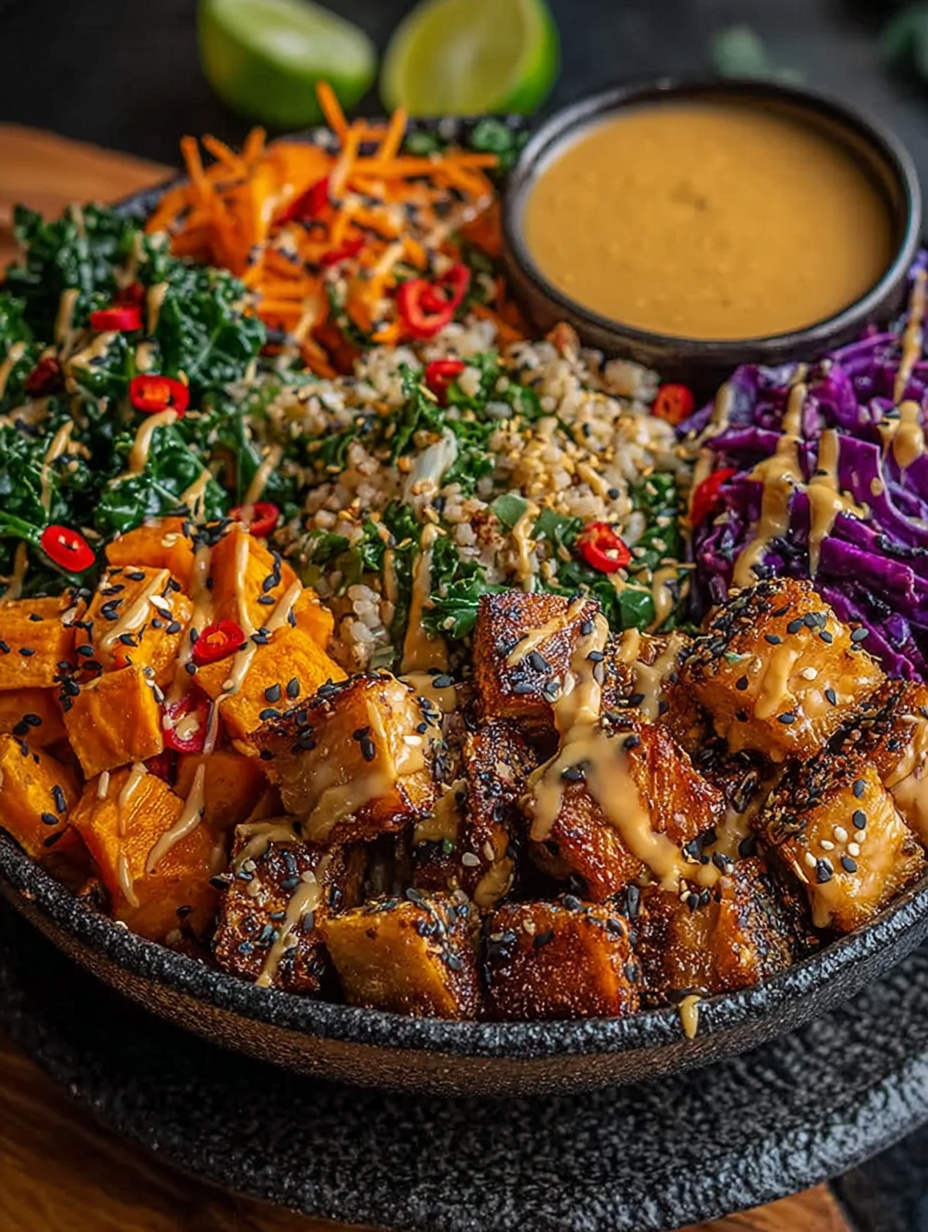
Maximize efficiency by setting up three stations: roasting the sweet potatoes, cooking the grain (quinoa or rice), and whipping up the dressing. Start the roasting first since it takes the longest, then multitask by preparing the cold toppings and the peanut sauce while the oven does the heavy lifting.
Add Your Touch
Feel free to customize this bowl! Swap the sweet potatoes for butternut squash or add broccoli florets for extra green goodness. For a richer flavor, toast the peanuts briefly before chopping them. You can also substitute the chicken with roasted firm tofu or grilled beef strips for protein variation.
Storing & Reheating
Store components separately in airtight containers for the best results, especially the dressing, which should be kept refrigerated. The roasted sweet potatoes and protein will last up to four days. Reheat the base and protein gently, adding the dressing and crisp vegetables just before serving to maintain freshness and crunch.
Chef’s Insider Tips for Success
I once served this bowl at a casual get-together, and a notoriously picky eater confessed he had scraped the bottom of the bowl clean, demanding the recipe immediately. That moment solidified this recipe as an absolute crowd-pleaser.
- To ensure crispy sweet potatoes, do not overcrowd the baking sheet; use two sheets if necessary, guaranteeing excellent air circulation for browning.
- Always use freshly squeezed lime juice in the dressing; the brightness of fresh citrus is non-negotiable and elevates the entire Thai peanut flavor profile.
- If the peanut dressing separates after refrigeration, don’t worry—just add a splash of warm water and whisk vigorously until it becomes smooth and emulsified again.
Frequently Asked Questions About Buddha Bowls
We often get asked about substitutions and advance preparation, so here are the answers to the most common queries.
Can I make the Thai Peanut Sweet Potato Buddha Bowl entirely vegan?
Absolutely. Simply swap the shredded chicken for chickpeas, roasted tofu, or edamame. Ensure you use maple syrup instead of honey in the dressing, making the entire dish plant-based and incredibly satisfying.
How long does the peanut sauce last in the refrigerator?
The peanut sauce is very stable and will last easily for up to one week when stored in an airtight container. If it thickens too much, stir in a tiny bit of warm water or lime juice to thin it out before serving.
What is the best way to prepare the grains (rice/quinoa) for this recipe?
For the fluffiest rice or quinoa, follow the package instructions precisely, focusing on the water-to-grain ratio. Allowing the grains to steam covered off the heat for 10 minutes after they finish cooking yields a perfect, non-sticky base for your bowl.
Can I use a different type of squash instead of sweet potato?
Yes, absolutely! Butternut squash, acorn squash, or even firm pumpkin cubes are excellent alternatives that hold up well to roasting and provide a similar earthy sweetness that pairs beautifully with the savory Thai flavors.
There you have it—a stress-free, customizable, and unbelievably flavorful meal ready to become your new favorite. TheDelicious Thai Peanut Sweet Potato Buddha Bowlis proof that eating healthy doesn’t mean sacrificing excitement or complexity. It’s an easy win for busy weeknights and a fantastic option for flavorful, satisfying meal prep. Get cooking, and enjoy the explosion of flavors!
Conclusion for Delicious Thai Peanut Sweet Potato Buddha Bowl
The journey to creating the perfect meal often feels complicated, but the Delicious Thai Peanut Sweet Potato Buddha Bowl proves that vibrant, layered flavor can also be effortless. We’ve combined the creamy comfort of roasted sweet potatoes with the satisfying crunch of fresh vegetables, all unified by that addictive, tangy, and slightly spicy peanut dressing. This recipe is a guaranteed crowd-pleaser, delivering maximum nutritional value and taste with minimal fuss. Whether you are meal prepping for a busy week or searching for a show-stopping dinner, this bowl is the answer. Go ahead, gather your ingredients, and prepare to embark on a savory adventure that will quickly earn a permanent spot in your culinary rotation.
Print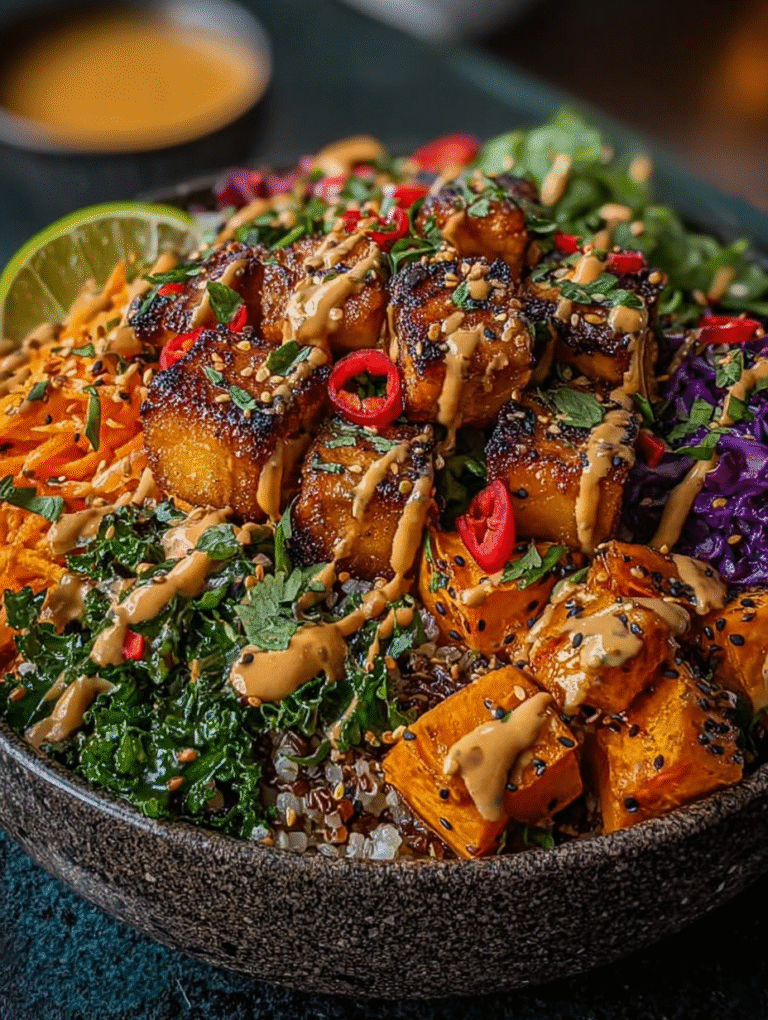
Delicious Thai Peanut Sweet Potato Buddha Bowl
Experience the ultimate balance! Sweet roasted tubers meet a smooth, savory peanut dressing over high-protein quinoa. This Buddha Bowl is simple to assemble and delivers rich Thai-inspired flavor.
- Total Time: 35 minutes
- Yield: 4 servings 1x
Ingredients
- 2 medium sweet potatoes, peeled and cubed
- 1 cup quinoa, uncooked
- 1 (15-oz) can chickpeas, rinsed and drained
- 1 tablespoon olive oil
- 1/4 cup natural creamy peanut butter
- 2 tablespoons low-sodium soy sauce (or tamari)
- 1 tablespoon fresh lime juice
- 1/4 cup chopped roasted peanuts
Instructions
- Step 1: Preheat the oven to 400°F (200°C). Toss the cubed sweet potatoes with olive oil, salt, and pepper. Spread them on a baking sheet and roast for 20-25 minutes, or until tender and lightly caramelized. While the sweet potatoes are roasting, cook the quinoa according to package directions.
- Step 2: Prepare the Thai Peanut Sauce by whisking together the peanut butter, soy sauce, lime juice, and 2-3 tablespoons of warm water until the sauce is smooth and creamy. Add more water if needed to reach a drizzleable consistency.
- Step 3: Lightly warm the rinsed chickpeas either on the stovetop or in the microwave. If using fresh greens (like kale or spinach), sauté them quickly in a pan with a small amount of oil until slightly wilted (optional).
- Step 4: Assemble the Buddha bowls by dividing the cooked quinoa among four bowls. Layer the roasted sweet potatoes, warmed chickpeas, and wilted greens (if used) on top of the quinoa base.
- Step 5: Drizzle a generous amount of the prepared Thai Peanut Sauce over all the ingredients in each bowl. Garnish immediately with the chopped roasted peanuts and a sprinkle of fresh cilantro (if desired) before serving.
Notes
- Store the Thai Peanut Sauce in a separate airtight container for up to 5 days, only drizzling it over the bowl components right before serving to keep the quinoa and roasted vegetables fresh and not soggy.
- When enjoying leftovers, gently reheat the quinoa and sweet potatoes together in a microwave or oven, but always add the peanut sauce cold after warming to preserve its smooth texture and bright lime flavor.
- For added brightness and crunch, try adding thinly sliced red bell pepper, shredded purple cabbage, or a sprinkle of toasted sesame seeds just before the final sauce drizzle.
- If your natural peanut butter is stiff, slightly heating the water used in the sauce and whisking vigorously will help the mixture emulsify quickly into that perfect drizzleable consistency.
- Prep Time: 15 minutes
- Cook Time: 20 minutes
- Method: Stovetop
- Cuisine: American
FAQs
Can I add protein to the Delicious Thai Peanut Sweet Potato Buddha Bowl?
Absolutely! Adding a protein source transforms this already satisfying meal into a powerhouse lunch or dinner. We highly recommend incorporating shredded chicken breast, which absorbs the peanut sauce wonderfully, or marinated, pan-seared beef strips for a heartier texture. If you prefer a plant-based option, crispy baked tofu or a scoop of black beans provides excellent balance and nutrition. Just make sure to prepare your protein separately and add it warm to the bowl before drizzling with the glorious Thai peanut dressing. This simple addition ensures you stay full and energized throughout the afternoon.
How should I properly store the components of this Thai Peanut Buddha Bowl for meal prep?
Meal prepping this bowl is incredibly simple and highly recommended. To maintain freshness and texture, you must store the components separately. Keep the cooked sweet potatoes and other roasted vegetables in one airtight container. Store the fresh greens (like spinach or kale) in a separate container, ensuring they are completely dry before storage. Crucially, the rich peanut sauce must be stored on its own in a small jar. When you are ready to eat, simply reheat the roasted items if desired, combine the components, and dress the bowl immediately before serving. This method prevents the greens from wilting and the sweet potatoes from getting soggy.
What are the best ways to adjust the spice level in the peanut sauce for the sweet potato bowl?
The beauty of the Thai peanut sauce is how easily you can customize its kick. If you love heat, simply increase the amount of Sriracha or add a touch of chili-garlic paste until it reaches your desired burn. Start with a quarter teaspoon and adjust up from there. Conversely, if you prefer a milder flavor profile, reduce or completely omit the chili component. Another fantastic method for achieving warmth without overwhelming heat is to use a pinch of ground ginger or a dash of apple cider vinegar, which brightens the flavor without requiring the use of high-heat peppers. Taste as you go to ensure maximum deliciousness.
Are there substitutions for peanuts in this Delicious Thai Peanut Sweet Potato Buddha Bowl?
If you or someone you are cooking for has an allergy or aversion to peanuts, don’t despair—you can still enjoy the creamy, nutty flavor profile of this buddha bowl! The easiest and most common substitution is sunflower seed butter or almond butter. Ensure that whichever alternative you choose is unsweetened and natural, as the flavor needs to meld with the savory and spicy elements of the sauce. You may need to slightly adjust the amount of liquid (like lime juice or water) to achieve the perfect dressing consistency, as different nut and seed butters vary in thickness. The resulting bowl maintains all the incredible texture and richness we love.





Leave a Comment