
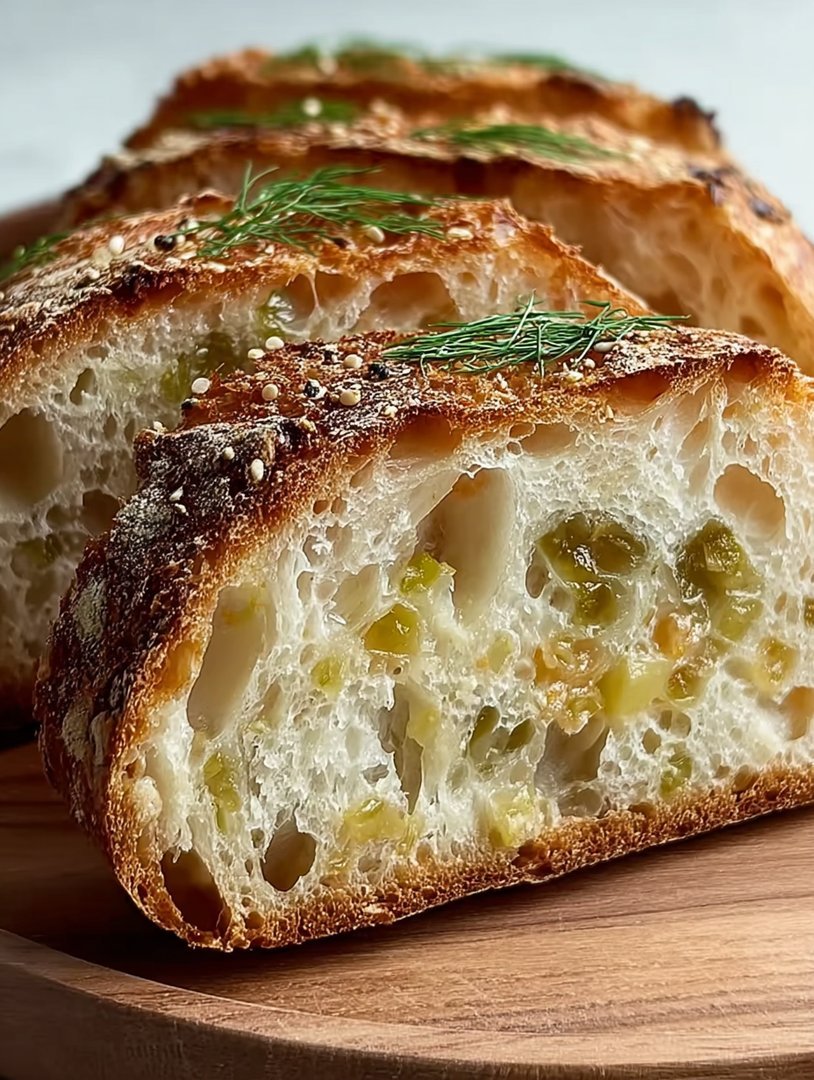
Remember that time you stared longingly into the pickle jar, thinking, “This brine needs to be bread?” Me too. ThisFlavorful Dill Pickle Sourdough Breadis the tangy, crunchy answer to your wildest carb fantasies, moving pickles firmly from side dish to main event.
Forget boring white loaves; this is a bread that bites back (in the best way possible). Prepare your taste buds for the ultimate fusion of sour funk and herbaceous crunch, resulting in a showstopping loaf that defies expectations and tastes truly phenomenal.
- This recipe leverages the power of active sourdough starter and pickle brine for an incredibly complex flavor profile with minimal fuss.
- Enjoy the perfect balance of tangy sourdough and sharp, refreshing dill, studded with crunchy pickle pieces throughout every slice.
- The distinctive green hue and visible pickle chunks ensure this loaf is the undeniable star of any charcuterie board or sandwich spread.
- Ideal for gourmet grilled cheeses or simply toasted with a smear of cream cheese, transforming any meal into an occasion.
The Curious Case of Pickle Brine and Flour
Baking sourdough is a journey of patience, hydration, and, often, surprising culinary detours. My detour started accidentally, of course. I was nurturing a starter named “Bartholomew” through a particularly humid August when I reached for water for the final mix. Distracted by a podcast detailing the merits of fermentation, I grabbed the closest clear liquid—a jar of extremely potent, home-cured dill pickle brine. I realized my mistake immediately, but Bartholomew was already ecstatic, bubbling furiously at the unexpected tang.
Instead of tossing the mixture, I decided to lean into the chaos. After all, the brine is essentially heavily salted, flavored water, and sourdough thrives on salt and flavor. What followed was a week of intense experimentation, resulting in this magnificentFlavorful Dill Pickle Sourdough Bread. It manages to capture the pungent, sharp, garlicky essence of a good kosher dill without turning the bread into a soggy mess. The key is balance: using just enough brine for hydration and layering the dill flavor with actual chopped pickles and dried herbs for textural interest. This loaf is simultaneously chewy, crusty, deeply sour, and surprisingly herbaceous—it’s the definition of an addictive food experience.
The beauty of this recipe lies in its unconventional nature. It turns basic ingredients into something extraordinary simply by embracing the pickle. While traditional sourdough often relies on subtle, nutty notes, this one shouts its intentions from the roof of the bread basket. Prepare yourself, because once your kitchen is filled with the aroma of baking bread mingled with vinegar and garlic, there is no going back. You’ll find yourself hoarding pickle brine just for your next baking session. The biggest challenge you will face is trying not to eat the entire loaf right out of the oven, because the aroma is dangerously compelling. We recommend cooling it completely, but we know you probably won’t listen.
Ingredients for Flavorful Dill Pickle Sourdough Bread
Here’s what you’ll need to make this delicious dish:
- Active Sourdough StarterEnsure your starter is robust, active, and recently fed—it should double in size within 4 to 6 hours for best results.
- Bread FlourHigh-protein bread flour provides the necessary gluten structure to support the added moisture and chunkiness of the pickle pieces.
- Filtered Water and Pickle BrineUse a 50/50 mix of water and high-quality dill pickle brine; the brine adds tang, salt, and crucial fermentation-boosting microbes.
- Fine Sea SaltSalt controls the fermentation rate and improves flavor; adjust slightly if your pickle brine is exceptionally salty.
- Chopped Dill PicklesFinely dice drained whole dill pickles; squeeze them dry with paper towels to prevent excess moisture from compromising the dough structure.
- Fresh or Dried DillAdd this for an extra burst of fresh, earthy dill flavor, complementing the tang from the brine.
- Garlic Powder (Optional)A small amount enhances the savory profile, giving a nod to traditional pickle seasoning without adding whole garlic cloves that might burn.
The full ingredients list, including measurements, is provided in the recipe card directly below.
Crafting Your Masterpiece: How to Make Flavorful Dill Pickle Sourdough Bread
Follow these simple steps to prepare this delicious dish:
Step 1: Mixing the Dough and Autolyse
In a large mixing bowl, combine the bread flour, the filtered water, and the pickle brine mixture. Stir these ingredients until no dry bits of flour remain, forming a shaggy dough consistency. Cover the bowl loosely and let the mixture rest for 30 minutes; this period, known as the autolyse, allows the flour to fully hydrate and gluten development to begin before the starter and salt are introduced.
Step 2: Incorporating Starter, Salt, and Flavor
After the autolyse, add the active sourdough starter and the measured salt to the dough. Mix thoroughly, kneading by hand for about five minutes until the ingredients are well integrated. Now, introduce the drained chopped dill pickles, fresh dill, and optional garlic powder. Gently fold these chunky additions into the dough, ensuring they are evenly distributed without tearing the forming gluten network excessively.
Step 3: Bulk Fermentation and Stretching
Cover the bowl and begin the bulk fermentation process, which typically lasts 4 to 6 hours at room temperature (around 72°F to 78°F). During this time, perform a set of four “stretch and folds” every 30 minutes during the first two hours. To stretch and fold, grab a section of the dough, gently pull it upwards without tearing, and fold it over itself. Repeat this action four times around the dough’s circumference. The dough should increase in volume by approximately 30-50% and look noticeably airy when complete.
Step 4: Shaping and Cold Proofing
Gently turn the fermented dough out onto a lightly floured surface. Shape the dough into a tight round or oval shape, depending on your preferred baking vessel. Place the shaped dough into a well-floured banneton basket, seam-side up. Cover the banneton with plastic wrap or place it inside a sealed plastic bag, then transfer it to the refrigerator for a cold proof lasting 12 to 18 hours. This cold period develops complexity and firms the dough for easier scoring and baking.
Step 5: Baking the Flavorful Loaf
Preheat your oven, along with a Dutch oven or baking stone, to 500°F (260°C) for at least one hour. Carefully remove the dough from the banneton and score the top with a sharp razor blade or lame. Place the loaf inside the hot Dutch oven, cover it, and immediately reduce the temperature to 450°F (230°C). Bake covered for 20 minutes to trap steam, creating a magnificent oven spring and thin crust. Remove the lid and continue baking for another 25 to 30 minutes until the crust is a deep golden brown and the internal temperature reaches 200–210°F (93–99°C).
Transfer to plates and drizzle with sauce for the perfect finishing touch. Just kidding! Place the cooling loaf onto a wire rack to cool completely for at least two hours before slicing—slicing early releases steam and results in a gummy texture.
Advanced Tips for Perfecting Your Tangy Bread
While the process of baking sourdough can sometimes feel like a high-stakes chemistry experiment, a few simple adjustments can significantly elevate your result. TheFlavorful Dill Pickle Sourdough Breadrelies heavily on the quality of the brine and the strength of the starter, so paying attention to these details is crucial for success. Never use brine from pickles that contain artificial colors or sweeteners; look for natural, fermented dill pickles, as their brine will have the desirable microbial activity and clean flavor that complements the sourdough culture.
Adjusting Hydration Based on Brine
Pickle brine, especially homemade brine, can vary wildly in salinity and viscosity. If your dough feels too stiff after the initial mix, resist the urge to add plain water. Instead, use a tiny splash more brine. If the dough seems overly slack, reduce the brine-to-water ratio in your next batch. Sourdough dough should be sticky but manageable; too much liquid will make shaping nearly impossible and result in a flatter loaf.
Achieving the Ideal Crust and Crumb
The secret to that crispy, shatteringly thin sourdough crust is steam, which is why the Dutch oven method is essential here. If you do not have a Dutch oven, you can achieve a good result by placing a pan filled with hot water on the bottom rack of your oven during the first 20 minutes of baking. This humidity prevents the crust from setting too quickly, allowing the dough to expand fully. For a beautiful, open crumb texture, make sure you don’t over-handle the dough during shaping; be firm but gentle to avoid degassing the precious air bubbles you worked so hard to create during bulk fermentation.
Serving Suggestions for Maximum Impact
This incredible dill sourdough masterpiece is far too exciting to waste on plain butter. Slice it thickly and use it as the base for a Reuben sandwich (minus the traditional restricted meats, of course, using savory turkey pastrami or roasted beef instead). It pairs magically with smoked salmon, cream cheese, and capers, replacing the traditional bagel with a complex, tangy alternative. For a simple appetizer, toast slices until crisp and top with melted Swiss cheese or a dollop of goat cheese and a sprinkle of fresh dill. The savory, tangy, and herbaceous notes in the bread make it an exceptional pairing for rich, creamy toppings that counterbalance the pickle’s sharpness. Enjoy the compliments when you reveal your secret ingredient!
The culinary world is often divided into staunch traditionalists and rogue experimentalists. I, dear reader, belong firmly in the latter camp, especially after realizing that the average, innocent-looking sandwich loaf was quietly judging my flavor choices. It was boring. It was beige. It needed a revolution. And that revolution arrived, surprisingly, in the form of a jar of sour, crunchy, dill-infused pickles that had been sitting forgotten in the back of my fridge.
I am talking about a bread so fiercely delicious, so outrageously bold, that it demands attention. This is not just bread; it’s an adventure. It is the Flavorful Dill Pickle Sourdough Bread, the undisputed champion of the toast rack, designed for those who believe pickles belong on everything, including your morning slice.
The Accidental Discovery of Sunshine on a Plate
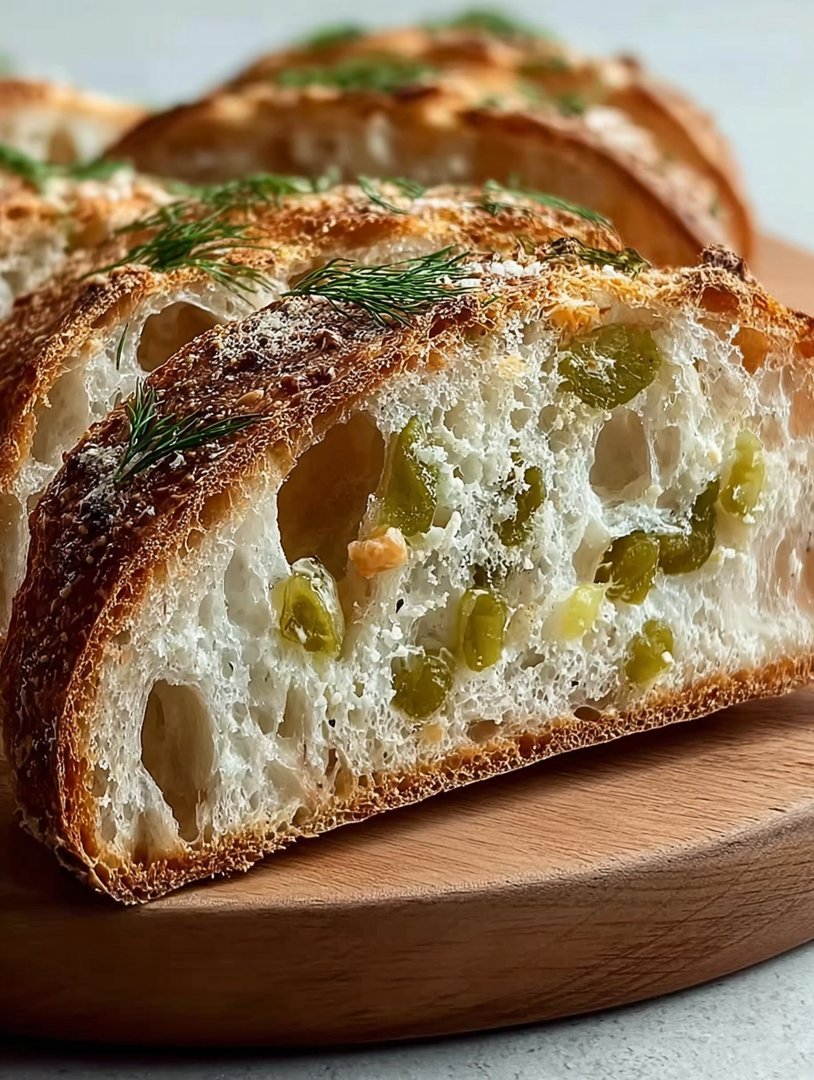
I had accidentally dropped an entire jar of brine-soaked pickles near my active sourdough starter jar. Instead of cleaning it, I saw potential. What if that tangy crunch and herbal dill could translate into a truly unforgettable, Flavorful Dill Pickle Sourdough Bread? The result was pure, shocking joy.
Why This Tangy Loaf Works Wonders
Sourdough is already a flavor powerhouse, relying on wild yeast and bacteria to create complex tang and structure. Pickles and their brine naturally complement this profile, adding a layer of sharp acidity and herbaceousness that plain water simply cannot replicate. The chopped pickles provide delightful bursts of texture, preventing the bread from ever becoming monotonous.
Moreover, the moisture content from the pickles actually helps keep the resulting crumb incredibly soft and moist for days, extending the lifespan of the loaf far beyond that of a standard country bread. If you love the complexity of great sourdough and the zing of a crunchy pickle, prepare for your new obsession.
The Essential Ingredients for Pickle Perfection
This recipe relies on quality ingredients, so choose a pickle brand you genuinely love. The pickle brine acts as part of the liquid component, intensifying the overall dill flavor.
- 100g active, bubbly sourdough starter (100% hydration)
- 350g lukewarm water (or mixed water and pickle brine, see notes)
- 500g strong bread flour (high protein content is key)
- 10g fine sea salt
- 120g dill pickles, thoroughly drained and finely chopped
- 2 tablespoons fresh dill, chopped
Crafting the Ultimate Dill Pickle Bread
Achieving a beautiful, airy crumb in a sourdough that contains wet inclusions like pickles requires a slight deviation from traditional methods. Patience is your most important ingredient here; do not rush the fermentation process.
Mixing the Dough and Autolyse
In a large mixing bowl, combine the flour and the lukewarm water/brine mixture. Mix until just combined into a shaggy mass—no dry streaks should remain. Cover the bowl and let it rest for 30 minutes. This resting period, known as autolyse, allows the flour to fully hydrate and gluten development to begin before the salt and starter are introduced.
Adding the Starter and Salt
After the autolyse, add the active starter and the salt to the dough. Squeeze and fold the dough gently for about five minutes until the ingredients are fully integrated. The dough will become slightly firmer as the salt tightens the gluten structure. Cover the dough and let it rest for another 30 minutes before starting the bulk fermentation.
The Bulk Fermentation and Stretching
The bulk fermentation should last 4 to 5 hours at room temperature (around 72°F/22°C), depending on your kitchen temperature. During the first two hours, perform three sets of coil folds every 30 minutes. Coil folds dramatically increase the dough’s strength and structure.
Perfecting the Cooking Process
For the best crumb, always incorporate the chopped dill pickles and fresh herbs during the second bulk fermentation fold, not initially. This prevents tearing the gluten structure too early. Use a Dutch oven preheated to 500°F (260°C) for the perfect oven spring and crust.
Incorporating the Crunch
After the second set of coil folds, gently spread the dough and scatter the chopped dill pickles and fresh dill across the surface. Fold the dough over itself to distribute the inclusions evenly. Perform the final coil fold 30 minutes later, ensuring all the pickle pieces are tucked securely within the dough matrix. Allow the remaining bulk fermentation time to finish.
Shaping and Cold Proofing
Once the dough has increased by about 30–50% in volume, gently turn it out onto a lightly floured surface. Shape the dough into a tight round (boule) or an oval (batard), ensuring you create enough surface tension for a beautiful oven spring. Place the shaped dough seam-side up in a floured proofing basket (banneton). Cover it tightly and refrigerate for 12 to 18 hours. This cold proofing stage deepens the flavor and makes the dough easier to handle.
The Dramatic Bake
Preheat your oven to 500°F (260°C) with your Dutch oven inside for one hour. When the oven is fully heated, carefully score the top of the chilled loaf with a sharp razor blade. Place the dough into the hot Dutch oven, cover it, and immediately reduce the temperature to 450°F (230°C).
Bake covered for 20 minutes to trap the steam, which gives the crust its incredible elasticity and volume. After 20 minutes, remove the lid and reduce the temperature to 425°F (220°C). Continue baking uncovered for another 25 to 30 minutes until the crust is a deep golden brown. The internal temperature should read 208°F (98°C).
Remove the loaf and transfer it to a cooling rack immediately. Do not slice this magnificent, Flavorful Dill Pickle Sourdough Bread until it has cooled completely, which can take up to two hours. Slicing too early releases the steam, leading to a gummy interior.
Add Your Touch
Want to elevate this tangy loaf? Try swapping some white flour for rye flour for a deeper flavor profile. A sprinkle of dried onion flakes or a tablespoon of sharp yellow mustard seed added during mixing will amplify that iconic pickle flavor spectacularly.
Storing & Reheating
Store this delightful dill pickle bread at room temperature, wrapped tightly, for up to four days. To refresh, spritz slices with a little water and toast lightly, or wrap the whole loaf in foil and bake briefly at 350°F (175°C) to revive the crust.
Expert Tips for Flawless Sourdough
-
Drain the pickles meticulously before chopping; excess moisture makes the dough overly sticky and difficult to manage during the final shaping process.
-
Use high-quality pickle brine sparingly, mixing it with fresh water to ensure the salinity doesn’t inhibit your starter’s vital activity during fermentation.
-
Check your starter’s strength by performing the float test; if a small piece floats in water, it is ready to handle the heavy inclusions like the pickles and herbs.
The first time I served this unique loaf, my neighbor, a sourdough skeptic, took a bite and simply stared. He immediately asked for the recipe and admitted it was the best thing he had ever eaten off my counter.
Conclusion for Flavorful Dill Pickle Sourdough Bread
Creating this magnificent dill pickle sourdough bread is a truly rewarding experience, transforming simple ingredients into a complex, savory masterpiece. The combination of classic sourdough tang and the salty, acidic crunch of pickles makes for a deeply satisfying loaf that elevates any meal. Remember to respect the process: meticulous draining of the pickles and precise timing during the bulk fermentation are crucial for achieving that perfect, open crumb. Whether you enjoy it toasted, slathered in butter, or alongside a hearty soup, this tangy loaf promises a delicious adventure for your taste buds. Go forth, embrace the tang, and share this truly Flavorful Dill Pickle Sourdough Bread with everyone you know.
Print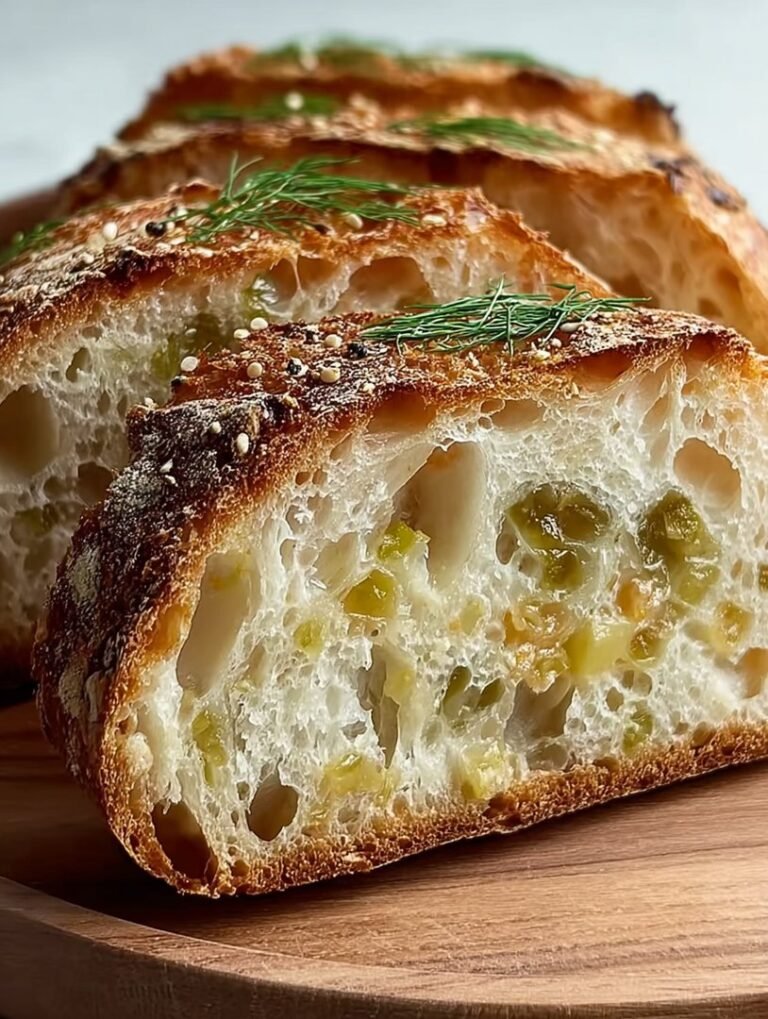
Flavorful Dill Pickle Sourdough Bread
Tangy brine meets active starter! This dill pickle sourdough boasts a complex sour profile and tender crumb, studded with salty pickles. Master the autolyse and stretch-and-fold method.
- Total Time: 35 minutes
- Yield: 4 servings
Ingredients
- Active Sourdough Starter (fed and active): 100 grams
- High-Protein Bread Flour: 400 grams
- Warm Dill Pickle Brine (strained, reserved from jar): 280 grams
- Fine Sea Salt: 9 grams
- Finely Chopped Dill Pickles (pat dry): 100 grams
- Dried Dill Weed: 1 tablespoon
- Garlic Powder: 1 teaspoon
- Cracked Black Pepper (optional): 1/2 teaspoon
Instructions
- Step 1: In a large bowl, whisk together the warm pickle brine and the active sourdough starter until dissolved. Add the bread flour and mix until a shaggy mass forms, cover, and let rest (autolyse) for 45 minutes.
- Step 2: Sprinkle the salt, dried dill, garlic powder, and pepper over the dough, followed by the chopped pickles. Work the ingredients thoroughly into the dough using wet hands. Begin bulk fermentation, performing three sets of stretch and folds every 30 minutes, ensuring the dough remains covered between folds. Allow the dough to rest for 3-4 hours total, or until it has visibly increased in volume by 30-50%.
- Step 3: Gently turn the dough out onto a lightly floured surface and perform a preliminary shaping. Bench rest for 20 minutes, then perform the final shaping into a tight boule. Place the dough seam-side up into a well-floured banneton (proofing basket). Cover tightly with plastic wrap and cold proof in the refrigerator for 12-18 hours.
- Step 4: Preheat your oven to 500°F (260°C) with a Dutch oven placed inside for at least 45 minutes. Carefully remove the hot Dutch oven, invert the cold dough onto parchment paper, and score the top deeply with a razor blade. Lift the dough and parchment paper into the Dutch oven.
- Step 5: Place the lid back on the Dutch oven and bake for 20 minutes. Reduce the oven temperature to 450°F (230°C), remove the lid, and continue baking for an additional 25-30 minutes, or until the crust is deeply golden brown. Remove the bread and cool completely on a wire rack for at least 2 hours before slicing.
Notes
- To maintain the best crust integrity, store completely cooled bread wrapped tightly in a linen bag or bread box at room temperature for up to three days, or slice and freeze for longer storage.
- If the crust loses its crunch, refresh individual slices by toasting, or place the whole loaf in a 350°F (175°C) oven for 5-7 minutes to revive the texture and warmth.
- This savory loaf pairs exquisitely with creamy soft cheeses like goat cheese or whipped cream cheese, and makes a fantastic, zesty base for a deluxe grilled cheese sandwich or a Reuben.
- Since the pickle additions significantly impact the final dough structure, ensure you pat the chopped dill pickles thoroughly dry before mixing them in; too much excess liquid makes the dough overly sticky and difficult to shape.
- Prep Time: 15 minutes
- Cook Time: 20 minutes
- Method: Stovetop
- Cuisine: American




Leave a Comment