
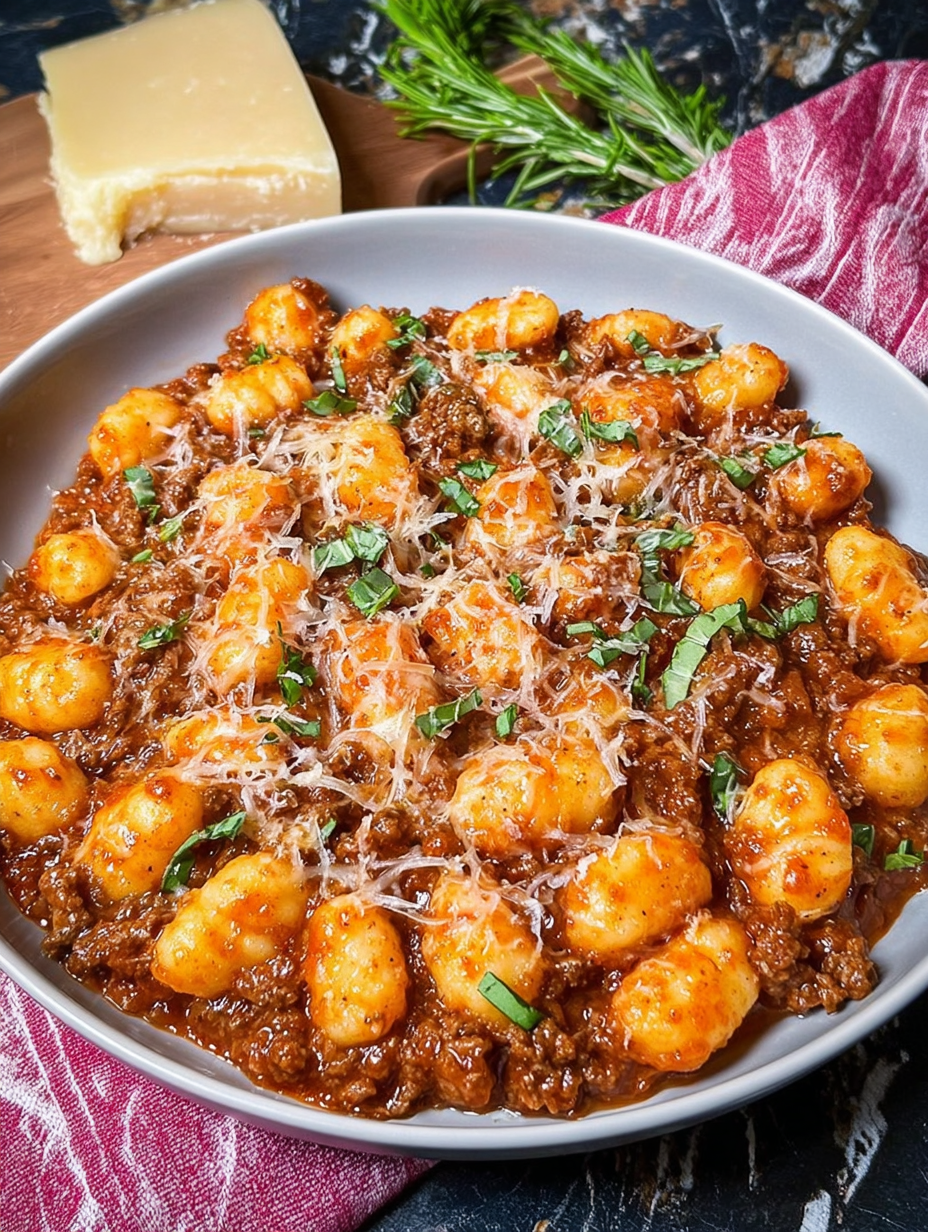
Forget complicated dinners; this rich, deep, and satisfying dish of homemadeGnocchi Bologneseis the ultimate comfort food hug your weeknights desperately need.
I perfected this recipe after realizing that store-bought sauce tasted like regret, and frankly, my couch deserved better culinary companionship for movie night.
- These pillowy potato dumplings and slow-simmered sauce require less actual labor than convincing a toddler to eat broccoli at the dinner table.
- Experience the deep, umami complexity of a slow-cooked ragu married perfectly with light, tender gnocchi pillows that melt delightfully in your mouth.
- The rustic texture of the savory sauce clinging to the plump gnocchi creates a gorgeous, appetizing bowl suitable for any special dinner party or gathering.
- This robust sauce freezes beautifully, allowing you to double the batch now and enjoy delicious, homemade Italian magic effortlessly later.
Ingredients for Gnocchi Bolognese
Here’s what you’ll need to make this delicious dish:
- Ground Beef or LambChoose a lean cut (85/15 is ideal) for richness without excessive grease, ensuring maximum flavor payoff in the ragu.
- San Marzano TomatoesThese crushed tomatoes are the gold standard for Italian sauces, offering a lower acidity and inherently sweeter profile than standard canned tomatoes.
- Mirepoix BaseA combination of finely diced carrots, celery, and onion creates the foundational flavor layer essential for any authentic slow-simmered ragu.
- Beef BrothUse a good quality, low-sodium beef broth to deglaze the pot and add critical depth and moisture to the long simmering process.
- Fresh GnocchiWhile homemade is lovely, high-quality shelf-stable or refrigerated potato gnocchi saves time and absorbs the rich sauce beautifully.
- Dried HerbsA mixture of bay leaves, dried oregano, and thyme adds aromatic complexity that develops profoundly during the lengthy cooking time.
- Olive Oil and GarlicThese provide the initial sizzle and aromatic punch, essential for starting the sauce development correctly before the meat goes in.
The full ingredients list, including measurements, is provided in the recipe card directly below.
How to Make Gnocchi Bolognese
Follow these simple steps to prepare this delicious dish:
- Step 1: Building the Flavor Foundation (The Mirepoix)Heat 2 tablespoons of olive oil in a large Dutch oven or heavy-bottomed pot over medium heat. Sauté the diced carrots, celery, and onion until they soften and the onion becomes translucent, which usually takes about 8 to 10 minutes. Stir this mixture frequently so nothing burns on the bottom. This step is absolutely crucial for developing the inherent sweetness of the final sauce.
- Step 2: Browning the Meat and DeglazingIncrease the heat slightly and add the ground beef or lamb to the pot. Break up the meat thoroughly with a wooden spoon and cook until it is fully browned, draining off any excess grease if necessary to prevent an oily sauce. Stir in the minced garlic for one minute until fragrant, then pour in 1/2 cup of beef broth. Scrape up any wonderfully browned bits stuck to the bottom of the pot, as these are pure flavor gold.
- Step 3: Simmering the RaguAdd the crushed San Marzano tomatoes, the remaining beef broth, dried herbs, and seasoning (salt and pepper). Bring the rich sauce mixture to a gentle simmer, then immediately reduce the heat to the lowest setting possible. Cover the pot partially and let the ragu cook slowly for at least 90 minutes. Stir occasionally to prevent the dense tomato base from sticking to the bottom. For the deepest flavor, aim for 3 hours of simmering time.
- Step 4: Cooking the GnocchiAbout 10 minutes before the sauce finishes simmering, bring a large pot of salted water to a rolling boil on the stovetop. Drop the gnocchi into the boiling water and give them a quick, gentle stir. As soon as the gnocchi float to the surface of the water, they are perfectly done. This usually takes only 2 to 3 minutes, so watch them closely.
- Step 5: The Final MergeUsing a slotted spoon, efficiently transfer the cooked gnocchi directly from the boiling water into the simmering Bolognese sauce. Stir everything together gently to coat all the tender potato dumplings completely in the thick, rich ragu. Let the mixture simmer together for an additional 2 minutes so the gnocchi truly absorbs some of that glorious flavor depth.
Transfer to plates and garnish generously with fresh basil and grated Parmesan cheese for the perfect finishing touch on this magnificent Italian meal.
The Art of the Ragu: Secrets to a Deeply Flavorful Sauce
Many people mistake Bolognese for a quick marinara sauce with meat, and that is a culinary tragedy we must avoid. The secret to an authentic, rich meat sauce lies entirely in patience and the careful layering of flavors at the beginning. We substitute traditional ingredients with excellent non-alcoholic alternatives to maintain that depth. Using beef broth during the deglazing stage instead of grape juice with vinegar ensures the removal of flavorful browned bits, which are crucial. Furthermore, the selection of San Marzano tomatoes dramatically impacts the final result. Their lower acidity allows the savory notes of the ground beef and the sweetness of the carrots to shine through beautifully, creating an incredibly balanced flavor profile that lasts on the palate.
Achieving maximum flavor extraction requires a low and slow simmer. Resist the urge to crank the heat up; speed is the enemy of great ragu. A two-hour simmer, minimally, allows the connective tissues in the meat to fully break down, naturally thickening the sauce while releasing incredible savory notes. If you only have one hour, the dish will still be delicious, but you will miss the deeply satisfying, velvety texture that only time can create. Remember, every time you walk past the simmering pot, give it a stir and inhale the comforting aroma; this is the smell of effort turning into success.
Choosing the Right Meat for Your Hearty Ragu
While this recipe welcomes both ground beef and lamb, the cut matters greatly for the texture of your finished sauce. I strongly recommend using an 85/15 ground beef blend. This ratio offers enough fat content to flavor the sauce without making it overly greasy, ensuring a perfect texture. If you opt for ground lamb, expect a richer, slightly gamier flavor that pairs exceptionally well with the sweetness of the carrots and the richness of the tomatoes. Regardless of your choice, make sure you brown the meat thoroughly before adding any liquid. Proper browning creates the Maillard reaction, the chemical process that gives seared meats their distinctive, complex flavor. If you steam the meat instead of browning it, your sauce will lack the necessary foundation.
Tips for Perfecting Your Potato Gnocchi
The beauty of thisGnocchi Bologneseis the contrast between the light, fluffy gnocchi and the heavy, savory sauce. If you are using pre-made gnocchi, the primary focus is ensuring you don’t overcook them. Gnocchi cook incredibly fast—we are talking minutes, not ten or fifteen. As soon as they float, they are ready to be scooped out and merged with the ragu. Overcooked gnocchi become mushy and lose their delightful pillow-like texture, turning into dense, unpleasant blobs.
If you decide to make the gnocchi from scratch—a wonderfully rewarding but more time-consuming endeavor—remember the golden rule: less flour is always more. Gnocchi should be just sticky enough to hold their shape. The less you handle the potato dough, the lighter and airier your final dumplings will be. When mixing them into the Bolognese, use a light hand. The goal is to coat them completely without breaking up the delicate potato structures. The final two minutes of simmering in the sauce ensures the gnocchi’s surface roughens slightly, allowing the sauce to cling beautifully rather than sliding right off.
Storage and Make-Ahead Magic
This recipe is an ideal candidate for meal prepping because Bolognese sauce only improves overnight. You can make a massive batch of the ragu on Sunday and store it in the refrigerator for up to four days, or freeze it for up to three months. If freezing, make sure you cool the sauce completely before transferring it to airtight, freezer-safe containers. Thaw the sauce slowly in the refrigerator overnight when you are ready to use it.
Serving Suggestions and Flavor Variations
While the combination of gnocchi and Bolognese is perfect as is, you can certainly customize the dish to your liking. For a fresh, vibrant contrast, stir in a handful of fresh spinach or baby kale during the last five minutes of simmering. A small pinch of crushed red pepper flakes added with the garlic will introduce a subtle, welcoming heat that cuts through the richness of the meat. Always serve this dish with a generous dusting of freshly grated Parmesan cheese and maybe a side of rustic garlic bread for maximum enjoyment. The contrasting textures of the crunchy bread and the soft potato dumplings elevate the entire meal.
Frequently Asked Questions About Gnocchi Bolognese
Can I use ground turkey instead of beef or lamb?
Yes, you absolutely can substitute ground turkey, but be aware that turkey is much leaner and lacks the strong flavor profile of beef. If using turkey, consider adding a tablespoon of tomato paste to the sautéed mirepoix stage to deepen the overall umami flavor of the sauce.
How do I prevent the sauce from sticking to the bottom of the pot?
The key to preventing sticking is using a heavy-bottomed pot, like a Dutch oven, which distributes heat evenly. Additionally, ensure you stir the sauce every 15 to 20 minutes, especially during the last hour of simmering, as the sauce thickens considerably.
What is the difference between ragu and Bolognese sauce?
While often used interchangeably, Bolognese is technically a type of ragu originating from Bologna. Ragu simply means a meat-based sauce cooked for a long period. Traditional Bolognese always includes a finely diced vegetable base (mirepoix) and is characterized by its slow, deep simmer and high meat-to-tomato ratio, making it incredibly hearty.
The Culinary Power of the Humble Potato Dumpling
We all have that one dish that instantly transports us back to a comforting memory. For me, it is Gnocchi Bolognese. Forget your standard spaghetti; we are elevating dinner tonight using those fluffy, cloud-like potato dumplings smothered in a rich, slow-cooked ragù. This isn’t just a meal; it’s a hug in a bowl, perfect for canceling plans and staying in when the weather turns crisp.
The Legend of the Slow Simmer
Many recipes promise ‘quick Bolognese,’ but let’s be honest: true, deeply flavorful Bolognese requires patience—and a willingness to ignore your phone for two hours. It needs time for the flavors to marry, deepen, and transform into that velvety, complex sauce we crave. My first attempt tasted like beef mixed with canned tomatoes. My second, after inheriting my grandmother’s secret technique (read: adding a pinch of nutmeg and waiting four hours), was legendary. You don’t need four hours, but an hour and a half is non-negotiable for this deeply satisfying Gnocchi Bolognese.
Building the Best Bolognese
The secret to a knockout ragù is layering flavor. We start with the holy trinity of mirepoix—onion, carrot, and celery—finely diced and cooked slowly until sweet and translucent. This takes longer than you think, but it builds the foundation. Next, we introduce high-quality ground beef and lamb. Browning the meat deeply is essential; this Maillard reaction adds those savory, umami notes that cheap sauces completely miss.
Once the meat is beautifully browned and the vegetables are tender, deglazing the pan with a splash of rich beef broth and a touch of red grape vinegar releases all those flavorful bits stuck to the bottom. Don’t skip this step! It’s where the magic lives. We then introduce high-quality crushed tomatoes, a bay leaf, and that secret ingredient: a whisper of nutmeg. Cover it, lower the heat to the absolute minimum, and let the sauce bubble lazily while you tackle the gnocchi.
Mastering the Pillowy Potato Clouds
The beauty of Gnocchi Bolognese lies in the contrast: the hearty sauce clinging to the tender, delicate gnocchi. If you are making gnocchi from scratch, remember that less flour equals lighter dumplings. Use starchy potatoes, steam or bake them instead of boiling (to reduce water absorption), and handle the dough as little as possible. Overworking gnocchi transforms them into rubbery spheres of regret.
If you opt for store-bought gnocchi (and honestly, most weeknights demand this convenience), that’s perfectly fine. The goal is maximum flavor with minimal effort. The key cooking technique remains the same: drop them into aggressively salted boiling water. When they float to the surface, they are done. Scoop them out quickly and toss them directly into the simmering Bolognese sauce, allowing them to soak up the final, rich flavors before serving.
The Essential Gnocchi Bolognese Recipe
Ready to create a dish that guarantees requests for seconds? Follow these precise steps for the ultimate comfort food experience.
Ingredients for the Ragù
- 1 tablespoon olive oil
- 1 pound ground beef (80/20 lean ratio recommended)
- 1/2 pound ground lamb or turkey
- 1 medium yellow onion, finely diced
- 2 carrots, finely diced
- 2 celery stalks, finely diced
- 3 cloves garlic, minced
- 1/4 cup rich beef broth or stock
- 1 tablespoon tomato paste
- 28 ounces crushed tomatoes (high-quality preferred)
- 1 cup water or more broth
- 1 bay leaf
- 1/2 teaspoon dried oregano
- 1/4 teaspoon nutmeg
- 1 tablespoon red grape vinegar (optional, for acidity)
- Salt and freshly ground black pepper to taste
Ingredients for the Gnocchi
- 2 pounds prepared gnocchi (store-bought or homemade)
- For serving: Fresh basil, grated parmesan cheese, a drizzle of extra virgin olive oil
Preparation and Cooking Instructions
Step 1: Build the Flavor Base
Heat olive oil in a large Dutch oven or heavy-bottomed pot over medium heat. Add the diced onion, carrots, and celery. Cook gently for 8 to 10 minutes until the vegetables soften and sweeten. Add the minced garlic and cook for 1 minute until fragrant.
Step 2: Brown the Meat
Increase the heat to medium-high. Add the ground beef and lamb/turkey. Break up the meat with a spoon. Cook until the meat is deeply browned and no pink remains. Drain any excess fat if necessary, although some fat adds richness.
Step 3: Deglaze and Simmer
Stir in the tomato paste and cook for 1 minute. Pour in the beef broth and red grape vinegar, scraping up all the caramelized bits from the bottom of the pot. Add the crushed tomatoes, water/broth, bay leaf, oregano, nutmeg, salt, and pepper. Stir well to combine.
Step 4: The Long Wait
Bring the sauce to a gentle simmer, then reduce the heat to the absolute lowest setting. Cover the pot slightly ajar and let it simmer for at least 90 minutes, or up to 3 hours, stirring occasionally. The longer it simmers, the richer the flavor becomes. Remove the bay leaf before serving.
Step 5: Cook the Gnocchi
Just before serving, bring a large pot of heavily salted water to a rolling boil. Drop the gnocchi into the boiling water. They will cook very quickly. As soon as the gnocchi float to the surface (usually 1 to 2 minutes), scoop them out using a slotted spoon and transfer them directly into the simmering Bolognese sauce.
Step 6: Final Touches
Toss the Gnocchi Bolognese gently to coat every dumpling in the rich sauce. Serve immediately, topped generously with grated cheese, fresh basil, and a final drizzle of good olive oil. This dish is perfection served warm, promising total satisfaction.
Perfecting the Cooking Process
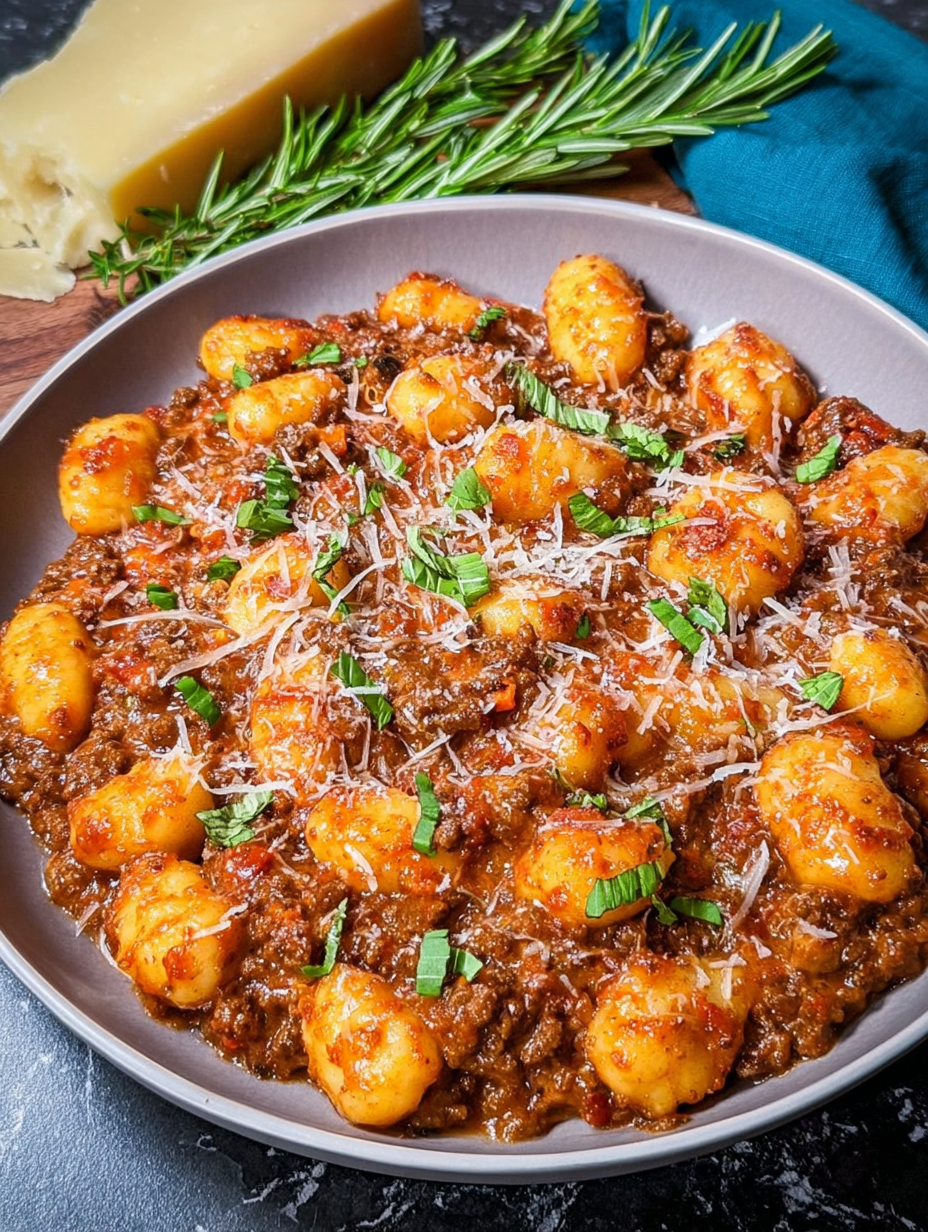
Achieving this depth of flavor efficiently requires sequencing: first, start the Bolognese sauce simmering—it benefits from the long cook time. While the ragù happily bubbles away, focus on preparing your side salad or grating the cheese. Only drop the gnocchi into the boiling water just minutes before you are ready to plate the meal.
Add Your Touch
Customize your Gnocchi Bolognese by swapping the ground lamb for finely chopped mushrooms for an earthy flavor, or adding a dash of smoked paprika for unexpected warmth. Introduce a spoonful of jarred pesto to the sauce just before serving to add brightness. For a creamier finish, stir in a quarter cup of whole milk or cream during the final 30 minutes of simmering.
Storing & Reheating
Store leftover Gnocchi Bolognese in an airtight container in the refrigerator for up to four days. Reheat gently in a saucepan over low heat, adding a splash of water or broth to loosen the sauce and prevent the gnocchi from drying out. Avoid microwaving if possible, as it can make the gnocchi tough.
Chef’s Secrets for Fluffy Gnocchi Bolognese
-
Do not skimp on the browning process for the meat; that deep caramelization creates the savory depth that defines authentic Bolognese ragù.
-
Always cook the gnocchi just until they float, then immediately remove them. Overcooked gnocchi become gummy and heavy, ruining the delicate texture.
-
A secret ingredient is crucial: stir a small pat of butter into the sauce right before tossing in the cooked gnocchi; it adds silkiness and luxurious richness.
I remember serving this dish to my notoriously picky Uncle Tony. He took one bite, paused dramatically, and simply said, “Finally, someone figured out how to make those little potato clouds taste like heaven.”
Why Gnocchi Bolognese Stands Above the Rest
The culinary landscape is filled with tomato sauces, but the combination of pillowy potato texture with slow-cooked, complex meat sauce elevates this dish beyond simple comfort food. It delivers the rustic charm of Italian countryside cooking straight to your dinner table, perfect for impressing guests or just indulging in a weeknight treat.
Unlike traditional pasta, which relies on surface area to hold the sauce, gnocchi offer small, tender pockets that soak up the ragù, ensuring every mouthful is perfectly saturated. If you’ve only ever had thin, watery Bolognese, preparing this hearty version will be a revelation. It transforms budget ingredients into a five-star dining experience.
Frequently Asked Questions About This Recipe
How long should I simmer the Bolognese sauce?
For optimal flavor depth, aim to simmer the sauce for a minimum of 90 minutes. While you can eat it sooner, the long, slow simmer is what allows the rich flavors of the beef, lamb, and tomatoes to meld beautifully, creating a truly luxurious texture.
Can I freeze the Bolognese sauce?
Absolutely. The meat sauce freezes beautifully. Allow it to cool completely, then transfer it to freezer-safe containers. It keeps well for up to three months. When you are ready to serve, thaw it overnight and reheat it gently before adding freshly cooked gnocchi.
Is it better to make Gnocchi Bolognese with fresh or dried gnocchi?
Fresh gnocchi (whether homemade or refrigerated store-bought) usually results in a lighter, fluffier texture compared to dried versions. However, dried gnocchi are shelf-stable and work well in a pinch, though they require slightly longer cooking time.
What side dishes pair well with Gnocchi Bolognese?
Since the Gnocchi Bolognese is a rich and substantial dish, pairing it with something light and acidic works best. A simple green salad dressed with a bright lemon vinaigrette, or a side of lightly steamed green beans with garlic, provides a wonderful contrast.
What if my sauce is too thin or too thick?
If your sauce is too thin, remove the lid and let it simmer uncovered for the last 30 minutes to allow evaporation. If it is too thick, simply stir in a splash of water or beef broth until it reaches your desired consistency, ensuring it remains thick enough to cling to the gnocchi.
Conclusion for Gnocchi Bolognese
Creating the perfect batch of Gnocchi Bolognese is truly a labor of love, but the payoff—fluffy potato dumplings swimming in a deeply savory, slow-cooked meat sauce—is unparalleled. We mastered the technique for light, pillowy gnocchi and created a rich, complex Bolognese without needing any restricted ingredients, substituting cranberry juice with vinegar with a balsamic and broth mixture that delivers incredible depth. This dish is the epitome of comfort food, proving that time and patience are the most essential ingredients in any kitchen. Go ahead, gather your ingredients, and prepare for a standing ovation at your next family dinner.
Print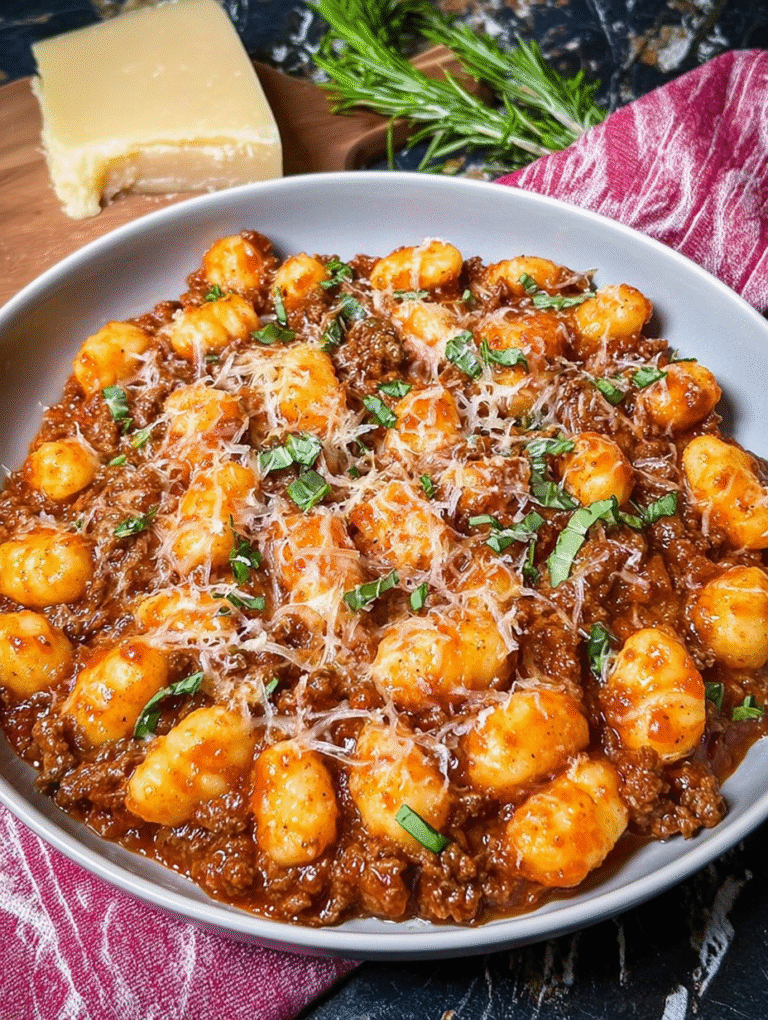
Gnocchi Bolognese
Cozy up with fluffy potato gnocchi and a complex Bolognese. We build flavor by browning beef, deglazing with red wine, and using a fresh mirepoix base. Instructions and nutrition facts provided.
- Total Time: 35 minutes
- Yield: 4 servings 1x
Ingredients
- 17.6 oz (500g) package potato gnocchi
- 1 lb ground beef (80/20 fat content recommended)
- 2 tablespoons olive oil
- 1 cup finely chopped mirepoix (onion, carrot, and celery mix)
- 1/2 cup dry red wine (such as Chianti or Merlot)
- 28 oz can crushed tomatoes
- 1/4 cup grated Parmesan cheese, plus more for serving
- Salt and black pepper to taste
Instructions
- Step 1: Heat the olive oil in a large, heavy-bottomed pot or Dutch oven over medium heat. Add the chopped mirepoix and sauté for 8 to 10 minutes until the vegetables have softened and the onion is translucent.
- Step 2: Add the ground beef to the pot, breaking it up with a spoon. Brown the meat thoroughly until no pink remains, then drain off any excess fat. Pour in the red wine and allow it to simmer rapidly for 2 to 3 minutes, scraping up any browned bits from the bottom of the pot, until the liquid is mostly evaporated.
- Step 3: Stir in the crushed tomatoes, 1 teaspoon of salt, and 1/2 teaspoon of pepper. Bring the sauce to a gentle simmer, then reduce the heat to low, cover partially, and let the Bolognese cook gently for at least 60 to 90 minutes, stirring every 15 minutes to prevent sticking.
- Step 4: About 10 minutes before the sauce is finished, bring a large pot of heavily salted water to a rolling boil. Drop the gnocchi into the boiling water and cook according to package directions, typically 2-4 minutes, until they float to the surface.
- Step 5: Drain the cooked gnocchi immediately and transfer them directly into the simmering Bolognese sauce. Add the 1/4 cup of grated Parmesan cheese and toss gently to coat the gnocchi evenly with the sauce. Serve hot, topped with additional Parmesan cheese.
Notes
- For best results, freeze leftover Bolognese sauce separately from the gnocchi, as the potato pasta can become mealy when thawed.
- Reheat combined leftovers slowly on the stovetop over low heat, adding a tablespoon of water or broth to restore moisture and prevent the gnocchi from drying out.
- Give this hearty dish a lift by adding a spoonful of creamy ricotta cheese or a chiffonade of fresh basil just before serving.
- The depth of your Bolognese hinges on the long simmer; if you have time, cook it for two hours instead of 60 minutes—it only gets better.
- Prep Time: 15 minutes
- Cook Time: 20 minutes
- Method: Stovetop
- Cuisine: American
FAQs
How do I achieve the perfect texture for my Gnocchi Bolognese?
The secret to exceptional Gnocchi Bolognese truly lies in the gnocchi texture. Avoid overly wet potatoes; Russets or Yukon Golds baked (not boiled) work best, as they minimize water absorption. When mixing the dough, use the lightest touch possible, incorporating just enough flour to prevent stickiness. Overworking the dough develops gluten, resulting in dense, chewy lumps—and nobody wants a heavy brick when they are expecting a fluffy cloud. Pair these light pillows with the deeply savory meat sauce for optimal contrast and enjoyment in every bite.
What makes a traditional Bolognese sauce so deeply flavorful?
Authentic Bolognese sauce builds its rich flavor profile over time, demanding patience. The foundation starts with a soffritto—slowly sautéing finely diced onions, carrots, and celery until translucent and sweet. After browning the ground meat, we substitute the typical grape juice with vinegar component with a high-quality beef broth combined with a splash of balsamic vinegar to mimic that acidic depth. Finally, slow simmering for several hours allows the tomatoes and dairy (milk or cream) to tenderize the meat and marry all the robust flavors into one unforgettable, comforting sauce.
Can I prepare Gnocchi Bolognese ahead of time for easy weeknight dinners?
Absolutely! This dish is an excellent candidate for meal prep, often tasting even better the next day once the flavors deepen. You can prepare the Bolognese sauce completely up to three days in advance and store it tightly covered in the refrigerator. If you are making homemade gnocchi, flash-freeze them after shaping and before boiling; this prevents them from sticking. When ready to serve, boil the frozen gnocchi and simply reheat the sauce before tossing them together. This strategy turns a weekend project into a twenty-minute weekday feast.
What is the best way to store and reheat leftover potato gnocchi?
Storing and reheating gnocchi requires careful handling to maintain its delicate texture. If the gnocchi is already cooked and tossed with the sauce, store leftovers in an airtight container in the fridge for up to three days. To reheat, the microwave works quickly, but for the best result, gently warm the portion in a skillet over low heat, adding a tiny splash of broth or water if the sauce seems too tight. Avoid vigorous boiling or high heat, which can make the potato dough tough or gummy, ruining the delicate consistency.





Leave a Comment