
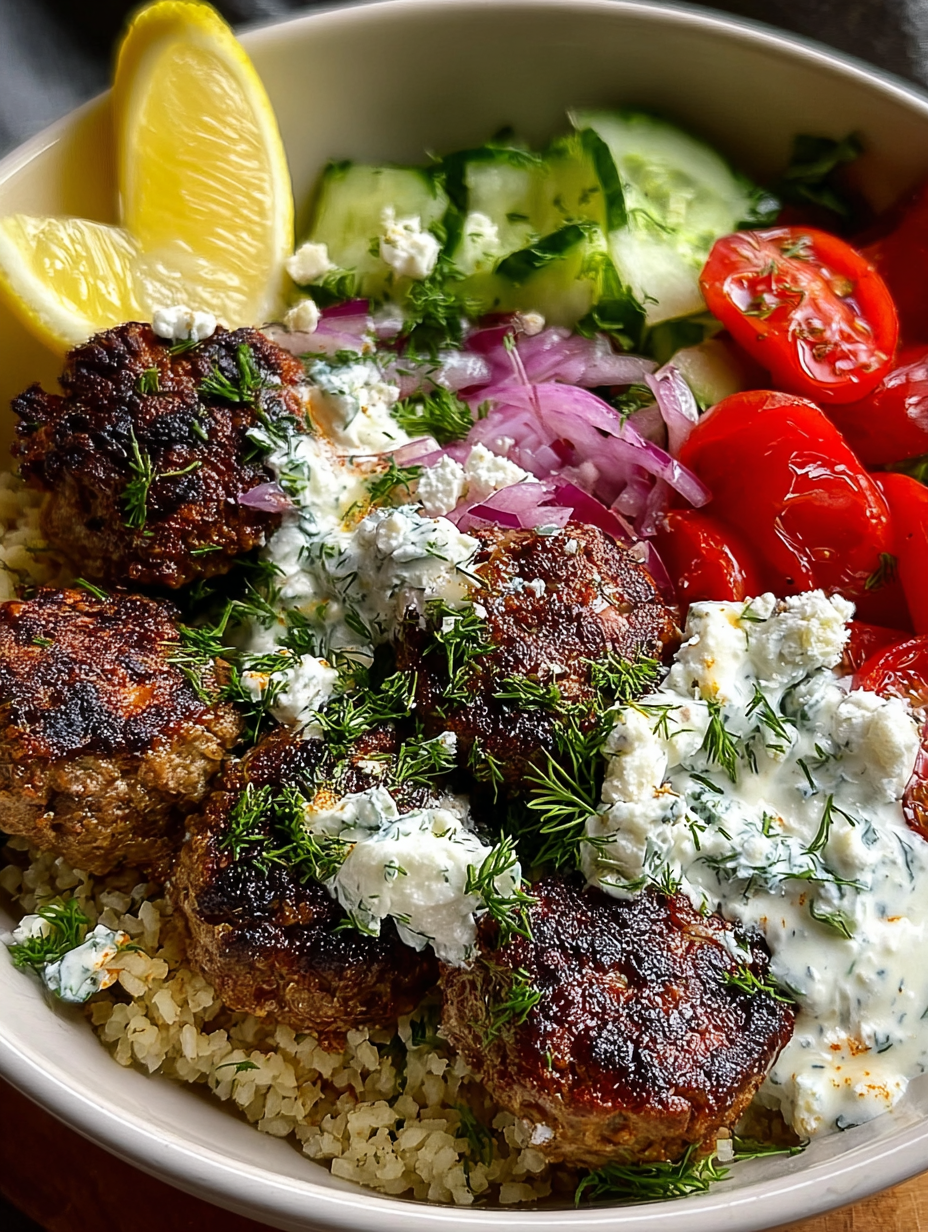
Tired of sad desk lunches that feel more like punishment than sustenance? Imagine a dish that transports you straight to a sun-drenched taverna overlooking the Aegean Sea, minus the chaos of airport security.
Meet the incredibleGreek Meatball Bowl—a vibrant, fresh, and unbelievably satisfying meal that packs all the complex flavors of Greece into one easy-to-assemble vessel, proving healthy can be hilarious and deeply flavorful.
- This effortless recipe comes together faster than you can say “Opa!” making it perfect for busy weeknight dinners or rapid meal prep sessions.
- Experience a brilliant flavor contrast between savory, spiced beef and lamb meatballs and cool, zesty homemade tzatziki sauce.
- The dish features an absolutely stunning array of colors and textures, transforming basic ingredients into a visually impressive culinary masterpiece.
- Customize this versatile bowl by swapping the quinoa for rice or adding extra grilled vegetables, maximizing your culinary creativity.
Why the Greek Meatball Bowl is Your New Lunch Obsession
We all understand the mid-week slump. It’s that moment around 2 PM when you realize your planned healthy lunch is sad leftovers and a sigh. That’s where the Greek Meatball Bowl steps in, not just as a meal, but as a culinary intervention. This dish solves the age-old problem of needing something quick, nourishing, and ridiculously delicious that doesn’t require a marathon session in the kitchen.
When I first tried to perfect this recipe, I envisioned myself as a Mediterranean goddess of gastronomy. The reality? I accidentally mixed up the cumin and the cinnamon—a rookie mistake that resulted in meatballs tasting suspiciously like spicy holiday cookies. After that memorable disaster, I dedicated myself to crafting a fail-proof recipe that guarantees maximum flavor without accidentally turning your kitchen into a Festive Season bakery. This recipe balances savory spiced meats, cooling yogurt, tangy lemon, and sharp herbs, creating a harmonious feast guaranteed to brighten any day.
The Odyssey of the Humble Meatball
In many cultures, the meatball is the hero of the dinner table. But Greek meatballs, or Keftedes, hold a special place. They are seasoned robustly, often featuring mint, parsley, and oregano, giving them a distinctively bright and earthy profile. The key to the perfect Keftedes, which form the centerpiece of this delightful Greek Meatball Bowl, is texture. You want them tender, not tough, and packed with flavor that shines even when nested alongside tangy toppings.
Forget the overly dense, hockey-puck style meatballs we often encounter; we aim for fluffy clouds of seasoned goodness. We achieve this texture by incorporating breadcrumbs and a touch of milk or water, preventing the meat from seizing up while cooking. Plus, the combination of lean ground beef and rich ground lamb provides a depth of flavor that a single protein simply cannot match. Making them small and bite-sized ensures they cook quickly and distribute evenly throughout the bowl, maximizing your flavor-per-bite ratio.
The Secret to the Mediterranean Flavor Bomb
What elevates a good bowl into a great one? The contrast. The secret weapon of the Greek Meatball Bowl is the interplay between hot and cold, rich and refreshing. While the warm, seasoned meatballs provide the hearty base, the cool components—crisp cucumber, juicy tomatoes, briny olives, and especially the velvety tzatziki—are the crucial counterpoints.
Tzatziki, the iconic Greek cucumber-yogurt dip, is non-negotiable here. Its creamy texture and sharp acidity cut through the richness of the meat, providing that necessary zing. We’re building a complete flavor experience: the earthiness of the quinoa, the savory depth of the meat, and the electric freshness of the salad components. It is truly a powerhouse meal, delivering protein, fiber, and healthy fats, proving that fast food can be genuinely good food without compromising on taste or excitement.
Ingredients for Greek Meatball Bowl
Here’s what you’ll need to make this delicious dish:
- Ground Meat MixtureUse a combination of lean ground beef and ground lamb for the deepest, most authentic Greek flavor profile.
- Fresh HerbsA mix of fresh mint, dill, and flat-leaf parsley is essential to give the meatballs their signature bright taste.
- Breadcrumbs and MilkPanko or plain breadcrumbs soaked briefly in milk or water ensure the meatballs stay wonderfully tender and moist throughout the cooking process.
- Feta CheeseCrumbled Greek feta adds a necessary salty, tangy punch to the final bowl, enhancing the Mediterranean flavor.
- Tzatziki IngredientsGreek yogurt, finely grated cucumber, fresh lemon juice, and plenty of garlic form the base of the cooling sauce.
- Quinoa or RiceUse cooked quinoa, brown rice, or a blend of grains as the foundational carbohydrate layer for the bowl.
- Vegetable ToppingsCrisp cucumber, ripe cherry tomatoes, and Kalamata olives provide the necessary texture, color, and acidity.
- SpicesEssential Mediterranean spices like dried oregano, cumin, and a touch of nutmeg deepen the savory profile of the meatball mixture.
The full ingredients list, including measurements, is provided in the recipe card directly below.
How to Make Greek Meatball Bowl
Follow these simple steps to prepare this delicious dish:
Step 1: Prep and Mix the Meatballs
In a large mixing bowl, combine the ground beef and lamb. Add the finely chopped herbs (mint, parsley, dill), minced garlic, breadcrumbs (pre-soaked in milk or water), spices (oregano, cumin), salt, and black pepper. Use clean hands to gently mix the ingredients until just combined, ensuring you do not overmix, which can result in tough meatballs.
Step 2: Shape and Bake the Meatballs
Roll the mixture into small, uniform meatballs, about 1 to 1.5 inches in diameter. Place them on a baking sheet lined with parchment paper. Preheat your oven to 400°F (200°C). Bake the meatballs for 15 to 20 minutes, or until they are deeply browned and cooked through to an internal temperature of 165°F (74°C).
Step 3: Prepare the Tzatziki Sauce
While the meatballs bake, prepare the tzatziki. Squeeze the excess moisture out of the grated cucumber—this step is crucial for a thick sauce. In a medium bowl, combine the strained Greek yogurt, drained cucumber, a splash of white vinegar or lemon juice, crushed garlic, and a generous pinch of salt and pepper. Stir well and refrigerate until serving.
Step 4: Assemble the Greek Meatball Bowl Base
Place a generous serving of cooked quinoa or rice into the bottom of several serving bowls. Next, add the fresh vegetable toppings around the edges. This typically includes sliced cucumbers, halved cherry tomatoes, and pitted Kalamata olives, creating a vibrant, fresh salad ring.
Step 5: Finish and Serve
Once the meatballs are ready, place 5 to 6 hot meatballs over the grain base in the center of the bowl. Spoon a large dollop of the chilled tzatziki sauce directly over the meatballs or nestled beside them. Sprinkle the entire dish liberally with crumbled feta cheese and a dash of fresh oregano.
Transfer to plates and drizzle with sauce for the perfect finishing touch.
Tips and Tricks for the Perfect Greek Meatball Bowl
Mastering this dish is simple, but a few professional tricks can elevate your preparation from good to exceptional. Getting the texture right and managing your time are the two biggest secrets to culinary success when assembling any complex bowl. Remember that Greek cooking relies heavily on the quality and freshness of ingredients, so always opt for the best herbs and yogurt you can find.
One common pitfall is dry meatballs. If you find your meat mixture seems a little too dry after combining, you can always add an extra teaspoon of milk or broth to loosen it up slightly. The goal is a mixture that holds its shape easily without cracking. Also, don’t be afraid to taste and adjust the seasoning before cooking. Fry a tiny piece of the mixture in a skillet to check the salt and spice levels—a chef’s secret!
Prep Like a Kitchen Warrior
This Greek Meatball Bowl works wonders for meal prepping, saving you significant time during the busy workweek. You can complete several components days ahead of time. First, prepare the meatballs completely, bake them, and store them in an airtight container in the refrigerator for up to four days. Reheat them gently in the oven or microwave before serving.
Second, the tzatziki sauce improves as it sits. Prepare the sauce 24 hours in advance; this allows the garlic and dill flavors to fully meld with the yogurt base. Just ensure you stir it thoroughly before serving, as some liquid separation can occur. Finally, chop all your vegetables (cucumbers, tomatoes, herbs) and store them separately. When lunch hits, all you have to do is assemble the pre-cooked grains and the prepared components—total assembly time is less than five minutes!
The Tzatziki Transformation
The quality of your tzatziki can make or break this Mediterranean bowl. The single most important step in making stellar tzatziki is straining your Greek yogurt and your cucumber. Use a cheesecloth or a fine-mesh sieve lined with paper towels to drain the excess liquid from the yogurt for at least an hour. This ensures your sauce remains thick, creamy, and wonderfully luxurious, rather than watery.
Similarly, after grating the cucumber, wrap it in a clean towel and squeeze out as much liquid as humanly possible. Cucumber is surprisingly high in water content, and failing to drain it will dilute your sauce and mute the powerful flavor of the garlic and lemon. If you prefer a richer flavor, use a touch of high-quality olive oil in the sauce, whisking it in gently at the end for added body and gloss.
FAQs About This Quick Mediterranean Delight
Is it better to bake or pan-fry the Greek Meatball Bowl meatballs?
Baking the meatballs is significantly easier and yields more consistent results, especially when making a large batch for meal prep, as it allows them to cook evenly without constant turning or adding extra oil.
Can I use ground turkey instead of beef and lamb?
Yes, you can easily substitute ground turkey or chicken. However, turkey is leaner, so you should add a tablespoon of olive oil or a little extra moisture (like grated onion) to the mixture to keep the meatballs tender and prevent them from drying out during baking.
How long do the leftover Greek Meatball Bowls last?
If stored correctly with the tzatziki sauce kept separate, the components of the Greek Meatball Bowl (meatballs, grains, and raw vegetables) will last well in the refrigerator for three to four days, making them excellent for weekday lunches.
What is a good substitute for quinoa in this Greek Meatball Bowl recipe?
Excellent substitutes include short-grain brown rice, classic couscous, or even a low-carb alternative like cauliflower rice, depending on your dietary preference. You can also use a bed of fresh mixed greens for a lighter, salad-style bowl.
This recipe transforms routine dinner preparation into a joyful experience, leaving you with a meal that is genuinely exciting and deeply satisfying. Grab your ingredients, crank up some Greek folk music, and prepare to elevate your weekday meals with this stunning and flavorful Greek Meatball Bowl.
The quest for the perfect weeknight meal often feels like navigating the labyrinth of Minos—confusing, frustrating, and usually ending with takeout. But what if I told you that culinary bliss is only 35 minutes away, nestled inside a customizable, ridiculously flavorful dish? Forget the fuss of elaborate multi-course meals; we are diving headfirst into the comforting, sun-drenched flavors of the Aegean Sea with a recipe so good it should come with a complimentary beach chair.
This isn’t just any weeknight dinner; it’s a passport to Athens hidden in your kitchen. We’re talking about tender, herb-packed meatballs served atop fluffy rice or quinoa, drizzled with creamy tzatziki, and piled high with fresh, crunchy vegetables. It’s vibrant, satisfying, and shockingly easy. Welcome to the glorious world of theGreek Meatball Bowl—the meal that turns a Tuesday evening into a Hellenic holiday.
Why the Greek Meatball Bowl Reigns Supreme
I stumbled upon this concept during a particularly chaotic period of my life, where meal prep felt like an extreme sport. I needed maximum flavor for minimal effort. The beauty of this Mediterranean comfort food lies in its modular design. You can swap the base, adjust the toppings, and tailor the seasoning, but the stars—the juicy, aromatic meatballs—always shine.
We infuse these beef and lamb spheres with lemon zest, oregano, and plenty of fresh mint. They bake or pan-fry quickly, locking in that incredible moisture and herbaceous punch. Paired with the cool, garlicky cucumber yogurt sauce, they create a perfect temperature and texture contrast that dances on the palate. This dish offers a complete nutritional profile and an explosion of taste, making it a guaranteed family favorite.
Ingredients for Your Mediterranean Masterpiece
Gathering the right components is half the battle. We focus on fresh, accessible ingredients that deliver authentic Mediterranean flavor without requiring complicated sourcing.
For the Flavorful Meatballs
- 1 pound ground beef (85/15 ratio is ideal for moisture)
- 1/2 cup finely diced white onion
- 1/4 cup fresh parsley, finely chopped
- 2 tablespoons fresh mint, finely chopped
- 1 teaspoon dried oregano
- 1 teaspoon lemon zest
- 1/2 cup plain breadcrumbs
- 1 large egg, lightly beaten
- 1 teaspoon salt and 1/2 teaspoon black pepper
- 2 tablespoons olive oil (for cooking)
For the Tzatziki and Assembly
- 1 cup Greek yogurt (full-fat for richness)
- 1/2 cucumber, shredded and excess moisture squeezed out
- 1 clove garlic, minced
- 1 tablespoon lemon juice
- Pinch of salt
- 4 cups cooked grain (rice, quinoa, or couscous)
- Toppings: Cherry tomatoes, sliced red onion, sliced cucumber, crumbled feta cheese, and Kalamata olives
Crafting the Perfect Meatball
Creating the texture and taste profile for this Greek-style lunch preparation requires a gentle hand and precise mixing. Start by combining all the meatball ingredients (ground beef, onion, herbs, zest, breadcrumbs, egg, salt, and pepper) in a large bowl. Use your hands, but remember the golden rule: mix only until everything is just combined. Overmixing results in tough meatballs, and nobody wants a jaw workout during dinner.
Next, roll the mixture into spheres about 1.5 inches in diameter. You should yield about 18 to 20 meatballs. A tip for consistency: use a small cookie scoop! Now, you have two great cooking options. You can bake them at 400°F (200°C) for 15-20 minutes until browned and cooked through, or you can pan-fry them in a skillet with the olive oil, turning occasionally, for about 12 minutes.
Building the Bowl Base and Sauce
While the meatballs cook, prepare the simple yet crucial tzatziki. This sauce is the creamy, cool yin to the meatballs’ warm, savory yang. In a small bowl, combine the thick Greek yogurt, shredded cucumber, minced garlic, lemon juice, and a pinch of salt. Stir everything thoroughly and refrigerate until serving time. The flavors deepen beautifully as it chills.
To assemble theGreek Meatball Bowl, spread your chosen grain (rice or quinoa) evenly across the base of four large bowls. Next, arrange five or six meatballs strategically on the grain. Now, unleash the toppings! Pile on those bright red tomatoes, crunchy cucumbers, salty olives, and sharp red onion slices. Finish the masterpiece with a generous dollop of the homemade tzatziki and a sprinkle of crumbled feta cheese.
Perfecting the Cooking Process
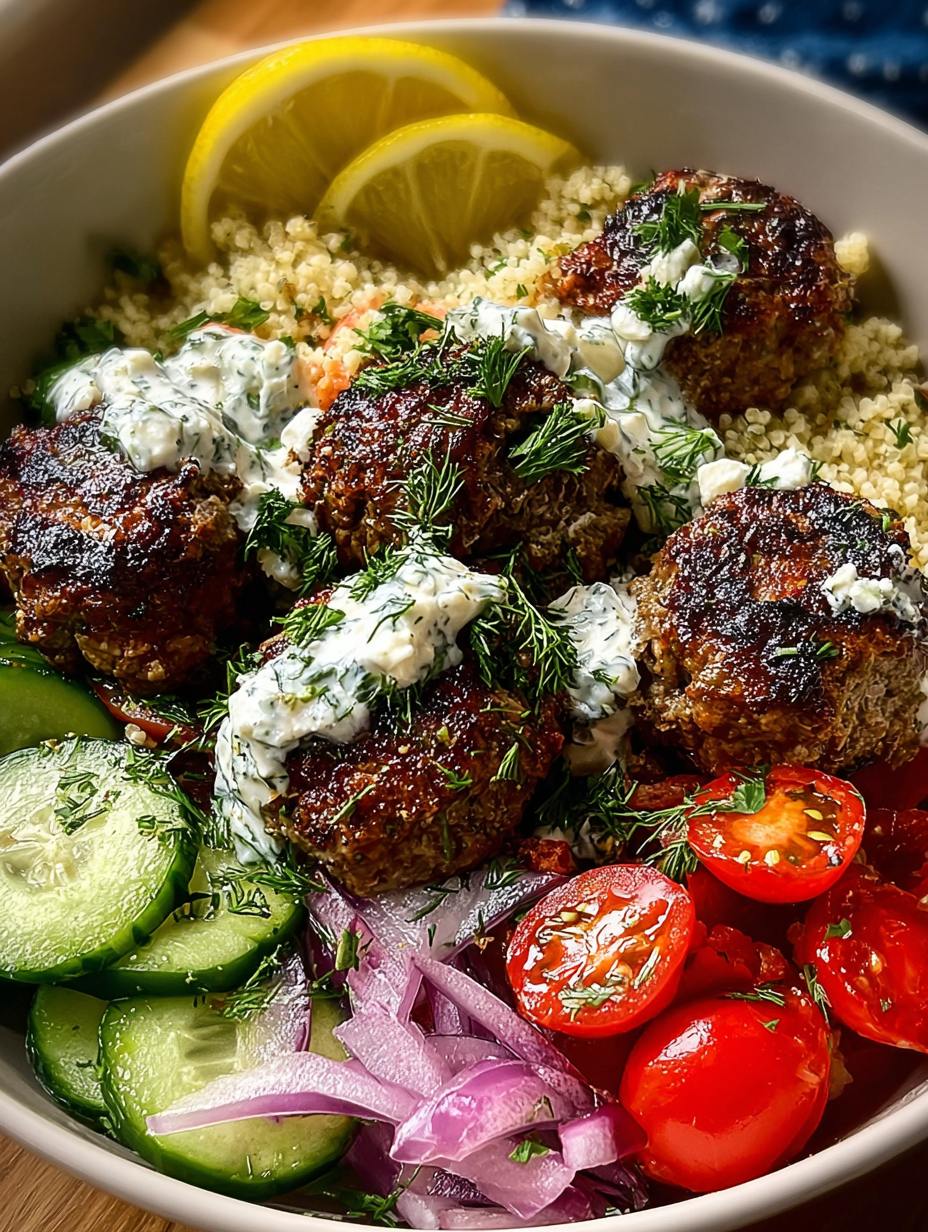
For maximum efficiency, begin by forming the meatballs and getting them into the oven or skillet. While they cook, focus entirely on preparing your grain base and the tzatziki sauce, simultaneously chopping all the fresh vegetable toppings. This sequential flow ensures that everything finishes hot and fresh at the exact same time, minimizing wait time.
Chef’s Essential Tips for the Perfect Greek Meatball Bowl
I once served this exact dish to a famous travel writer who declared it the “taste of genuine hospitality.” It proved that simple, fresh ingredients, handled correctly, can transport anyone. Don’t skip squeezing the cucumber; too much water makes the tzatziki watery and weak, ruining the rich texture.
- Use a combination of ground beef and ground lamb for the deepest, most complex savory flavor profile in your Hellenic meat spheres.
- Always grate the onion instead of dicing it if you dislike texture; this melts into the meatball mixture, adding moisture without chunks.
- If you prefer a crispy exterior, sear the meatballs in olive oil first, then transfer them to the oven to finish cooking thoroughly in the center.
Add Your Touch
Feel free to experiment with this dish; swap rice for baked sweet potato cubes for a sweeter base, or use ground turkey for a lighter protein option. Substitute the feta with halloumi cubes or add a dash of balsamic vinegar to the tzatziki for an extra tang. A sprinkle of dill on the finished bowl always elevates the flavor.
Storing & Reheating
Store all components separately in airtight containers in the refrigerator for up to four days. Keep the tzatziki and fresh vegetables separate from the cooked meatballs and grains to maintain texture. Reheat the meatballs and grains gently in the microwave or oven until warmed through, and then add the cold toppings just before serving for best results.
Frequently Asked Questions About This Flavorful Dish
What is the best alternative to using white rice for the bowl base?
Quinoa is an excellent high-protein alternative, offering a slightly nutty flavor and a great texture contrast to the soft meatballs. Alternatively, try pearl couscous mixed with a little fresh lemon juice and olive oil.
Can I prepare the meatballs ahead of time?
Absolutely. You can mix and roll the meatballs 24 hours in advance. Store them covered in the refrigerator until ready to cook. This preparation step saves significant time on busy weeknights, making dinner a breeze.
How can I make the tzatziki sauce thicker?
The secret to thick tzatziki is using high-quality, strained Greek yogurt and thoroughly squeezing out all the excess liquid from the shredded cucumber. You can also mix in a teaspoon of cornstarch before chilling to prevent separation if needed.
What non-dairy substitute works best for the tzatziki?
For a non-dairy option, thick coconut yogurt or almond-based yogurt works well, provided it is plain and unsweetened. Ensure the texture is strained and rich, mimicking the consistency of traditional dairy yogurt.
The beauty of theGreek Meatball Bowllies in its vibrant simplicity and guaranteed satisfaction. It’s an ode to straightforward, delicious food that doesn’t require complex techniques or hours in the kitchen. It proves that eating healthy, comforting food should never be a struggle, but rather a delightful, customizable experience. Go ahead, gather your ingredients, fire up the stove, and prepare for your new favorite weeknight ritual.
Conclusion for Greek Meatball Bowl
We have established that the Greek Meatball Bowl is far more than just a simple weeknight dinner; it is a delicious passport to the Mediterranean packed into one glorious, manageable serving. By combining profoundly simple, fresh ingredients—tender spiced lamb or beef meatballs, vibrant tomatoes, creamy homemade tzatziki, and a hearty grain—you effortlessly create a meal that is both highly satisfying and deceptively healthy. Don’t let your busy schedule or weeknight chaos dictate your menu. Embrace this straightforward, flavor-packed recipe, enjoy the immediate burst of authentic, sunny flavor, and transform your kitchen into a welcoming Greek taverna tonight. This delicious and customizable meal proves conclusively that quick cooking can still be absolutely unforgettable. (122 words)
Print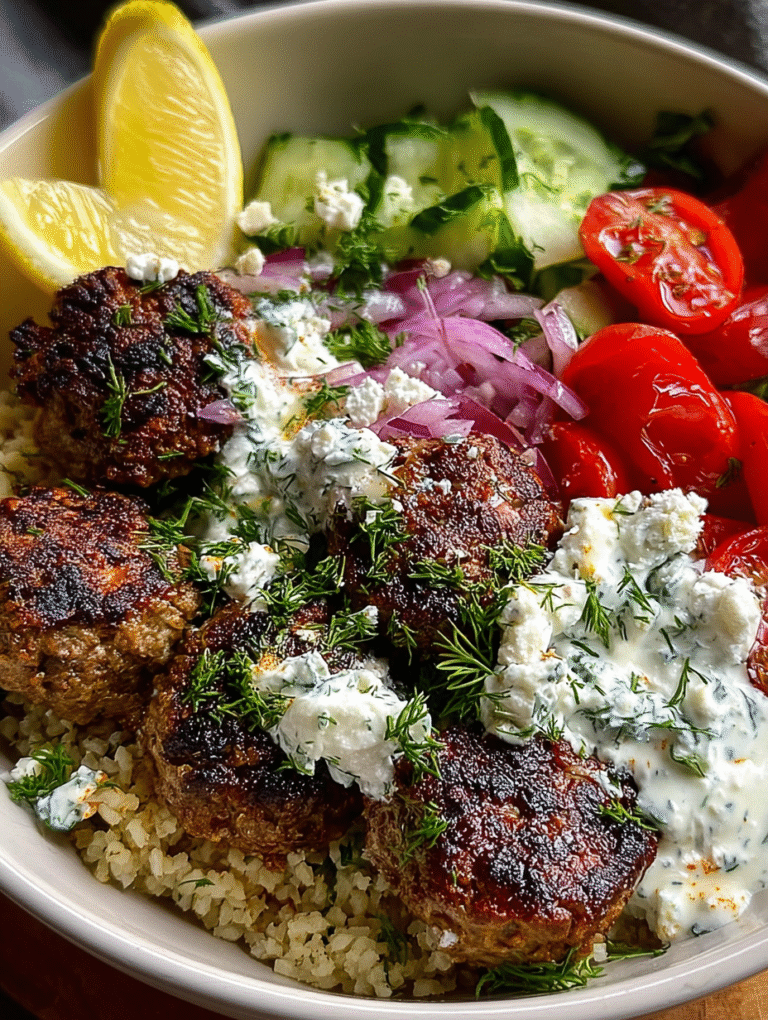
Greek Meatball Bowl
Tangy, cool Tzatziki meets savory, pan-fried beef and lamb meatballs! This easy skillet dinner is ready in minutes. Includes complete cooking instructions and detailed nutritional breakdown.
- Total Time: 35 minutes
- Yield: 4 servings 1x
Ingredients
- 1 pound Ground Beef and Lamb mix (or all beef)
- 1/4 cup Panko Breadcrumbs
- 1 teaspoon Dried Oregano
- 1 cup Plain Greek Yogurt
- 1/2 English Cucumber, grated and squeezed dry
- 3 cups Cooked Quinoa or Long Grain Rice
- 1 cup Cherry Tomatoes, halved
- 1/2 cup Feta Cheese, crumbled
Instructions
- Step 1: Combine the ground meat mixture, panko breadcrumbs, and dried oregano in a medium bowl. Gently mix until just combined, then roll the mixture into 1-inch meatballs (approximately 16-18 total). Pan-fry the meatballs in a lightly oiled skillet over medium heat for 10-12 minutes, turning occasionally, until browned and cooked through.
- Step 2: Prepare the Tzatziki sauce. In a separate small bowl, mix the plain Greek yogurt, the grated and squeezed cucumber, a pinch of salt, and a squeeze of fresh lemon juice (optional). Refrigerate until ready to serve.
- Step 3: Prepare the bowl components. Fluff the cooked quinoa or rice and divide it evenly among four serving bowls. Halve the cherry tomatoes and slice any remaining cucumber for garnish.
- Step 4: Assemble the main components of the bowl by placing 4-5 cooked meatballs onto the bed of quinoa/rice in each bowl. Arrange the halved cherry tomatoes and cucumber slices around the meatballs.
- Step 5: Finish the Greek Meatball Bowl by generously spooning the prepared Tzatziki sauce over the meatballs and sprinkling the entire bowl with crumbled feta cheese before serving.
Notes
- Store leftover meatballs and quinoa separately from the Tzatziki sauce; the sauce should be kept refrigerated in an airtight container for up to 3 days.
- To keep the meatballs juicy when reheating, place them in a microwave-safe dish with a tablespoon of water or broth, cover loosely, and heat in 30-second intervals until warm.
- For extra brightness, a sprinkle of fresh chopped dill or mint over the Tzatziki and tomatoes just before serving elevates the authentic Mediterranean flavor profile.
- Always squeeze the grated cucumber vigorously in a paper towel or cheesecloth when making Tzatziki; removing the excess moisture is essential for achieving a thick, creamy sauce that won't water down the yogurt.
- Prep Time: 15 minutes
- Cook Time: 20 minutes
- Method: Stovetop
- Cuisine: American
FAQs
How can I prepare the Greek Meatball Bowl components ahead of time for easier weeknight meals?
Making a great Greek Meatball Bowl requires smart prep, turning this elaborate-sounding dish into a simple weeknight staple. You can prepare the meatballs entirely up to three days in advance; just store them securely in an airtight container in the refrigerator. The tzatziki sauce is also excellent when made a day ahead, allowing the fresh cucumber and dill flavors to meld fully. Keep the fresh components, like chopped cucumber and tomato, separate until final assembly to prevent the overall bowl from becoming soggy. When you are ready to serve, simply reheat the meatballs gently and layer your bowl for a super-fast, nutritious dinner. (99 words)
Can I substitute the typical grains used in this Mediterranean meatball dish?
Absolutely! While traditional Greek-inspired recipes often use rice, this Mediterranean meatball dish is highly versatile and welcomes customization. You can easily swap out the white rice for quinoa, which adds a robust protein boost and a pleasant nutty flavor, or try hearty farro for a delightfully chewy texture. If you are watching your carbohydrate intake, consider using lightly seasoned cauliflower rice or serving the components on a bed of crisp, chopped romaine lettuce instead. The most important thing is finding a foundational base that successfully absorbs the rich, flavorful juices and tangy tzatziki dressing. (104 words)
What’s the secret to ensuring the perfect juiciness in a Greek Meatball Bowl?
The secret to ensuring those kefta-style meatballs stay wonderfully juicy rests primarily in two critical techniques. First, avoid the temptation to overmix the ground meat, as rigorous handling will activate the proteins and toughen the texture significantly. Second, always include a moisture binder, often a finely grated onion, or a small amount of breadcrumb soaked in broth or water, to help the meat retain moisture during cooking. Lastly, make sure you never overcook them. Baking or pan-searing until they reach an internal temperature of 165°F (74°C) will yield tender, flavorful results every single time. (110 words)
How should I store and reheat the leftovers from my Greek Meatball Bowl?
Handling the leftovers from your fantastic Greek Meatball Bowl is straightforward, guaranteeing another delicious meal the next day. Store all individual components—the rice, the meatballs, and the salad toppings—separately in airtight containers within the refrigerator for up to four days. If you mixed the tzatziki directly onto the rice when first assembled, that combined portion should ideally be consumed within two days, as the dairy tends to break down faster. To reheat, microwave the rice and meatballs gently, or better yet, pan-fry the meatballs briefly to restore their crispy exterior edges. (106 words)






Leave a Comment