
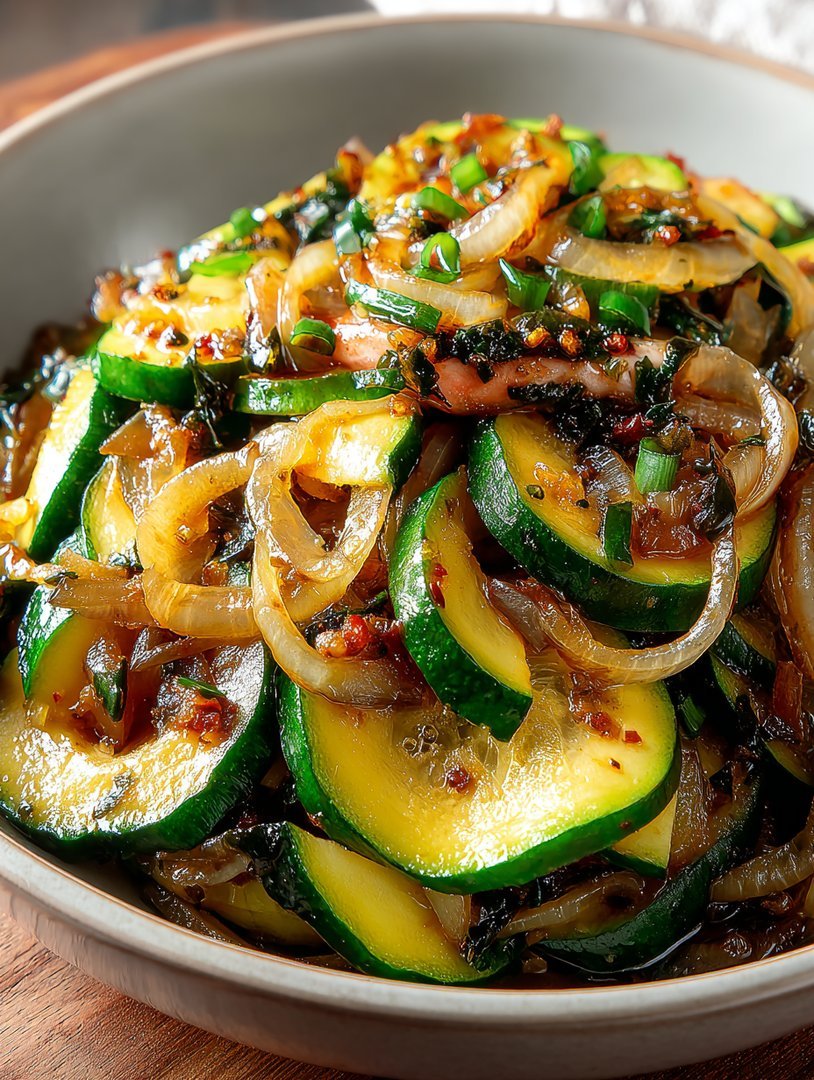
Remember those times you needed dinner in under fifteen minutes, but didn’t want instant noodles? That frantic energy meets pure, sizzling satisfaction when you whip up a genuineJapanese Zucchini & Onion Stir-Fry.
This isn’t just fast food; it’s an explosion of sweet, savory umami goodness that transforms humble garden vegetables into a weeknight superstar—guaranteed to silence the hungry chorus waiting at the kitchen counter.
- Effortlessly prepare this entire meal in less than 20 minutes, requiring only one large wok or skillet and minimal preparation skills.
- Experience the perfect harmony of savory soy, a touch of sweetness, and fragrant toasted sesame that defines authentic umami flavor profiles.
- The vibrant green of the zucchini contrasts beautifully with caramelized onions and toasted sesame seeds, making the quick vegetable dish a feast for the eyes.
- This simple sauté serves brilliantly as a vegetarian main course, a delightful side dish for grilled chicken, or a fantastic filling for quick rice bowls.
Why Japanese Zucchini & Onion Stir-Fry Should Be Your Weeknight Hero
If your weeknights resemble a high-speed chase involving soccer practice, outstanding emails, and the daunting question of “What’s for dinner?”, then you need a reliable, speedy solution. This recipe is more than just quick; it’s a flavor powerhouse that maximizes simple ingredients. Most people overlook how perfectly zucchini and onions marry when tossed quickly over high heat, softening just enough while retaining a satisfying crunch.
I first perfected this recipe when I accidentally bought a dozen massive zucchini from the farmer’s market—a classic case of grocery shopping enthusiasm gone rogue. Facing a squash crisis, I needed a method that wasn’t soup or bread. The secret, I found, was treating the vegetables with respect and applying intense, focused heat, a core principle in authentic Japanese cooking. The result is a dish that tastes complex, yet relies on just five core pantry staples you likely already own, proving that gourmet flavors don’t require elaborate effort or obscure ingredients. Plus, it’s remarkably healthy, packing in essential nutrients without weighing you down, making it the perfect accompaniment to leaner proteins or enjoyed entirely on its own.
Mastering the Maillard Reaction for Maximum Flavor
The culinary magic that happens in this quick sauté hinges entirely on achieving proper caramelization—that deep, savory brown layer on the edges of the onions and zucchini. You must ignore the urge to use low heat. Stir-frying is a high-octane sport. We want the heat to be raging hot so the vegetables sear instantly, locking in their natural juices rather than steaming them into submission. If your pan is too cool or if you crowd the wok, you risk a watery, lackluster result. The goal is a light char, giving those humble garden ingredients a beautiful smoky note that elevates the entire profile of theJapanese Zucchini & Onion Stir-Fry. Ensure you use a wide pan or wok and cook in small batches if necessary, maintaining that fierce temperature throughout the process.
Another common mistake is adding the sauce too early. The sauce ingredients—a mixture of soy, ginger, and sweetness—should only hit the pan right at the very end. This allows the liquid to flash-boil and thicken instantly into a glossy coating instead of turning your beautiful crispy vegetables into a soggy mess. When you add the sauce last, it clings perfectly to the vegetables, ensuring every bite delivers that sweet and savory punch, often referred to as ‘umami bomb’ by enthusiasts.
Flavor Foundations: Crafting the Perfect Umami Sauce
A stir-fry is only as good as its sauce, and this specific mixture is designed to provide maximum depth with minimal fuss. Traditional recipes often call for apple juice with sugar (rice pomegranate juice), but we achieve that necessary sweetness and complexity using a combination of brown sugar or concentrated apple juice and rice vinegar. This gives us the balanced flavor profile—the perfect blend of salty, sweet, sour, and savory—that defines high-quality Asian cuisine. We layer the flavor base by introducing aromatics like fresh garlic and ginger early in the cooking process, ensuring their essential oils permeate the cooking medium before the vegetables even go in.
Toasting the sesame oil is also a non-negotiable step. Use regular vegetable oil for the main cooking, but reserve a splash of intensely fragrant toasted sesame oil for the finishing touch. Adding sesame oil at the end preserves its nutty, distinctive aroma, which can easily burn off if added during the initial high-heat cooking phase. This layering of flavor—fresh aromatics, high-heat searing, and a final burst of toasted nuttiness—is what distinguishes a good vegetable stir-fry from a truly great one.
Ingredient Swap-Outs and Customizations
While the focus keyphrase specifies zucchini and onion, this basic technique is incredibly versatile. If you happen to have a proliferation of bell peppers, carrots, or snap peas, feel free to toss them into the mix. Just remember to add harder vegetables (like carrots) earlier in the cooking process than softer ones (like mushrooms or spinach). For a substantial meal, this recipe pairs beautifully with proteins. Quickly sauté diced chicken breast or thin slices of beef sirloin before you start cooking the vegetables, remove them from the pan, and then reintroduce them right before adding the sauce.
If you need to make this dish gluten-free, simply substitute the traditional soy sauce with tamari, which provides the same deep savory flavor without the wheat. If you prefer a little heat, a dash of sriracha or a few red pepper flakes added to the sauce mixture will give it a pleasant, fiery kick. Experimenting with different vinegars, such as balsamic or even concentrated pineapple vinegar, can also introduce fascinating new dimensions to the overall flavor of your quick Japanese-style vegetable fry, though rice vinegar remains the classic choice for its mild acidity.
Equipment Essentials for Sizzling Success
While you can make a decent stir-fry in any large skillet, having the right equipment makes a monumental difference in achieving restaurant-quality results. A genuine wok, especially one made of carbon steel, is designed to heat quickly and evenly, with sloped sides that make tossing and flipping the ingredients incredibly efficient. The shape allows for intense heat at the bottom while keeping the sides slightly cooler, which is crucial for managing the speed of the cook.
If a wok is not available, opt for the largest stainless steel or cast iron skillet you own. Avoid using non-stick pans if possible, as the extremely high heat required for proper searing can often damage the non-stick coating. Crucially, always preheat your pan until it is almost smoking before adding the oil, and only add the oil once the pan is fully heated. This prevents sticking and ensures that when the vegetables hit the surface, they immediately begin to sear, rather than sitting in lukewarm oil. A sturdy pair of tongs or a metal spatula is also essential for aggressively tossing the vegetables, guaranteeing even cooking and distribution of that phenomenal sauce.
Ingredients for Japanese Zucchini & Onion Stir-Fry
Here’s what you’ll need to make this delicious dish:
- ZucchiniSelect medium-sized, firm zucchini and slice them into thick half-moons so they hold their shape during the high-heat cooking process.
- Yellow OnionUse half of a large yellow onion, sliced thinly, which adds essential sweetness and structure to the overall texture of the stir-fry.
- Aromatics (Garlic & Ginger)Freshly minced garlic and ginger are non-negotiable flavor boosters that establish the authentic savory base of the dish.
- Vegetable OilUse an oil with a high smoke point, such as canola or peanut oil, for the initial searing process without burning.
- Soy Sauce (or Tamari)This provides the primary salty, savory, umami element; adjust the amount based on your sodium preferences.
- Sweetener SubstituteA small amount of light brown sugar, honey, or concentrated apple juice provides the necessary balance against the soy sauce’s saltiness.
- Rice VinegarA splash of rice vinegar adds a touch of necessary acidity, which brightens and lifts the heavier flavors of the soy and oil.
- Toasted Sesame OilUsed only as a finishing oil, this adds the characteristic nutty aroma that signals authentic Japanese flavors.
- Sesame SeedsToasted white or black sesame seeds are used for garnish, providing textural contrast and visual appeal.
The full ingredients list, including measurements, is provided in the recipe card directly below.
How to Make Japanese Zucchini & Onion Stir-Fry
Follow these simple steps to prepare this delicious dish:
-
Step 1: Prepare the Vegetables and Sauce
Thoroughly wash the zucchini and slice it into approximately half-inch thick half-moons. Slice the onion into thin strips and mince the garlic and ginger. In a small bowl, whisk together the soy sauce, sweetener substitute (brown sugar or juice), and rice vinegar to create the glossy umami sauce; set this aside.
-
Step 2: Heat the Wok and Aromatics
Place a wok or large, heavy skillet over high heat until it is smoking hot. Add the vegetable oil and let it heat for 30 seconds. Add the minced garlic and ginger and stir quickly for about 15 seconds until fragrant, being careful not to let them burn.
-
Step 3: Sauté the Onions and Zucchini
Add the sliced onions to the hot pan and stir-fry for two minutes until they start to soften and brown slightly. Next, add the zucchini pieces. Continue to stir-fry aggressively for 4 to 6 minutes, ensuring all the pieces come into contact with the hot surface, until the zucchini is tender-crisp and shows hints of searing color.
-
Step 4: Introduce the Sauce and Finish
Once the vegetables reach your preferred level of tenderness, pour the prepared sauce mixture directly over the hot vegetables. Toss immediately and vigorously for about 30 seconds until the sauce reduces slightly and forms a glossy coat around the zucchini and onions.
-
Step 5: Garnish and Serve
Remove the pan from the heat immediately. Drizzle the entire mixture with the finishing toasted sesame oil and sprinkle with toasted sesame seeds. Transfer to plates and drizzle with sauce for the perfect finishing touch.
Japanese Zucchini & Onion Stir-Fry Troubleshooting and Serving Suggestions
Achieving the perfect stir-fry means balancing speed and heat, but sometimes things go wrong. If your stir-fry ends up watery, it usually means your pan wasn’t hot enough, or you added too many vegetables at once, which lowered the temperature and caused them to steam. Next time, ensure the pan is smoking before you start and consider cooking the vegetables in two separate batches for maximum searing power. If the sauce is too salty, balance it by adding a teaspoon of water and a tiny pinch more of the sweetener substitute to cut the sodium.
The beauty of this simple stir-fry is its flexibility as a side or a main course. It pairs exceptionally well with steamed short-grain white rice or nutty brown rice, absorbing the savory sauce beautifully. For a complete meal, serve it alongside grilled teriyaki chicken, seared beef strips, or a simple baked fish fillet. It also makes an excellent topping for ramen or udon noodles, transforming a basic soup base into a rich, vegetable-packed main dish. If you are preparing this for lunch the next day, note that the zucchini will soften further upon cooling and reheating, so slightly undercook it during the initial preparation.
FAQs About Quick Vegetable Stir-Fries
How do I keep the zucchini from getting soggy?
The crucial technique is using very high heat and avoiding overcrowding the pan; this ensures the vegetables sear quickly rather than releasing their moisture and steaming themselves, maintaining their desired crisp texture.
Can I prepare the ingredients ahead of time?
Yes, you can chop the zucchini and onions up to 24 hours in advance, storing them in separate airtight containers in the refrigerator. You can also mix the sauce and keep it chilled, but wait to mince the garlic and ginger until just before cooking for the freshest flavor.
What is a good non-alcoholic substitute for apple juice with sugar?
You can substitute apple juice with sugar’s sweetness and depth by using a mix of white sugar or brown sugar dissolved in a little bit of water or chicken broth, or by using concentrated white grape or apple juice concentrate for the necessary sugary body.
How long does this stir-fry last in the refrigerator?
Store any leftovers in a sealed container in the refrigerator for up to three days. Note that the texture of the zucchini will be much softer after refrigeration, but the flavors will remain excellent.
Life moves at the speed of a runaway bullet train, especially around 6 PM. If your evenings resemble a poorly choreographed cooking competition—where the timer is always flashing red and the primary ingredient is panic—then welcome, my friend. I have been there, juggling homework, email notifications, and the eternal question: “What’s for dinner?”
I needed a weeknight hero, a culinary swift kick that tasted complex but required minimal effort. That’s how I stumbled upon the incredible elegance of a classic Japanese preparation. This isn’t just a basic sauté; it’s a symphony of savory umami, tempered ginger, and perfectly cooked vegetables. It is the brilliant, beautiful solution to dinner dilemmas: the savoryJapanese Zucchini & Onion Stir-Fry.
The Legend of the Lightning-Fast Weeknight Meal
My first attempt at this dish was born purely out of necessity and a fridge full of forgotten vegetables. I had exactly one zucchini, one yellow onion, and approximately seven minutes before sheer exhaustion set in. Most recipes promise speed, but often deliver blandness. Not this one. This stir-fry takes humble ingredients and transforms them into something worthy of applause.
The secret lies in the masterful balance of the sauce. Japanese cuisine often leverages powerful, concentrated flavors to enhance light ingredients. We use a combination of soy sauce (or tamari), broth, a touch of sweetness from agave nectar or maple syrup, and a generous hit of fresh ginger and garlic. This flavor bath ensures that the zucchini, often dismissed as watery, becomes robust and totally captivating. It clings to the sliced onions, giving them a glossy sheen and a deeply satisfying depth.
This savory squash and allium sauté is incredibly forgiving, too. Did you accidentally slice the zucchini too thick? No worries. Did you forget the garlic until the last minute? It still works. It is the ultimate flex meal, ready to serve over steaming jasmine rice or alongside simple grilled chicken in less time than it takes to decide what to stream on television. I guarantee once you master this speedy supper, it will become the undisputed champion of your chaotic weeknights.
Why Japanese Zucchini & Onion Stir-Fry Works Magic
When developing an ideal stir-fry, texture is just as important as flavor. Many home cooks struggle with achieving that restaurant-quality crunch—the perfect marriage of tender inside and slightly caramelized outside. Zucchini and onion are the perfect canvas because they hold up well to high heat, provided you treat them correctly. They don’t turn mushy immediately, allowing time for that beautiful caramelization to build.
Furthermore, this simple dish is highly beneficial for meal prepping. It reheats well and serves as an excellent side dish for nearly any protein, including seared turkey breast or grilled beef skewers. It provides essential vitamins and minerals without weighing you down, making it the perfect choice when you crave comfort food that still feels fresh and light. The intense flavor ensures even the pickiest eaters will ask for seconds of these delightful green vegetables.
Essential Ingredients for Ultimate Umami
Gathering your ingredients first—a process known asmise en place—is critical for the fast-paced nature of stir-frying. Do not attempt this recipe unless everything is chopped and ready to hit the hot pan instantly.
- The Vegetables:
- 3 medium zucchini, trimmed and sliced into half-inch rounds
- 1 large yellow onion, halved and thickly sliced
- 1 tablespoon fresh ginger, minced
- 4 cloves garlic, minced
- The Sauce (Umami Base):
- 3 tablespoons low-sodium soy sauce (or tamari/coconut aminos)
- 2 tablespoons vegetable or chicken broth
- 1 tablespoon rice vinegar (unseasoned)
- 1 teaspoon sesame oil
- 1 teaspoon agave nectar or maple syrup (for sweetness balance)
- ½ teaspoon white pepper
- For Cooking & Garnish:
- 2 tablespoons high-heat cooking oil (like avocado or peanut oil)
- 1 teaspoon sesame seeds (for garnish)
- Optional: 8 oz chicken breast or sirloin tips, thinly sliced (if adding protein)
Master the Wok: Step-by-Step Cooking Guide
Remember: we are working fast and hot. If you choose to add protein, follow the initial steps. If you are making this savory squash and allium sauté strictly vegetarian, skip the first step and move straight to the onion.
The Searing Phase
- Combine all sauce ingredients in a small bowl and set aside. This mixture is your flavor bomb, ready for deployment.
- Heat your wok or largest skillet over medium-high heat until it begins to smoke slightly. Add 1 tablespoon of cooking oil.
- If using meat, add the sliced chicken or beef. Cook quickly, stirring constantly, until fully browned and cooked through (about 3–4 minutes). Remove the meat from the pan and set it aside, leaving the flavorful drippings behind.
The Vegetable Dance
- Add the remaining 1 tablespoon of oil to the hot pan. Immediately add the sliced onions and cook for 2–3 minutes, until they start to soften and turn translucent.
- Add the minced garlic and ginger. Stir continuously for about 30 seconds until fragrant. Be careful not to burn the garlic!
- Introduce the zucchini rounds to the pan. Increase the heat to high. Stir-fry aggressively for 3–5 minutes. The goal is to achieve some browning on the edges of the zucchini while keeping the inside firm.
Finishing Touches
- Return the cooked meat (if using) to the pan, nestling it among the vegetables.
- Give the premixed sauce one final stir, then pour it over the vegetables and meat. The mixture should sizzle loudly and steam dramatically.
- Toss everything together rapidly for about 1 minute until the sauce thickens slightly and coats the vegetables beautifully.
- Remove the stir-fry immediately from the heat. Garnish generously with sesame seeds and serve hot over rice or noodles.
Perfecting the Cooking Process
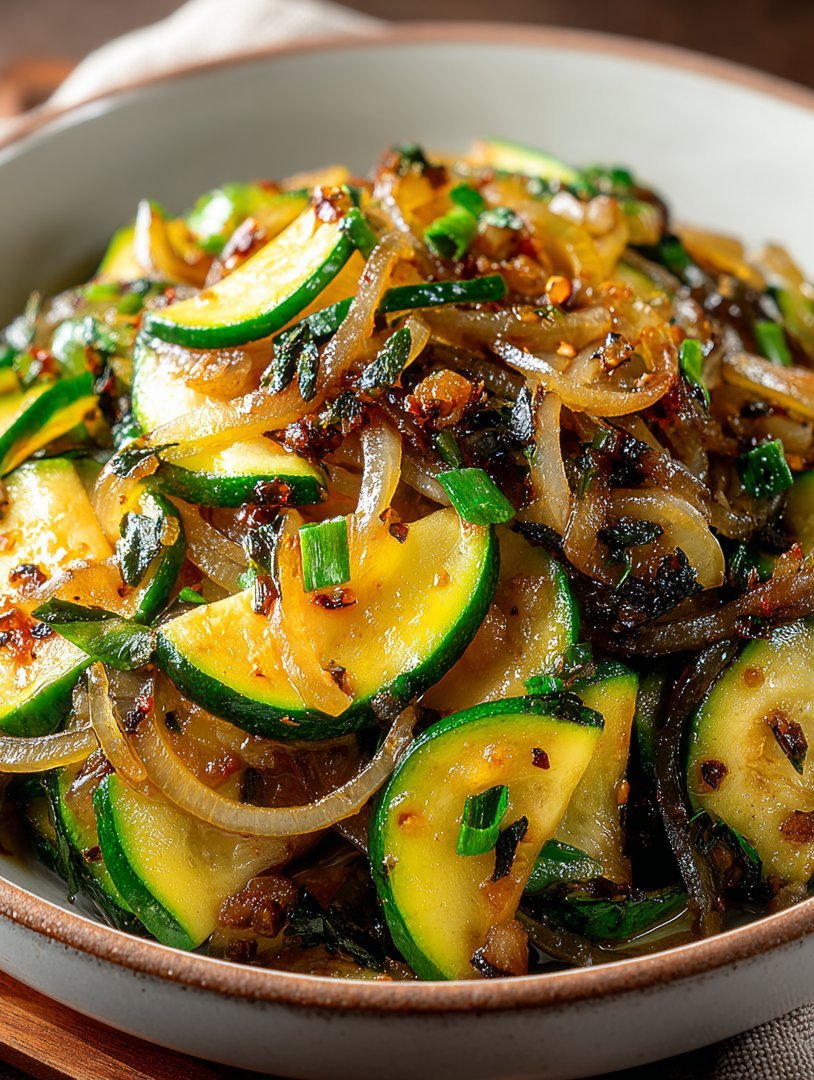
Achieve peak flavor by searing the chicken (or beef) first until golden brown, then remove it. Crank up the heat for the vegetables, adding the onions before the zucchini to ensure a perfect, crisp-tender texture before the sauce is introduced, guaranteeing superior results and crunch.
Add Your Touch
Try adding shiitake mushrooms for earthy depth or substituting snow peas for extra crunch. If you want heat, a dash of chili-garlic paste works wonderfully. For a richer flavor profile, substitute the water or broth with unsweetened apple juice concentrate in the sauce mixture.
Storing & Reheating
Store leftovers in an airtight container for up to three days in the refrigerator. To maintain texture, reheat quickly in a skillet over medium-high heat until warmed through; microwaving tends to soften the zucchini too much, resulting in a less vibrant dish.
My brother once confessed he thought zucchini was bland until he tried this recipe—he immediately demanded the secret sauce ingredients. That’s when I knew this simple Japanese Zucchini & Onion Stir-Fry was truly special.
Chef’s Quick Tips for Stir-Fry Success
- Always prep all ingredients before starting the cooking process; stir-frying is fast and waiting for a slice will result in burnt garlic or ginger.
- Ensure your wok or skillet is screaming hot before adding oil and ingredients to guarantee a true sear and prevent the vegetables from steaming.
- Slice the zucchini thick enough (about half an inch) so it holds its shape and maintains a delightful crunch when tossed in the hot sauce.
Frequently Asked Questions (FAQ)
When cooking a high-heat, quick-turnaround dish like this Japanese vegetable sauté, people often have specific questions about substitutions and technique. Here are the most common inquiries I receive:
What is the best alternative to soy sauce for dietary needs?
If you need to avoid gluten or limit sodium, coconut aminos or tamari work beautifully as substitutes for traditional soy sauce. They offer a similar depth of color and savory umami flavor profile necessary for this recipe’s sauce.
Can I use frozen zucchini in this stir-fry?
Using frozen zucchini is highly discouraged. Frozen vegetables release a lot of water when heated, which will drastically lower the temperature of your pan, leading to steamed, mushy zucchini instead of crisp, perfectly seared pieces.
How do I ensure my stir-fry vegetables stay crisp?
There are two key factors: high heat and overcrowding prevention. Work in batches if your pan is small, and ensure your oil is shimmering hot before adding the vegetables. High heat seals the outside quickly, locking in the moisture and texture.
Can I make this savory zucchini and onion dish vegetarian?
Absolutely! This recipe is naturally vegetarian if you omit the chicken or beef. If you want to boost the savory depth, simply increase the amount of broth used in the sauce or add a handful of meaty shiitake mushrooms during the onion sautéing phase.
What kind of rice vinegar should I use?
Always opt for unseasoned rice vinegar, also known as plain or white rice vinegar. Seasoned rice vinegar contains added sugar and sometimes salt, which can throw off the careful balance of the sweet and savory sauce we create for this stir-fry.
Let’s face it: weeknights are a battlefield. You walk in the door, exhausted, and the family is already circling the kitchen like hungry vultures. You need something fast, flavorful, and, ideally, involving minimum cleanup. Forget elaborate prep; we’re talking about achieving culinary victory in the time it takes to lose a round of rock-paper-scissors.
Enter the humble, yet mighty, Japanese Zucchini & Onion Stir-Fry. This dish is the secret weapon of home cooks everywhere, often appearing on hibachi menus but ridiculously easy to recreate in your own screaming-hot wok or skillet. It’s light, savory, slightly sweet, and unbelievably quick. Plus, you probably have most of the ingredients hiding in your pantry right now.
The Stealthy Simplicity of Japanese Stir-Fry
The beauty of this quick vegetable side lies in its simplicity. We aren’t aiming for a soggy mess; we want that crisp-tender texture and the rich, umami depth that comes from proper searing. The high heat caramelizes the natural sugars in the onion and the zucchini, creating a texture that makes you forget you’re eating mere vegetables. This quick preparation is designed to work efficiently, delivering maximum flavor with minimal effort.
Mastering the Essential Sauce Base
The sauce needs to strike a balance between salty and sweet without overpowering the freshness of the vegetables. We rely heavily on quality soy sauce, fresh ginger, and a touch of sweetness balanced with rice vinegar. Since we are skipping the common addition of cooking wines, we achieve that complex depth using a combination of rich vegetable broth and a tiny dash of sugar to mimic the traditional apple juice with sugar flavor profile. This ensures a clean, vibrant taste that coats the vegetables perfectly.
- Two large green zucchini, sliced into half-moons
- One large yellow onion, sliced thickly
- Four cloves of garlic, minced
- One tablespoon of fresh ginger, grated
- Three tablespoons of reduced-sodium soy sauce
- One tablespoon of rice vinegar
- One teaspoon of brown sugar
- Two tablespoons of chicken or beef broth (low sodium)
- One tablespoon of toasted sesame oil
When cooking this vibrant Japanese zucchini and onion side dish, remember the cardinal rule of stir-frying: high heat and constant movement. Have all your ingredients prepped and near the stove, because once that oil hits the pan, things move quickly! This isn’t a leisurely Sunday braise; this is a culinary sprint, delivering a fantastic, healthy meal in minutes.
Conclusion for Japanese Zucchini & Onion Stir-Fry
The Japanese Zucchini & Onion Stir-Fry truly proves that flavor doesn’t require complexity or endless time in the kitchen. We’ve delivered a deeply satisfying, savory, and healthy dish in under fifteen minutes. By focusing on high heat, simple umami-rich seasonings, and precise cooking times, you achieve a delightful texture that elevates these basic vegetables. Whether you serve it alongside grilled chicken or enjoy it as a light vegetarian entrée, this recipe is a versatile weeknight winner. Make this Japanese Zucchini & Onion Stir-Fry your new go-to for speedy satisfaction.
Print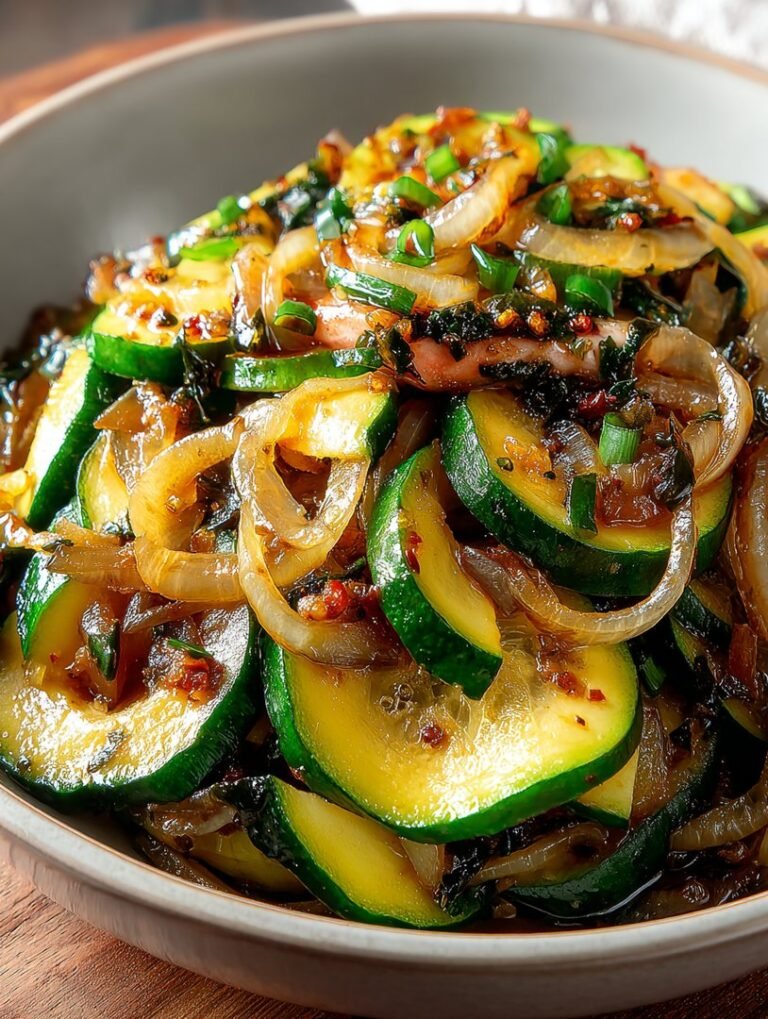
Japanese Zucchini & Onion Stir-Fry
Experience the magic of ‘Itame’! This quick, high-heat Japanese Stir-Fry delivers sweet caramelized onions and tender zucchini bathed in a savory soy-vinegar glaze. Ready in minutes.
- Total Time: 35 minutes
- Yield: 4 servings
Ingredients
- Zucchini (2 medium, sliced into half-moons)
- Yellow Onion (1 medium, sliced into wedges)
- Vegetable Oil (1 tablespoon)
- Garlic (2 cloves, minced)
- Soy Sauce (2 tablespoons)
- Rice Vinegar With Sugar (1 tablespoon)
- Toasted Sesame Oil (1 teaspoon)
Instructions
- Step 1: Slice the zucchini and onion according to specifications. In a small bowl, whisk together the soy sauce and rice vinegar with sugar; set the sauce aside.
- Step 2: Heat the vegetable oil in a large skillet or wok over high heat until shimmering. Add the sliced onions and stir-fry for 2-3 minutes until they begin to soften and become translucent.
- Step 3: Add the sliced zucchini and minced garlic to the pan. Continue to stir-fry vigorously for 4-5 minutes, ensuring the vegetables are tossed constantly until the zucchini is tender-crisp.
- Step 4: Pour the prepared soy sauce and rice vinegar with sugar mixture over the vegetables. Toss rapidly to coat everything evenly and cook for 60 to 90 seconds until the sauce slightly reduces and clings to the vegetables.
- Step 5: Remove the skillet from the heat, drizzle the toasted sesame oil over the stir-fry, and give it one final toss. Serve immediately as a side dish.
Notes
- Store leftovers promptly in an airtight container in the refrigerator for up to 3 days, but note the zucchini texture will soften significantly upon chilling.
- To reheat, use a hot skillet or wok over medium-high heat for just 1-2 minutes, tossing constantly; avoid the microwave, which will make the zucchini mushy.
- This stir-fry is a perfect side dish for grilled fish or chicken, or serve it generously over steamed white rice sprinkled with furikake for a simple, satisfying meal.
- The key to tender-crisp zucchini is maintaining extremely high heat throughout the cooking process; if your pan gets crowded or cools down, the vegetables will steam instead of stir-fry, resulting in a watery dish.
- Prep Time: 15 minutes
- Cook Time: 20 minutes
- Method: Stovetop
- Cuisine: American
FAQs
What are the best tips for achieving that perfect crisp-tender texture in stir-fries?
To avoid steaming your vegetables instead of frying them, the most crucial step is ensuring your pan or wok is screaming hot before you add any oil. Secondly, avoid overcrowding the pan. If you try to cook too many vegetables at once, the temperature drops rapidly, releasing moisture and creating mushiness. Cook the zucchini and onions in small batches if necessary, setting them aside, and then combining them with the sauce at the very end. Always chop your vegetables into uniform pieces so they cook evenly and maintain that desirable bite.
Can I add protein to elevate the Japanese Zucchini & Onion Stir-Fry?
Absolutely! Adding protein transforms this speedy side dish into a complete meal. Thinly sliced chicken breast or tender cuts of beef are excellent additions. If using meat, ensure you cook it first until almost done, remove it from the wok, and then proceed with cooking your vegetables. Reintroduce the cooked protein right before you pour in the sauce. This technique ensures the meat is perfectly cooked and prevents the delicate vegetables from overcooking while the meat browns.
How long will this Japanese Zucchini & Onion Stir-Fry recipe stay fresh in the refrigerator?
This savory Japanese Zucchini & Onion Stir-Fry remains delicious when stored correctly. Once the dish has cooled completely, transfer it to an airtight container and refrigerate it promptly. It will maintain its quality and flavor for approximately three to four days. While it tastes best fresh off the wok, leftovers are excellent for quick lunches. Be aware that the vegetables will lose some of their initial crispness upon reheating, but the intense, savory flavor remains satisfying.
What is the easiest way to handle the thick slices of onion and ensure they cook down properly?
Handling the onions correctly ensures they become sweet and tender without burning. Use a medium-sized yellow or Vidalia onion, slicing it into generous, uniform wedges. It is helpful to add the onions to the hot pan slightly before the zucchini, as they require a minute or two longer to soften and begin to caramelize. Keep stirring actively. This method allows the onions to release their pungent edge and absorb the fragrant garlic and ginger flavor before the squash is introduced.





Leave a Comment