
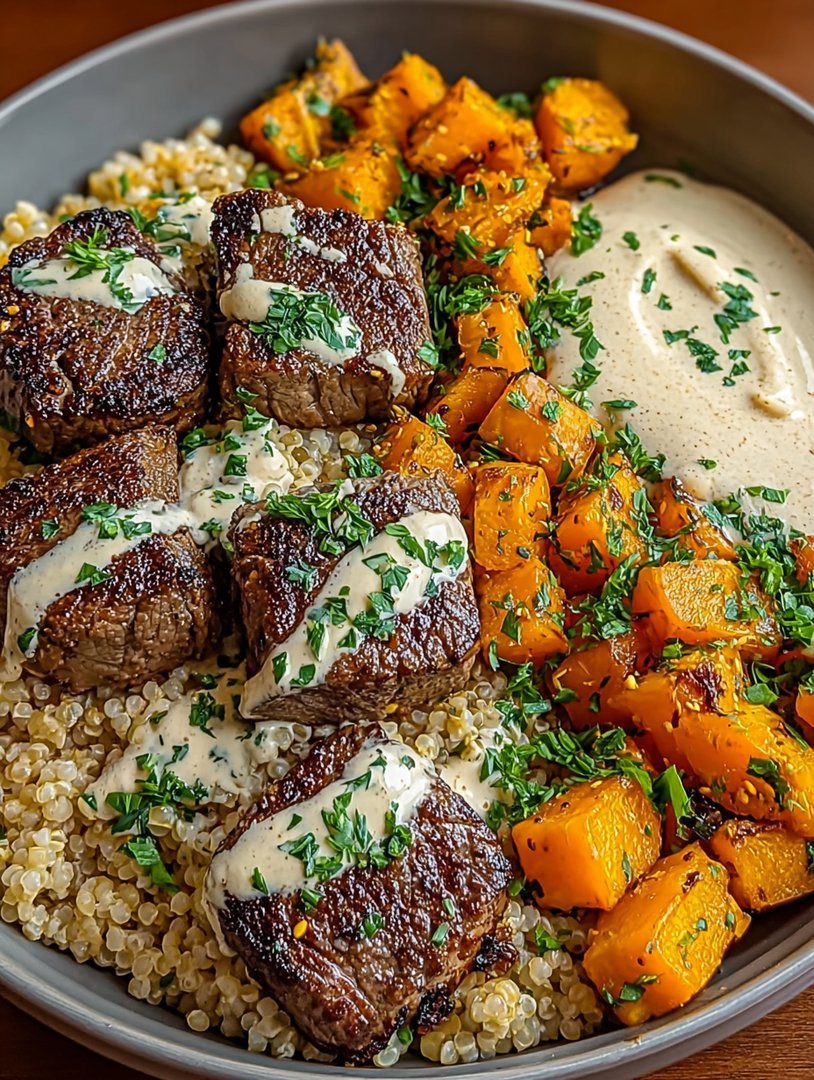
If you think meal prep is boring, clearly you haven’t met the star of the show: theMouthwatering Butternut Squash Steak Bowls Recipethat changes everything.
Imagine tender, perfectly seasoned flank steak mingling with sweet, caramelized squash—a delicious, comforting bowl designed to conquer your busy weeknights with flavor.
The Weeknight Warrior’s Guide to Gourmet Eating
There is a specific kind of chaos that descends upon the average household around 6:30 PM. It’s the ‘I’m starving, but I refuse to order takeout again’ dilemma. For years, I battled this culinary crisis armed only with rapidly defrosting ground beef and overwhelming anxiety. My attempts at meal prepping usually resulted in five identical, deeply sad containers of blandness that I avoided by Wednesday. But then, I discovered the magic of the power bowl—specifically, one that tastes like a five-star steakhouse relocated itself inside a giant, cozy bowl of autumn goodness.
The beauty of this particular bowl isn’t just in its fantastic flavor profile; it’s the efficiency. We are pairing a quick-searing protein with one of the most underrated vegetables in the universe: butternut squash. The squash is roasted until it’s perfectly caramelized—sweet, creamy, and robust enough to stand up to a hearty cut of beef. It’s a texture party, a flavor explosion, and crucially, it saves me from spending another regrettable evening eating cereal for dinner while staring blankly into the refrigerator. This dish is built for performance; it’s designed for the person who wants flavor without the fuss, sophistication without the stress, and a genuinely satisfying meal that doesn’t feel like a compromise.
Here are the compelling features that elevate this bowl from dinner to destiny:
- Ease of Preparation:This recipe streamlines complex flavors into simple steps, proving that gourmet dining doesn’t require an entire Saturday afternoon commitment.
- Flavor Profile:Enjoy the sophisticated balance of savory spice from the steak rub contrasting beautifully with the earthy sweetness of the roasted squash chunks.
- Visual Appeal:The vibrant orange hues of the squash, dark sear on the beef, and bright green garnishes create a photogenic, restaurant-quality meal.
- Versatility:Easily adaptable for different proteins or grains, making this power bowl a flexible foundation for endless creative culinary experiments.
Ingredients for Mouthwatering Butternut Squash Steak Bowls Recipe
Here’s what you’ll need to make this delicious dish:
- Flank Steak or SirloinChoose a cut that is about 1 inch thick for quick searing; patting it dry ensures a perfect crust.
- Butternut SquashSelect a firm squash, ensuring it feels heavy for its size, which indicates quality and moisture content for roasting.
- Olive OilEssential for roasting the squash and providing a high smoke point for searing the beef to achieve maximum flavor development.
- Spices (Smoked Paprika, Cumin, Garlic Powder)This trio creates a savory, slightly smoky rub that complements the natural richness of the beef wonderfully.
- Maple Syrup (or Honey)A small drizzle aids in the caramelization process of the squash, enhancing its inherent sweetness without being cloying.
- Fresh Arugula or SpinachThese greens form the vibrant base of the bowl, offering a peppery or mild contrast to the heavier components.
- Quinoa or Brown RiceCooked grain adds substantial fiber and texture, transforming the meal into a complete and sustaining power bowl.
- Apple Cider Vinegar DressingA simple mix of vinegar, Dijon mustard, and olive oil provides the necessary acidic tang to brighten all the savory and sweet flavors.
The full ingredients list, including measurements, is provided in the recipe card directly below.
How to Make Mouthwatering Butternut Squash Steak Bowls Recipe
Follow these simple steps to prepare this delicious dish:
Step 1: Prep and Roast the Butternut Squash
Preheat your oven to a hearty 425°F (220°C). Peel the butternut squash, scoop out the seeds, and cube the flesh into roughly one-inch pieces. Toss these cubes in olive oil, a pinch of salt, pepper, and a dash of maple syrup. Spread the cubes evenly on a baking sheet—do not crowd them, or they will steam instead of caramelizing—and roast for 20 to 25 minutes, flipping halfway through until tender and beautifully golden brown.
Step 2: Season and Prepare the Steak
While the squash is roasting, focus on the steak. Pat the flank steak completely dry using paper towels; this is the key to a good sear. In a small bowl, combine your smoked paprika, cumin, garlic powder, salt, and black pepper to create a robust rub. Rub this mixture thoroughly over both sides of the steak, pressing it into the meat so it adheres well and promises maximum flavor infusion during cooking.
Step 3: Sear the Steak to Perfection
Heat a heavy-bottomed skillet, preferably cast iron, over high heat until it is smoking hot. Add a tablespoon of oil with a high smoke point. Place the seasoned steak in the pan and sear for 3 to 4 minutes per side for medium-rare, or longer if you prefer a higher internal temperature. Immediately remove the steak from the skillet and allow it to rest on a cutting board for at least 8 to 10 minutes, letting the juices redistribute for ultimate tenderness.
Step 4: Assemble the Simple Vinaigrette and Slice
While the steak is resting, quickly whisk together the dressing, combining apple cider vinegar, Dijon mustard, fresh lemon juice, and olive oil. Season the vinaigrette, then shake vigorously until the mixture emulsifies. Once rested, slice the steak thinly against the grain—this ensures the meat is maximally tender and easy to chew before assembly.
Step 5: Construct the Ultimate Power Bowls
Start each bowl with a bed of warm cooked quinoa or rice, followed by a generous handful of fresh arugula or baby spinach. Arrange the perfectly roasted butternut squash cubes and the sliced steak artistically on top of the greens, scattering them for a visually appealing presentation. Before serving, generously drizzle the homemade apple cider vinaigrette over the entire bowl, paying special attention to coat the grains and the greens. Garnish with toasted pumpkin seeds or chopped fresh parsley for added crunch and brightness.
Transfer the perfectly constructed power bowls to the table and prepare for a chorus of appreciative sighs. These bowls are delicious served immediately or packed away for fantastic lunch meal prep throughout the week.
Mastering Steak Bowl Components
Crafting a power bowl focused on succulent steak and sweet roasted vegetables requires attention to texture and contrast. It shouldn’t just look good; it needs to satisfy that deep, primal craving for a complete, nutritious, and incredibly flavorful meal. If you want to take this recipe beyond its already stellar performance, focusing on two key elements—the texture variations and the quality of your protein—makes all the difference. We are looking to achieve culinary harmony, where every forkful offers something warm, something crunchy, something savory, and something slightly sweet.
One common mistake home cooks make is skipping the resting period for the steak. When you sear meat at high heat, the muscle fibers contract and push the internal juices to the center. If you slice it immediately, those delicious, flavorful juices end up on your cutting board instead of inside your steak. Resting the steak for that crucial 8 to 10 minutes allows the fibers to relax, reabsorbing the moisture and guaranteeing a juicy, tender slice every single time. Treat the protein with patience, and it will truly reward you with maximum tenderness.
Roasting Squash to Perfection
Getting the texture right requires attention to detail, particularly with the roasting process. Butternut squash is inherently sweet, but if you roast it too low, it just becomes mushy and bland. The high heat of 425°F is non-negotiable; it encourages the sugars to caramelize rapidly, creating those crispy, slightly charred edges that deliver complexity and structure to the bowl. You want resilience, not baby food consistency. Make sure to use enough olive oil to coat the cubes lightly, preventing sticking without making them greasy. Proper spacing on the sheet pan is paramount for achieving that desirable golden-brown color and firm exterior.
Variations for Dynamic Flavor
While the classic steak and squash foundation is amazing, adaptation keeps things interesting. A truly versatile recipe acts as a blueprint, allowing you to swap out components based on what you have or what dietary preferences you might be accommodating. Since the steak and the squash already provide a perfect savory-sweet foundation, tweaking the grain base or adding different types of crunch can refresh the experience dramatically. For instance, try farro or bulgur wheat instead of quinoa for a delightfully chewy and nutty profile. For the greens, while arugula provides a spicy, sophisticated bite, you could use massaged kale for something more robust, or even shredded Brussels sprouts for an earthy, crunchy component.
To avoid monotony, think about introducing a contrasting element. Quick-pickled red onions, steeped for just thirty minutes in apple cider vinegar and sugar, offer a sharp, tangy bite that cuts through the richness of the beef perfectly. Alternatively, for a fruitier twist, thinly sliced dried apricots or fresh pomegranate seeds can echo the sweetness of the squash while introducing a delightful textural pop. These contrasting flavors ensure every bite remains interesting and dynamic, transforming a simple assembly into a gourmet culinary experience that you will look forward to eating all week long.
Ultimately, this delicious approach to creating steak bowls is about optimizing flavor and convenience simultaneously. It’s the perfect answer to the question of what to cook when you need something fast, wholesome, and undeniably delicious. Stop relying on sad, flavorless shortcuts and start creating genuinely satisfying, beautiful meals that fuel your body and delight your palate. Enjoy the process, and more importantly, enjoy every single spoonful of your incredible creation.
The Accidental Discovery of Sunshine on a Plate
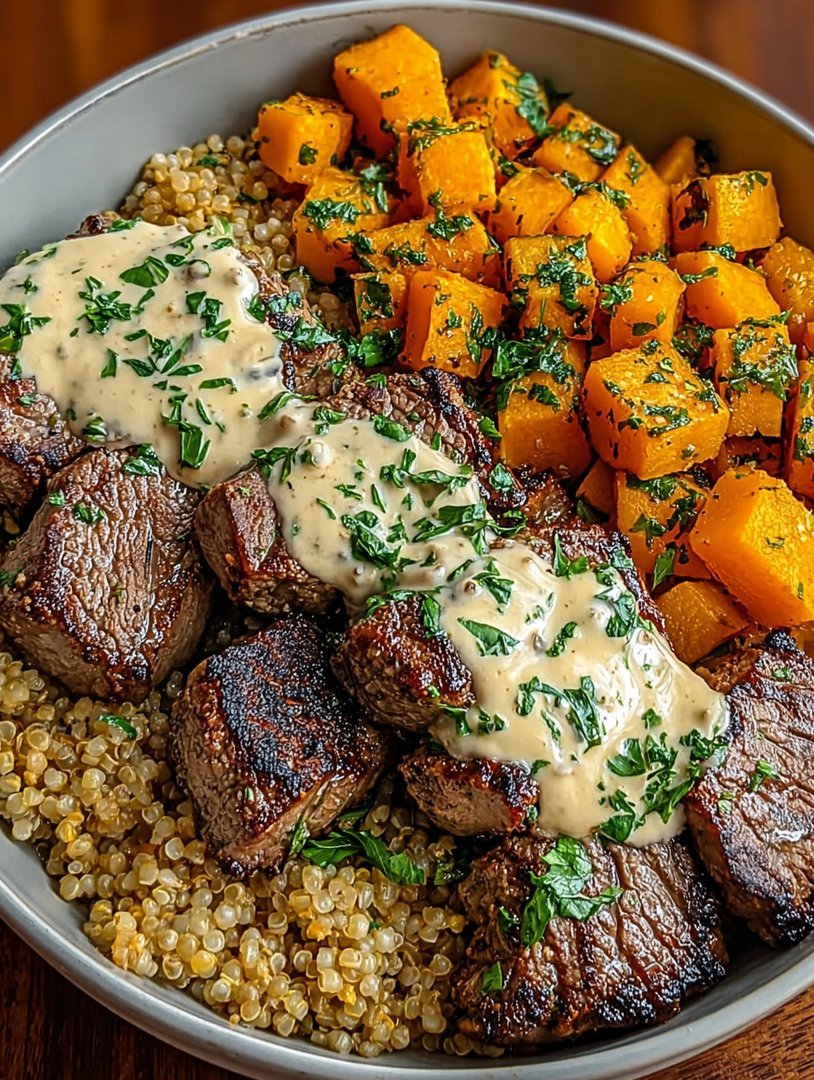
I stumbled upon this masterpiece during a particularly gloomy November. I had leftover flank steak and a mountain of butternut squash staring me down. Combining the rich, savory beef with the caramelized, sweet squash wasn’t just cooking; it was like capturing a ray of sunshine in a bowl, instantly lifting the mood and the dinner game.
Perfecting the Cooking Process
For ultimate efficiency and flavor synergy, always start by roasting the butternut squash until fork-tender and slightly caramelized. While the squash cools, prepare the vinaigrette. Sear the steak last, ensuring it rests properly before slicing, guaranteeing a tender, juicy result every time.
Add Your Touch
If you don’t have flank steak, use sirloin or beef tenderloin—just adjust cooking times. Swap pepitas for toasted walnuts or pecans for a richer crunch. For a vegetarian twist, use roasted chickpeas in place of the steak. A splash of apple cider vinegar brightens the whole dish beautifully.
Storing & Reheating
Store components separately. Keep the sliced steak and roasted squash in airtight containers in the refrigerator for up to four days. Reheat the steak quickly in a skillet over medium heat, or enjoy the squash cold. Dress the bowls right before serving for maximum freshness.
Gathering the Essentials for Your Harvest Bowl
ThisMouthwatering Butternut Squash Steak Bowls Recipeisn’t just a dinner; it’s an experience in texture and contrast. We need robust ingredients that can stand up to high heat and deliver deep, complex flavors. Think of this as your favorite cozy sweater, but in edible form. If you’ve been searching for that perfect weeknight dinner that feels fancy without demanding hours of your time, stop scrolling—you found it. We are focusing on high-quality beef and the natural sweetness of winter squash, balanced by a sharp, invigorating vinaigrette.
Ingredients for the Steak and Squash
- 1.5 lbs Flank Steak or Skirt Steak, trimmed
- 1 medium Butternut Squash, peeled, seeded, and cubed (about 4 cups)
- 2 tablespoons Olive Oil, divided
- 1 teaspoon Smoked Paprika
- 1/2 teaspoon Garlic Powder
- Salt and freshly ground Black Pepper, to taste
- 4 cups Arugula or mixed greens
Ingredients for the Maple-Dijon Vinaigrette
- 1/4 cup Olive Oil (extra virgin recommended)
- 2 tablespoons Apple Cider Vinegar
- 1 tablespoon Maple Syrup (Grade A dark recommended)
- 1 teaspoon Dijon Mustard
- 1 small Shallot, finely minced
- Pinch of Red Pepper Flakes (optional, for heat)
The Preparation: Roasting the Golden Jewels
The secret to achieving truly great flavor in a butternut squash steak and roasted squash bowl lies in how you handle the squash. Forget steaming; we want caramelization, that magical, slightly crispy edge that only high heat can provide. Preheat your oven to a hearty 400°F (200°C). Toss the cubed butternut squash with one tablespoon of olive oil, the smoked paprika, garlic powder, salt, and pepper. Spread the cubes in a single layer on a large baking sheet. Crowding the pan leads to sad, soggy squash, and nobody wants that.
Roast the squash for about 20 to 25 minutes, flipping halfway through, until the edges look beautifully golden brown and the squash yields easily when pierced with a fork. This step is non-negotiable; that deep sweetness contrasts wonderfully with the savory steak and sharp dressing. While the squash performs its golden transformation in the oven, you have time to tackle the star of the show: the beef.
Mastering the Steak Sear and Slicing Technique
Achieving a perfect crust on your steak is simpler than many people believe. First, pull the steak out of the refrigerator about 30 minutes before cooking. This allows it to come slightly closer to room temperature, which ensures more even cooking. Pat the flank steak thoroughly dry with paper towels—moisture is the enemy of the sear. Season both sides generously with salt and pepper. Don’t be shy; steak needs more seasoning than you think.
Heat your remaining tablespoon of olive oil in a heavy-bottomed skillet (cast iron is ideal) over high heat until it just begins to smoke. Carefully lay the steak in the hot pan, searing for 3 to 4 minutes per side for medium-rare, or longer if you prefer a higher internal temperature. Use a meat thermometer if you are unsure; 135°F is a fantastic medium-rare target for flank steak. Once cooked, immediately remove the steak from the pan and place it on a cutting board. Crucially, let the steak rest for at least 5 to 10 minutes. Resting allows the internal juices, which were violently pushed to the center during cooking, to redistribute throughout the meat, preventing a dry, disappointing slice.
When ready to slice, always cut against the grain. Look closely at the muscle fibers running along the steak; slice perpendicular to those lines. This shortens the fibers, ensuring every bite of your steak bowl is unbelievably tender. Thin, angled slices work best for flank or skirt steak.
The Essential Vinaigrette: Binding Flavors Together
A mediocre dressing can ruin an otherwise spectacular dish. Conversely, a brilliant vinaigrette elevates a simple combination of roasted vegetables and seared protein into something truly special. This maple-Dijon combination provides the perfect acidic zing and mellow sweetness to cut through the richness of the beef and complement the earthiness of the squash.
In a small bowl or jar, whisk together the extra virgin olive oil, apple cider vinegar, maple syrup, Dijon mustard, and minced shallot. If using, toss in a tiny pinch of red pepper flakes for a subtle background warmth—it’s not meant to burn, just to wake up the palate. Whisk vigorously until the dressing emulsifies slightly and thickens. Taste it and adjust seasoning; perhaps it needs a touch more salt or a little extra vinegar for brightness. Remember, the vinaigrette is the lively counterpart that ties all the robust ingredients of the Mouthwatering Butternut Squash Steak Bowls Recipe together.
Building Your Mouthwatering Butternut Squash Steak Bowls Recipe
Assembly is the grand finale, and it needs minimal effort. Start with the base: a generous layer of fresh arugula or mixed greens in each bowl. Arugula adds a peppery bite that contrasts beautifully with the sweet roasted vegetables. Next, artfully arrange the warm, roasted butternut squash cubes alongside the thinly sliced steak. Ensure you distribute everything evenly so every forkful offers a balanced bite.
Drizzle the maple-Dijon vinaigrette generously over the greens and the squash. Use just enough to coat, but don’t drown the ingredients. We want vibrancy, not soup. Optionally, you can sprinkle the bowl with toasted pepitas (or whatever crunch you chose) for texture. Serving these bowls immediately ensures the perfect temperature contrast—warm steak and squash against cool greens—making this hearty harvest bowl an absolute delight. This simple assembly process showcases why this dish is a go-to for quick, impressive dinners.
My grandmother once tried this recipe and immediately demanded the secrets to the squash. She thought I’d candied it, but it was just high-heat roasting doing its job—a true testament to simple preparation yielding stunning results.
Chef’s Corner: Three Tips for Perfect Steak and Squash Bowls
-
Temperature Check:Always use a meat thermometer when cooking steak. Overcooked flank steak becomes tough instantly, regardless of how perfectly you slice it against the grain.
-
Dry Roast First:If your butternut squash seems wet after cutting, pat it dry before tossing in oil and spices. This minimizes steaming and maximizes the beautiful, crispy caramelization necessary for the texture.
-
Rest the Vinaigrette:Mix the vinaigrette ingredients at least 10 minutes before use. This allows the minced shallots to slightly mellow and their flavors to fully infuse the oils and vinegars, deepening the overall taste.
Conclusion for Mouthwatering Butternut Squash Steak Bowls Recipe
The Mouthwatering Butternut Squash Steak Bowls Recipe successfully combines the savory richness of perfectly seared beef with the sweet, caramelized depth of roasted squash, all brightened by a zesty maple-Dijon dressing. This recipe proves that dinner doesn’t need complexity to be profoundly satisfying and flavorful. It delivers exceptional texture and taste, making it ideal for weeknight meals or casual entertaining. By following the simple steps—ensuring a proper sear on the steak and maximizing the squash’s caramelization—you guarantee a hearty, balanced, and truly unforgettable meal that brings harvest flavors directly to your table.
Print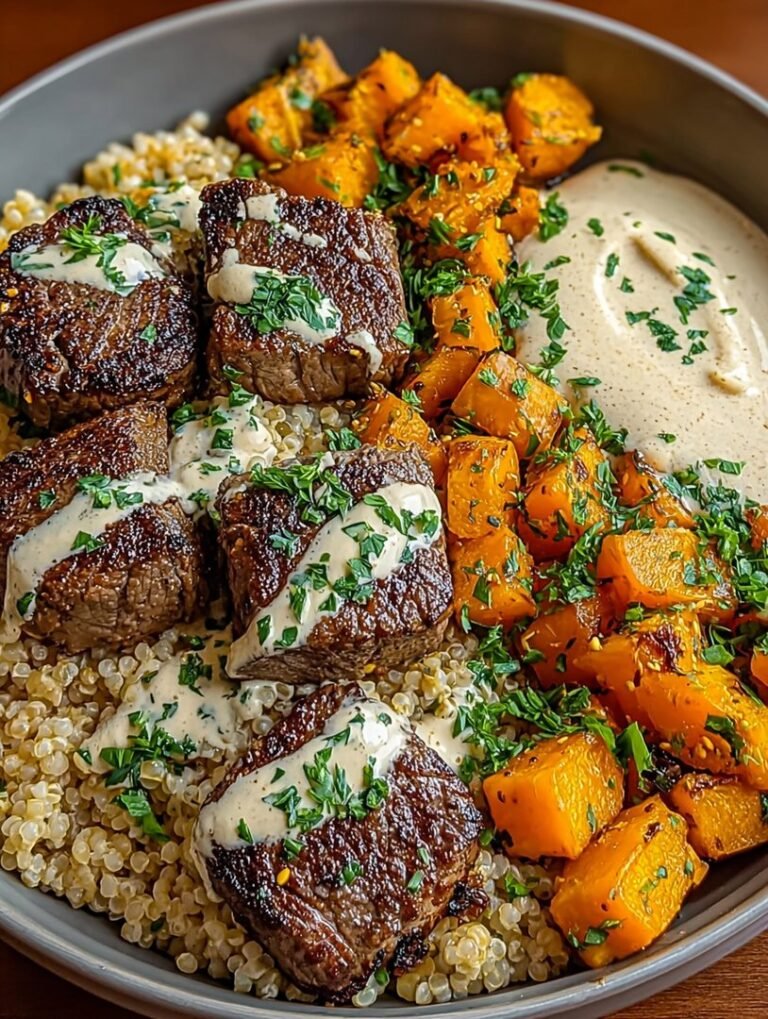
Mouthwatering Butternut Squash Steak Bowls Recipe
Perfectly seared steak meets sweet, smoky roasted butternut squash and fluffy quinoa. This nutrient-dense bowl is packed with flavor. Full instructions and nutrition facts included.
- Total Time: 35 minutes
- Yield: 4 servings 1x
Ingredients
- 1.5 lbs Flank Steak or Sirloin Steak
- 1 medium Butternut Squash, peeled and cut into 1-inch cubes
- 1 cup Quinoa, uncooked
- 2 tablespoons Olive Oil, divided
- 1 teaspoon Smoked Paprika
- 1 teaspoon Garlic Powder
- 1/4 cup Balsamic Vinegar
- 1 tablespoon Maple Syrup
Instructions
- Step 1: Preheat the oven to 400°F (200°C). Toss the butternut squash cubes with 1 tablespoon of olive oil, the smoked paprika, garlic powder, salt, and pepper. Spread on a baking sheet and roast for 20-25 minutes, or until tender and slightly caramelized. Simultaneously, cook the quinoa according to package directions and set aside.
- Step 2: While the squash roasts, season the steak liberally with salt and pepper. Heat the remaining 1 tablespoon of olive oil in a heavy-bottomed skillet (cast iron preferred) over medium-high heat. Sear the steak for 4 to 6 minutes per side, depending on thickness, for medium-rare doneness. Remove the steak and let it rest on a cutting board for 10 minutes.
- Step 3: Prepare the glaze by combining the balsamic vinegar and maple syrup in a small saucepan over medium heat. Bring the mixture to a simmer and reduce the heat slightly, allowing it to bubble gently until it has thickened into a syrupy glaze (about 3 minutes).
- Step 4: Thinly slice the rested steak against the grain.
- Step 5: Assemble the bowls: Start with a base of cooked quinoa, then layer with the roasted butternut squash cubes and the sliced steak. Drizzle the maple-balsamic glaze generously over the steak and squash before serving immediately.
Notes
- Store the steak, squash, and quinoa in separate airtight containers in the fridge for up to 3 days; keep the balsamic glaze separate for best flavor integrity.
- To preserve the steak's tenderness, reheat the quinoa and squash first, and then briefly pan-sear the sliced steak pieces just until warmed through.
- For added texture and brightness, sprinkle the finished bowls with crumbled goat cheese or feta and a handful of toasted pecans before drizzling with the glaze.
- When reducing the maple-balsamic glaze, watch it carefully; once the syrup coats the back of a spoon, remove it immediately to prevent it from over-reducing and hardening upon cooling.
- Prep Time: 15 minutes
- Cook Time: 20 minutes
- Method: Stovetop
- Cuisine: American




Leave a Comment