
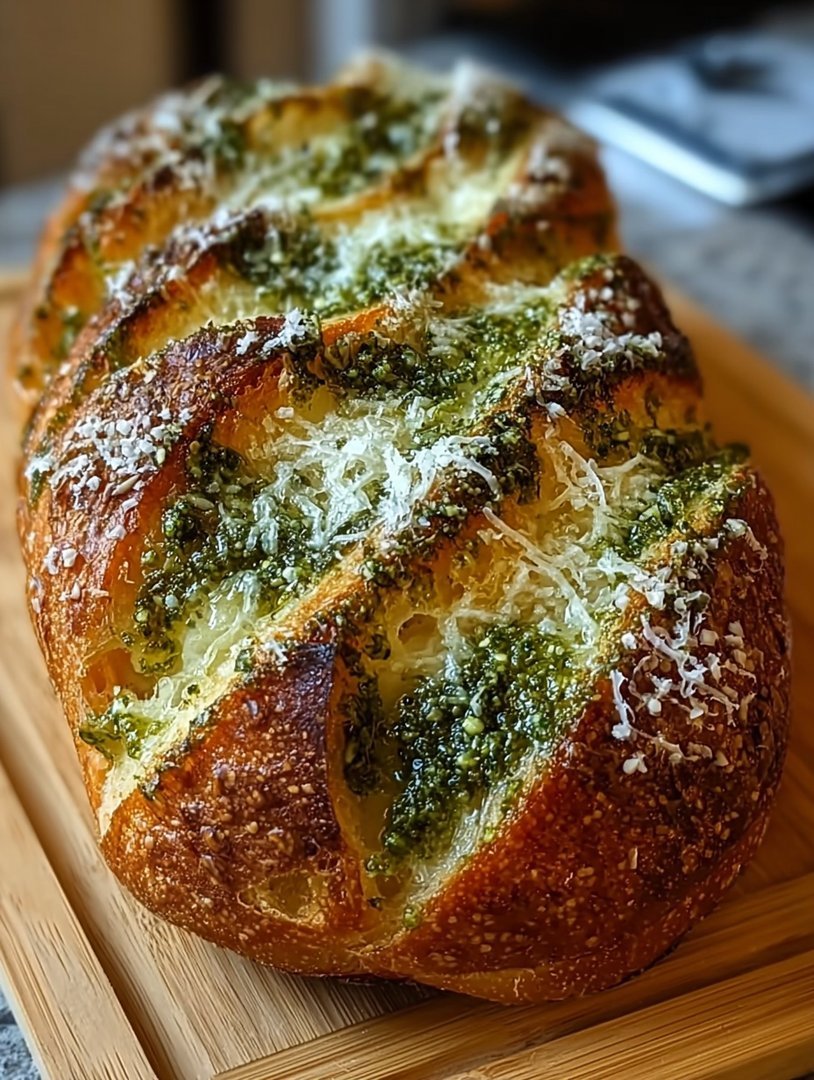
When life gives you a perfectly bubbly sourdough discard, you don’t just make another bland loaf; you elevate it to legendary status. Imagine the savory aroma of basil and garlic filling your kitchen—that is the promise of truly spectacularPesto Parmesan Sourdough. This recipe transforms humble dough into an aggressively addictive comfort food that will make all your friends jealous. It is time to retire the boring white loaf and embrace the cheesy, herbaceous swirl that awaits. This magnificent bread is crunchy on the outside, soft within, and explodes with Mediterranean flavors in every single bite.
- This simple layering technique ensures an even distribution of flavor, turning a standard loaf into a visually stunning, artisan-quality centerpiece for any meal.
- The intense, savory blend of vibrant basil pesto and sharp, salty Parmesan cheese creates an irresistible flavor profile that pairs perfectly with soups or stews.
- Preparation is surprisingly straightforward, meaning even beginner bakers can achieve bakery-level results with minimal fuss and only a few basic ingredients.
- Enjoy the versatility of this bread as an exceptional side dish, the base for gourmet sandwiches, or simply toasted and dipped into high-quality olive oil.
The Sourdough Saga: Why Pesto and Parmesan Are the Perfect Match
Every baker knows the sourdough journey is less a hobby and more a spiritual commitment. You lovingly feed your starter, give it names like “The Blob” or “Gluten Maximus,” and inevitably end up with more dough than you know what to do with. If you are tired of the basic sandwich slices and feel your starter deserves an upgrade worthy of its dedication, this recipe forPesto Parmesan Sourdoughis your destiny. I first developed this loaf after accidentally spilling a spoonful of pesto onto my freshly laminated dough. Instead of panicking, I embraced the chaos, sprinkled copious amounts of Parmesan, and shoved it into the oven. The result was a flavorful, swirling masterpiece that became an instant legend in my kitchen. The real magic here is the combination of textures. Sourdough already provides that signature tangy bite and wonderfully chewy crust, but when you introduce the rich, oily saturation of good pesto, the interior crumb stays incredibly moist. The Parmesan, finely grated, melts directly into the pesto pockets during baking, creating intensely salty, crispy edges where the cheese meets the heat. This bread doesn’t just complement dinner; it steals the show, making it the perfect companion for a hearty bowl of tomato soup or a simple grilled chicken breast. Forget fighting over the end slice—you’ll be wrestling over the middle swirl. This recipe will save you from the monotony of plain bread and ensure that no more precious sourdough starter goes to waste in the pursuit of blandness.
Ingredient Deep Dive: Selecting Your Flavor Arsenal
Creating a truly exceptional loaf of savory sourdough swirl depends heavily on the quality of your key flavor components. You can’t just grab any jar of pesto and expect gourmet results; think of the pesto as the vibrant heart of the bread, and the cheese as its salty soul. For the best flavor and color, I highly recommend using fresh, homemade basil pesto if you have the time. If not, select a refrigerated, high-quality store-bought option that lists olive oil as the main fat, avoiding those made predominantly with cheaper vegetable oils. The oil in the pesto is crucial, as it keeps the dough supple and prevents the inclusion of dry herbs from affecting the fermentation process negatively. When selecting Parmesan, skip the pre-grated plastic tubs. Purchase a block of high-quality aged Parmigiano Reggiano and grate it yourself; the depth of flavor is incomparable, and it melts infinitely better, creating those beautiful, savory ribbons throughout the bread. Do not underestimate the power of using freshly grated cheese; it holds its moisture better and disperses the flavor throughout the dough seamlessly, resulting in a superior overall experience.
Mastering the Swirl: Techniques for Artisan Bread
The appearance of this Pesto Parmesan Sourdough is just as important as the taste. Achieving that hypnotic green and white swirl requires a specific technique during the shaping phase. This isn’t just about slapping the ingredients onto the dough; it’s about gentle lamination and careful rolling. After the main bulk fermentation and subsequent cold rest, the dough needs to be delicately handled. Roll the dough out into a perfect rectangle, applying the pesto first in a thin, even layer, making sure to leave a clean 1-inch border around the edges. This border is essential for a proper seal. Next, evenly distribute the grated Parmesan. The trick to a perfect swirl is the tightness of the roll. Starting from the short end, roll the dough tightly like a sleeping bag, ensuring no air pockets form inside. Once rolled, pinch the seam firmly closed. If you are baking in a standard oval banneton, the next step is crucial: gently twist the rolled log once or twice before placing it seam-side down in the basket. This twisting action creates those signature, beautiful striations when the bread is sliced, making it look incredibly professional and artisanal.
Ingredients for Pesto Parmesan Sourdough
Here’s what you’ll need to make this delicious dish:
- Active Sourdough StarterEnsure your starter is fed, active, and doubled in size before starting the dough preparation for optimal rise.
- Bread FlourHigh-protein flour is essential for developing strong gluten structure, which supports the heavy additions of pesto and cheese.
- Filtered WaterUse room-temperature, filtered water as chlorine can sometimes interfere with the starter’s delicate bacterial balance.
- Fine Sea SaltSalt is necessary for flavor and also controls the fermentation rate, so measure this ingredient precisely.
- High-Quality Basil PestoUse approximately 1/3 cup of thick, oil-based pesto; drain off any excess surface oil before spreading.
- Freshly Grated Parmesan CheeseAim for about 1/2 cup of finely grated, aged Parmigiano Reggiano for the best savory kick and melting qualities.
The full ingredients list, including measurements, is provided in the recipe card directly below.
How to Make Pesto Parmesan Sourdough
Follow these simple steps to prepare this delicious dish: Step 1: Mixing the Dough and Autolyse Combine the active sourdough starter, flour, water, and salt in a large mixing bowl. Mix them until just combined—no dry streaks should remain. Cover the bowl and let the dough rest for 30 minutes. This process, known as autolyse, allows the flour to fully hydrate and gluten development to begin before any stretching is applied. Step 2: Bulk Fermentation and Stretching After the autolyse, perform a series of four “stretch and fold” sessions, spaced 30 minutes apart, to build strength in the dough. After the last fold, allow the dough to complete its bulk fermentation in a warm place until it has visibly increased in volume by 30-50% and feels light and airy. This stage usually takes between three and five hours, depending on your kitchen temperature. Step 3: Lamination and Flavor Incorporation Gently turn the dough out onto a lightly floured surface. Using your hands, stretch the dough into a large, thin rectangle, being careful not to tear the delicate surface. Spread the prepared basil pesto evenly across the entire surface, leaving that crucial one-inch border. Follow this immediately by sprinkling the grated Parmesan over the pesto layer. Step 4: Shaping the Swirl and Proofing Starting from the short end, tightly roll the dough into a cylinder. Pinch the seam shut firmly. Gently twist the log once or twice to enhance the swirl pattern, then place the dough seam-side up in a floured proofing basket (banneton). Cover the basket tightly and place it in the refrigerator for a long, cold proof, ideally 12 to 16 hours, to develop maximum flavor. Step 5: Baking Preparation and Scoring Preheat your oven and a lidded Dutch oven inside it to 500°F (260°C) for at least 45 minutes. Remove the hot Dutch oven carefully. Flip the cold dough from the basket onto parchment paper. Use a sharp razor blade (lame) to score the top of the loaf, creating a deep slice down the length of the bread to allow for oven spring. Step 6: Baking the Artisan Loaf Carefully lower the parchment paper and dough into the hot Dutch oven. Place the lid back on and reduce the oven temperature to 450°F (230°C). Bake covered for 20 minutes to trap the steam and ensure a beautiful rise. Remove the lid and continue baking for another 25–30 minutes, or until the crust is deeply golden brown and the internal temperature reaches 208°F (98°C). Transfer to plates and drizzle with sauce for the perfect finishing touch.
Serving Suggestions and Flavor Pairings
This vibrantPesto Parmesan Sourdoughis intensely flavorful, making it the perfect partner for various meals that benefit from a savory, herbaceous counterpoint. Its sturdy crust and moist crumb make it superb for dipping. Try pairing thick slices with a steaming bowl of roasted red pepper and tomato soup during the cooler months—the tang of the sourdough cuts through the richness of the vegetables beautifully. Another fantastic use is as the base for open-faced sandwiches. Toast a thick slice and top it with marinated beef slices, or some soft, fresh mozzarella and sun-dried tomatoes for a gourmet midday treat. The inherent saltiness also makes it wonderful served alongside a light, citrus-dressed salad. If you want to use it simply for breakfast, a little high-quality olive oil and a dash of balsamic vinegar reduction provide an exceptional start to the day. For a truly memorable pairing, serve it next to slow-cooked shredded chicken that has been seasoned simply with herbs and lemon juice.
Troubleshooting and Storage Secrets
Even seasoned bakers run into minor roadblocks, particularly when incorporating additions like pesto, which can interfere with gluten development if too much oil is used. If your dough feels overly slack or greasy after adding the pesto, try performing an extra set of folds after the initial lamination to help redistribute the ingredients and rebuild some tension. If your swirl isn’t visible, it means the roll wasn’t tight enough, so practice making a very tight cylinder next time, pushing out all the air as you go. For storage, this flavorful loaf is best enjoyed within two days of baking. Keep it whole and store it cut-side down on a cutting board, covered loosely with a clean tea towel to maintain the crust’s crispness while keeping the interior soft. If you need to store it longer, slice the cooled loaf, wrap the slices tightly in plastic wrap, and freeze them. You can easily toast the frozen slices directly when ready to eat, reviving the fresh-baked aroma and flavor instantly. Never store artisan bread in the refrigerator, as this accelerates staling and completely ruins the satisfying texture of the crust and crumb.
The Accidental Discovery of Sunshine on a Plate
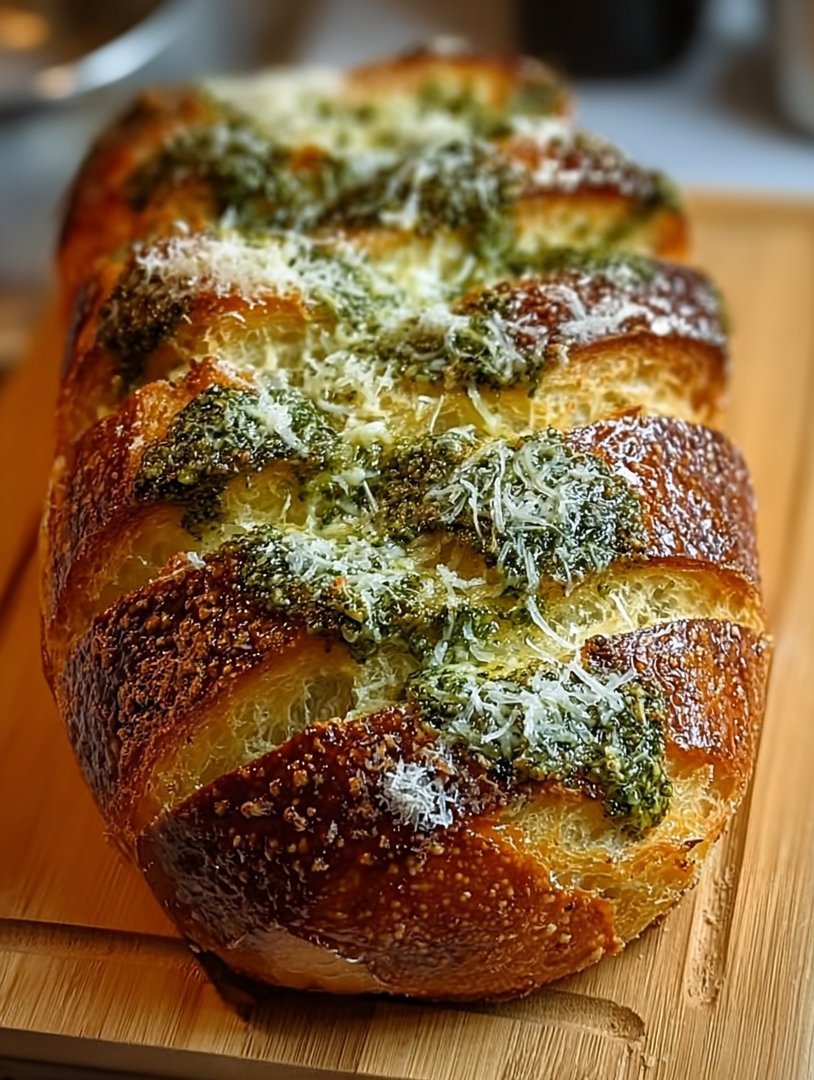
This bread was a happy accident born from a fridge full of leftover pesto and a stubborn sourdough starter named “Brenda.” I was aiming for a basic white loaf, but decided on a whim to swirl the vibrant green sauce and nutty Parmesan through the dough, transforming a humble bake into a truly intoxicating, savory masterpiece that smelled exactly like summer.
Perfecting the Cooking Process
Achieving the perfect swirl requires patience; incorporate the pesto and cheese only after the dough has completed its final bulk fermentation. Then, gently shape and coil the loaf before the final proofing, ensuring the rich inclusions don’t tear the delicate gluten structure. Bake hot and fast to achieve that signature crackle and deep golden crust.
Add Your Touch
If basil isn’t your thing, swap the traditional pesto for sun-dried tomato or even a spicy cilantro version. For an extra kick, mix in a pinch of red pepper flakes with the cheese. You can also substitute the Parmesan with aged cheddar or nutritional yeast for a different savory depth, playing with the flavor profile to match your mood.
Storing & Reheating
Store this masterpiece at room temperature in an airtight container for up to three days, though honestly, it rarely lasts that long. To bring back that glorious crusty chew, reheat thick slices in a toaster oven for about five minutes. Avoid the microwave, which turns perfect bread sadly rubbery.
The Sourdough Siren Song: Why This Loaf Rules
I believe every baker has a nemesis—that one recipe that refuses to cooperate, or that one ingredient that keeps ruining the party. For me, it used to be flavored sourdoughs. They always looked fantastic in photos, but when I tried them, the inclusions would inevitably tear the dough, leading to a flat, dense tragedy rather than the soaring, airy delight I envisioned. The bread would taste great, sure, but it lacked that signature oven spring that screams “I labored for 24 hours over this.”
But then came the inspiration for the Pesto Parmesan Sourdough. It wasn’t born out of flawless execution, but sheer necessity. I had a starter at peak performance, ready for action, but I was out of inspiration for a plain loaf. Staring into the abyss of my refrigerator, I spotted a forgotten jar of intensely garlicky, bright green pesto. It was a risk. Pesto is oily, and oil is generally considered the enemy of a highly structured sourdough dough. Adding it late in the game seemed like madness, but sometimes, madness yields delicious results.
What sets this Pesto Parmesan Sourdough apart is the timing. Most recipes suggest mixing everything simultaneously, but that’s where the structure fails. By waiting until the dough is already strong—well into the bulk fermentation—we treat the pesto and cheese almost like a lamination filling, rather than a primary ingredient. This method protects the gluten network while saturating every bite with savory, sharp flavor.
When you pull this loaf from the oven, it’s a moment of triumph. The outside is a deep amber, cracked in places, and the aroma filling your kitchen is potent: earthy yeast meets pungent basil and sharp, caramelized cheese. Slicing into it reveals a stunning, marbled interior—ribbons of emerald green wrapped around airy tunnels. It is visually stunning and utterly delicious, turning even the most skeptical bread eater into a devoted sourdough fan.
The Challenge of the Humble Starter
Working with sourdough requires a partnership with your starter. It’s a relationship built on trust, consistency, and a little bit of magic. Starters, especially mature ones, are strong enough to carry heavy loads, but we must respect their limits. Introducing inclusions like cheese and oily sauces can inhibit rise if done too early because fat coats the gluten strands, preventing them from linking up effectively. Think of it like trying to tie up string after dunking it in olive oil—it’s slippery and refuses to hold tension.
For this savory delight, we want the sourdough flavor to shine through, providing that characteristic tang that complements the saltiness of the Parmesan. If your starter is sluggish, give it an extra feed before you plan to bake. A vibrant, bubbly starter ensures maximum rise and a light, open crumb, which is crucial for showing off the beautiful green swirl of the Pesto Parmesan Sourdough. This process truly elevates the loaf from simple bread to an extraordinary eating experience that pairs perfectly with hearty soups or a simple drizzle of quality olive oil.
Ingredients for the Ultimate Pesto Parmesan Sourdough
This recipe assumes you have an active, mature sourdough starter (known as the leaven). If you need a refresher on building your starter, make sure it doubles reliably within 4 to 6 hours after feeding before beginning this recipe. All flour measurements should be weighted for precision.
Required Components
- Active Sourdough Leaven:100 grams
- Bread Flour:400 grams (high protein content preferred)
- Whole Wheat Flour:50 grams (adds depth and nutrition)
- Water (filtered, lukewarm):340 grams
- Fine Sea Salt:10 grams
Inclusion Components
- Basil Pesto:1/2 cup (ensure the pesto is rich but not overly liquid)
- Parmesan Cheese:1/2 cup, finely grated
- Garlic Powder:1/2 teaspoon (optional, for an extra aromatic kick)
Swirling Secrets: How to Master the Technique
Baking this Pesto Parmesan Sourdough takes time, typically spanning two days for fermentation, but the hands-on work is minimal. The goal is to develop a strong, elastic dough that can handle the rich inclusions without collapsing.
Day 1: Mixing and Bulk Fermentation
Begin by mixing your water and leaven until fully dissolved. Add the flours and mix until a shaggy mass forms. Let this rest for 30 minutes (autolyse). After the rest, sprinkle the salt over the dough and knead it in thoroughly for about 5 minutes until the dough tightens up slightly. Place the dough in a lightly oiled bowl.
Over the next 3 to 4 hours, perform four sets of stretch and folds, spaced 30 minutes apart. This builds strength. After the last fold, let the dough rest until it has visibly increased in volume by about 30 percent. This slight increase is key, as we still need room for the pesto and cheese.
Shaping the Swirl
Gently turn the dough out onto a lightly floured surface. Stretch the dough into a large, thin rectangle. Spread the basil pesto evenly over the surface, leaving about an inch clear around the edges. Next, sprinkle the grated Parmesan cheese and garlic powder over the pesto layer.
Starting from the short end, tightly roll the dough up into a cylinder, similar to a jelly roll. Ensure the seam is pinched shut. Now, gently shape the cylinder into a tight round loaf, folding the ends underneath. This coiling technique traps the pesto and cheese securely inside, ready for the final proof. Place the loaf seam-side up into a proofing basket dusted heavily with rice flour.
Proofing and Baking
Cover the proofing basket and place it in the refrigerator for a long, cold proof (12 to 18 hours). The cold temperature develops deep flavor and firms up the dough, making it easy to score and handle.
Preheat your oven and a Dutch oven to 500°F (260°C) for one hour. Carefully turn the cold loaf out onto parchment paper. Score the top deeply with a sharp razor blade, allowing for expansion.
Using the parchment paper as a sling, lower the loaf into the preheated Dutch oven. Cover and bake at 500°F for 20 minutes. After 20 minutes, reduce the temperature to 450°F (232°C), remove the lid, and continue baking for another 25 to 30 minutes, or until the crust is deeply golden brown and the internal temperature reaches 208°F (98°C).
Once baked, immediately transfer the Pesto Parmesan Sourdough to a cooling rack. Resist the urge to cut into this fragrant beast for at least two hours. Cutting it hot releases steam and results in a gummy texture. Patience is the final, essential ingredient for perfect bread.
Expert Tips for a Perfect Bake
Sometimes the smallest changes yield the most dramatic results when baking. Follow these tried-and-true techniques to elevate your Pesto Parmesan Sourdough from good to truly incredible.
-
Use rice flour generously in your proofing basket; it prevents sticking entirely, ensuring your delicate, flavorful dough releases cleanly before baking.
-
If your pesto is very liquid, blot it slightly with a paper towel before spreading; excess oil can weaken the gluten structure and prevent a proper rise.
-
Always bake the loaf directly from the refrigerator; the cold temperature helps maintain the shape and makes the scoring process much cleaner and sharper.
The first time I served this beautiful Pesto Parmesan Sourdough at a brunch, my usually reserved neighbor simply snatched a slice off the cooling rack—that’s how potent the aroma is—and declared it the best bread he’d ever eaten.
Conclusion for Pesto Parmesan Sourdough
Crafting the perfect Pesto Parmesan Sourdough is an endeavor that rewards patience and a willingness to embrace flavor innovation. By adhering to the crucial technique of adding the inclusions late in the fermentation process, you protect the sourdough’s vital structure while infusing every bite with rich basil and salty Parmesan. This savory loaf transcends traditional bread, offering a stunning marble swirl and an unforgettable aroma that fills your kitchen with warmth. Whether you serve it alongside a steaming bowl of homemade chicken soup or simply enjoy thick slices toasted with butter, this cheesy pesto bread promises to be a spectacular centerpiece. Don’t be afraid to experiment with your own twists, but always trust your starter—it’s the magic behind this glorious, rustic bake.
Print
Pesto Parmesan Sourdough
Experience the incredible tang of sourdough laced with vibrant pesto swirls and salty Parmesan. We detail the slow autolyse and folding steps necessary for an open crumb.
- Total Time: 35 minutes
- Yield: 4 servings
Ingredients
- Bread Flour: 500 grams
- Lukewarm Water: 350 grams
- Active Sourdough Starter (Levain): 100 grams
- Fine Sea Salt: 10 grams
- Fresh Basil Pesto: 80 grams (approx. 1/3 cup)
- Freshly Grated Parmesan Cheese: 50 grams (approx. 1/2 cup)
Instructions
- Step 1: Combine the bread flour, water, and sourdough starter in a large mixing bowl and mix until shaggy. Cover and allow the dough to rest for 30 minutes (autolyse). After the rest, incorporate the salt completely using a few minutes of mixing or folding.
- Step 2: Begin the bulk fermentation period (3-4 hours, depending on room temperature), performing a set of stretch and folds every 30 minutes for the first 90 minutes. After the final fold, gently spread the dough out, scatter the pesto and parmesan over the surface, and fold the dough over itself repeatedly to incorporate the additions, creating visible swirls.
- Step 3: Allow the remainder of the bulk fermentation to complete. Once the dough has increased in volume by about 30-50%, gently pre-shape the dough into a round, rest for 20 minutes, and then perform the final shape into a tight boule or batard. Place the dough seam-side up in a floured banneton basket.
- Step 4: Cover the banneton and transfer the dough to the refrigerator for a cold proofing period of 10-16 hours. About 45 minutes before baking, place a Dutch oven or baking vessel inside your oven and preheat the oven to 500°F (260°C).
- Step 5: Carefully turn the cold dough out onto parchment paper, score the top deeply, and transfer the dough (using the parchment paper) into the hot Dutch oven. Bake covered for 20 minutes at 475°F (245°C), then remove the lid and reduce the temperature to 450°F (232°C). Bake uncovered for an additional 25-30 minutes until the crust is deep golden brown.
Notes
- Store at room temperature (wrapped tightly) for 2-3 days, or slice and freeze leftover bread in an airtight bag for up to two months.
- To refresh stale slices, sprinkle lightly with water and bake in a preheated 350°F (175°C) oven for 5-7 minutes until the crust is wonderfully crisp again.
- Serve thick slices alongside a vibrant Caprese salad, or simply toast and top with a fried egg for a savory breakfast treat.
- When incorporating the pesto and parmesan, fold gently rather than kneading aggressively; this prevents the fat from inhibiting gluten strength and helps preserve those beautiful, visible swirls.
- Prep Time: 15 minutes
- Cook Time: 20 minutes
- Method: Stovetop
- Cuisine: American





Leave a Comment