
Imagine biting into a warm, comforting bowl of sunshine, bursting with sweet and savory flavors. That’s precisely what this *Roasted Vegetable Couscous* recipe delivers.
This vibrant dish is a celebration of textures and tastes, a symphony of roasted vegetables dancing with fluffy couscous. Perfect for a weeknight dinner or a potluck showstopper, it’s a versatile and delicious way to enjoy the bounty of the garden.
Here’s why you’ll adore this Roasted Vegetable Couscous:
- It’s incredibly easy to prepare, making it a fantastic option for busy weeknights when you need a healthy and satisfying meal quickly.
- The combination of roasted vegetables and fluffy couscous creates a delightful mix of textures and flavors that will tantalize your taste buds.
- The colorful array of roasted vegetables makes this dish visually appealing, adding a touch of elegance to any table or gathering.
- You can easily customize the vegetables and seasonings to suit your personal preferences and dietary needs, creating a unique and personalized dish every time.
Ingredients for Roasted Vegetable Couscous
Here’s what you’ll need to make this delicious dish:
The full ingredients list, including measurements, is provided in the recipe card directly below.
How to Make Roasted Vegetable Couscous
Follow these simple steps to prepare this delicious dish:
Step 1: Prepare the Vegetables
Preheat your oven to 400°F (200°C). Chop the broccoli florets, bell peppers, red onion, and zucchini into bite-sized pieces. Halve the cherry tomatoes. In a large bowl, toss the chopped vegetables with olive oil, minced garlic, dried herbs, salt, and pepper.
Step 2: Roast the Vegetables
Spread the seasoned vegetables in a single layer on a large baking sheet. Roast in the preheated oven for 20-25 minutes, or until the vegetables are tender and slightly caramelized, stirring halfway through.
Step 3: Cook the Couscous
While the vegetables are roasting, prepare the couscous according to the package directions, substituting vegetable broth for water. This will add a delicious depth of flavor to the couscous. Typically, this involves bringing the broth to a boil, stirring in the couscous, covering, and letting it sit for about 5 minutes until the liquid is absorbed.
Step 4: Combine and Serve
Once the vegetables are roasted and the couscous is cooked, combine them in a large serving bowl. Gently stir to combine. Squeeze fresh lemon juice over the mixture and toss again to distribute the flavors evenly.
Step 5: Adjust Seasonings and Garnish
Taste and adjust seasonings as needed. You may want to add more salt, pepper, or herbs to suit your preference. Garnish with fresh parsley or a sprinkle of grated Parmesan cheese (optional).
Step 6: Enjoy!
Serve the roasted vegetable couscous warm as a main course or a side dish. It’s also delicious served cold as a salad. Enjoy!
Perfecting the Cooking Process
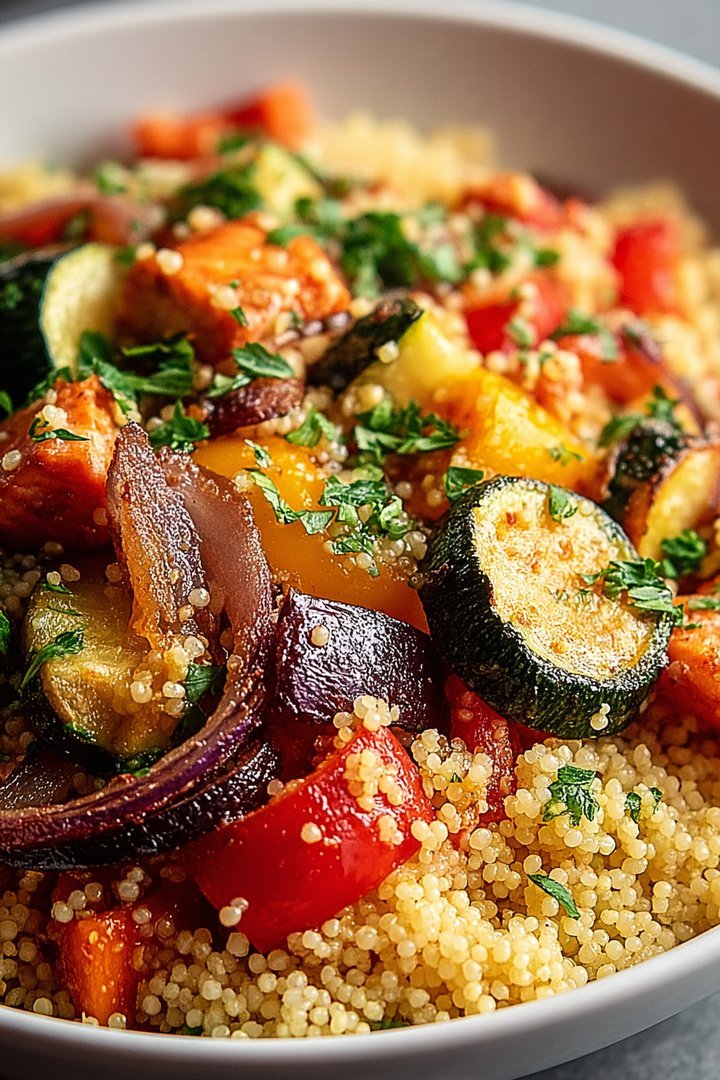
To achieve culinary harmony, start by roasting the vegetables until tender and slightly caramelized. While the veggies are in the oven, prepare the couscous according to package directions. Finally, whisk together the dressing and combine everything for a symphony of flavors.
Add Your Touch
Feel free to swap out your favorite vegetables or experiment with different herbs and spices. Add a sprinkle of toasted nuts or a dollop of creamy yogurt for an extra layer of flavor and texture. The beauty of this recipe lies in its versatility!
Storing & Reheating
Store leftover roasted vegetable couscous in an airtight container in the refrigerator for up to three days. To reheat, simply microwave until warmed through or enjoy it cold as a refreshing salad. It’s delicious either way!
- Roast the vegetables at a high temperature to bring out their natural sweetness and create a slightly charred, caramelized exterior.
- Don’t overcook the couscous, as it can become mushy; aim for a fluffy texture that complements the roasted vegetables.
- Taste and adjust the dressing to your liking, adding more lemon juice for brightness or a touch of maple syrup for sweetness.
(Personal anecdote formated as paragraph subheading)
My friends devoured this at our last potluck, even the picky eaters! One confessed she usually hates vegetables but loved them roasted with the couscous and zesty dressing. That’s a win in my book!
The Wonderful World of Couscous: A Tiny Grain with Big Flavor
Couscous, that delightful little grain often mistaken for a distant relative of rice, is actually pasta. Yes, you read that right! Tiny, semolina pasta, to be precise. It’s a staple in North African cuisine, and its versatility has made it a global favorite. Think of it as the chameleon of the culinary world, adapting to both sweet and savory dishes with remarkable ease.
But let’s be honest, couscous can be a bit… bland on its own. It’s like that friend who needs a little coaxing to come out of their shell. That’s where the magic of roasting vegetables comes in! Roasting intensifies the natural sweetness and adds a depth of flavor that transforms this simple grain into a star.
Why Roasted Vegetables Are the Real MVPs
Roasting vegetables is not just cooking; it’s an art form. It’s about coaxing the hidden potential out of humble ingredients and turning them into something extraordinary. When you roast vegetables, you’re essentially concentrating their flavors, caramelizing their natural sugars, and creating a symphony of textures, from crispy edges to tender interiors.
Think about it: a raw carrot is, well, just a carrot. But a roasted carrot? It’s a revelation! Sweet, slightly smoky, and utterly irresistible. The same goes for bell peppers, zucchini, onions, and all their veggie brethren. Roasting unlocks a whole new level of deliciousness that elevates any dish, especially our star, the Roasted Vegetable Couscous.
From Garden to Gourmet: Selecting Your Veggie Dream Team
Now, let’s talk about choosing the right vegetables for your roasting adventure. This is where you get to unleash your inner artist and create a masterpiece of flavors and colors. The key is to pick vegetables that complement each other in terms of taste and texture.
For this Roasted Vegetable Couscous recipe, I recommend a mix of:
- **Bell peppers:** They bring sweetness and a pop of color. Red, yellow, and orange are all fantastic choices.
- **Zucchini:** It adds a mild, slightly nutty flavor and a tender bite.
- **Red onion:** Roasting mellows out its sharpness and brings out its sweetness.
- **Cherry tomatoes:** They burst with juicy sweetness and add a vibrant touch.
- **Eggplant:** It becomes creamy and rich when roasted, adding depth to the dish.
- **Broccoli or Cauliflower:** These cruciferous veggies add a slightly earthy note and a satisfying crunch.
Of course, feel free to experiment with other vegetables based on your preferences and what’s in season. Butternut squash, sweet potatoes, Brussels sprouts, and asparagus are all excellent options.
The Secret to Perfectly Roasted Vegetables: A Few Simple Tricks
Roasting vegetables is easy, but there are a few tricks to ensure they turn out perfectly every time:
1. **Cut the vegetables into evenly sized pieces: ** This ensures that they cook at the same rate. No one wants a piece of charred broccoli next to a raw carrot.
2. **Don’t overcrowd the pan: ** Overcrowding steams the vegetables instead of roasting them. Use two baking sheets if necessary.
3. **Toss the vegetables with olive oil, herbs, and spices: ** This is where the magic happens! Olive oil helps the vegetables caramelize, while herbs and spices add depth of flavor.
4. **Roast at a high temperature: ** 400°F (200°C) is ideal for achieving that perfect balance of crispy edges and tender interiors.
5. **Don’t be afraid to experiment: ** Try different herbs, spices, and seasonings to find your favorite flavor combinations.
Crafting the Couscous: Fluffy Perfection Every Time
Alright, we’ve conquered the world of roasted vegetables. Now, let’s move on to the couscous. As I mentioned earlier, couscous can be a bit bland on its own, but with the right preparation, it can be transformed into a fluffy, flavorful base for our dish.
The key to perfect couscous is to use the right ratio of liquid to couscous and to avoid overcooking. Here’s my foolproof method:
1. **Bring water or broth to a boil: ** Use vegetable broth for added flavor. The ratio is typically 1:1, meaning 1 cup of liquid for every cup of couscous.
2. **Add the couscous: ** Remove the pot from the heat and stir in the couscous.
3. **Cover and let it sit: ** Cover the pot and let the couscous sit for 5-10 minutes, or until all the liquid is absorbed.
4. **Fluff with a fork: ** Use a fork to fluff the couscous and separate the grains. This will prevent it from clumping together.
5. **Season to taste: ** Add a pinch of salt, pepper, and any other desired seasonings.
For an extra layer of flavor, try toasting the couscous in a dry skillet before cooking it. This will bring out its nutty notes and add a pleasant aroma.
Dressing the Part: The Zesty Finale
No Roasted Vegetable Couscous is complete without a vibrant and flavorful dressing. This is where you get to tie all the elements together and create a harmonious blend of flavors.
My go-to dressing for this recipe is a simple lemon-herb vinaigrette:
- **Lemon juice:** Adds brightness and acidity.
- **Olive oil:** Provides richness and body.
- **Fresh herbs:** Parsley, mint, and basil are all excellent choices.
- **Garlic:** Adds a pungent kick.
- **Maple syrup:** Balances the acidity and adds a touch of sweetness.
- **Salt and pepper:** To taste.
Whisk all the ingredients together in a small bowl and adjust the seasoning to your liking. You can also add a pinch of red pepper flakes for a touch of heat.
Assembling the Masterpiece: Bringing It All Together
Now for the fun part! Once you’ve roasted the vegetables, prepared the couscous, and whipped up the dressing, it’s time to assemble your Roasted Vegetable Couscous masterpiece.
1. **Combine the couscous and roasted vegetables: ** In a large bowl, gently toss the couscous and roasted vegetables together.
2. **Drizzle with dressing: ** Drizzle the dressing over the couscous and vegetables and toss to coat evenly.
3. **Garnish: ** Garnish with fresh herbs, toasted nuts, or a dollop of creamy yogurt, if desired.
4. **Serve: ** Serve immediately or chill for later.
Variations on a Theme: Endless Possibilities
The beauty of this Roasted Vegetable Couscous recipe is that it’s incredibly versatile. Feel free to adapt it to your liking and create your own unique variations. Here are a few ideas to get you started:
- **Add protein:** Grilled chicken, chickpeas, or lentils are all great additions.
- **Include fruit:** Dried cranberries, raisins, or apricots add a touch of sweetness and chewiness.
- **Spice it up:** Add a pinch of red pepper flakes or a dash of hot sauce for a kick.
- **Make it Mediterranean:** Add crumbled feta cheese, Kalamata olives, and a sprinkle of oregano.
- **Go vegan:** Omit the yogurt or feta cheese and use a plant-based alternative.
The possibilities are endless! So, get creative, experiment with different flavors, and make this Roasted Vegetable Couscous your own.
Conclusion for Roasted Vegetable Couscous :
In short, the Roasted Vegetable Couscous recipe offers a symphony of flavors and textures. You’re not just making a side dish; you’re crafting a masterpiece. The key is roasting the vegetables to perfection and adding a flavorful dressing. Don’t be shy about experimenting with different spices or herbs. Feel free to adjust the recipe to your liking. Remember, cooking should be fun, so get in the kitchen and start creating!
Print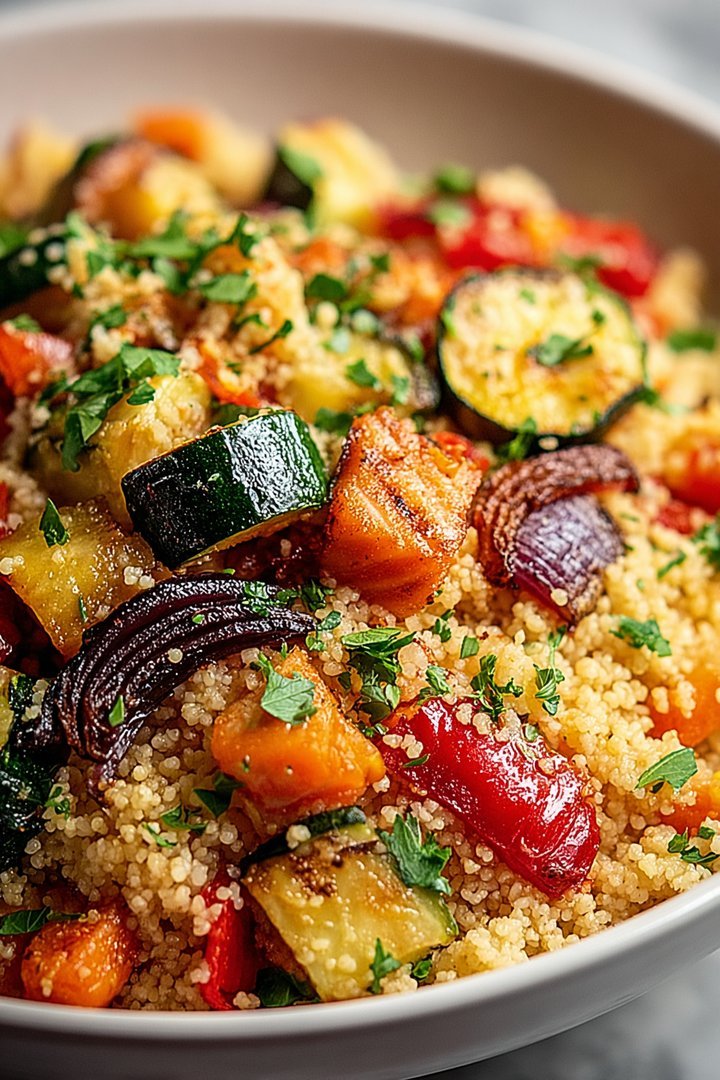
Roasted Vegetable Couscous
Delicious roasted vegetable couscous recipe with detailed instructions and nutritional information.
- Total Time: 35 minutes
- Yield: 4 servings
Ingredients
- Couscous: 1 cup
- Water or vegetable broth: 1 1/4 cups
- Olive oil: 3 tablespoons
- Bell peppers (various colors), chopped: 2 cups
- Red onion, chopped: 1 medium
- Zucchini, chopped: 2 cups
- Cherry tomatoes: 1 cup
- Feta cheese, crumbled: 1/2 cup
Instructions
- Step 1: Preheat oven to 400°F (200°C). Toss the bell peppers, red onion, zucchini, and cherry tomatoes with 2 tablespoons of olive oil, salt, and pepper on a baking sheet.
- Step 2: Roast the vegetables in the preheated oven for 20-25 minutes, or until tender and slightly caramelized, stirring halfway through.
- Step 3: While the vegetables are roasting, bring the water or vegetable broth to a boil in a medium saucepan. Stir in the couscous, cover, and remove from heat. Let it stand for 5 minutes, then fluff with a fork.
- Step 4: Once the vegetables are roasted, add them to the cooked couscous.
- Step 5: Drizzle with the remaining 1 tablespoon of olive oil and gently stir to combine.
- Step 6: Sprinkle with crumbled feta cheese before serving.
Notes
- Store leftover roasted vegetable couscous in an airtight container in the refrigerator for up to 3 days.
- Reheat the couscous gently in the microwave or a skillet with a splash of broth to prevent it from drying out.
- Serve this vibrant couscous as a light lunch, a side dish with grilled chicken, or even chilled as a refreshing salad.
- Roasting the vegetables until slightly caramelized enhances their sweetness, so don't be afraid to let them get a little color.
- Prep Time: 15 minutes
- Cook Time: 20 minutes
- Method: Stovetop
- Cuisine: American
FAQs :
Can I use different vegetables in my Roasted Vegetable Couscous?
Absolutely! Consider this recipe a starting point for your culinary adventure. Feel free to swap in your favorite veggies. Zucchini, bell peppers of any color, and even broccoli florets would be fantastic additions. Just remember to adjust the roasting time slightly depending on the density of the vegetables you choose. Root vegetables like carrots and parsnips might take a bit longer, while softer options like mushrooms will cook more quickly. Ultimately, it’s all about customizing the dish to your personal preferences, so let your creativity run wild and see what delightful combinations you can concoct.
How do I make Roasted Vegetable Couscous vegetarian?
Making this dish fully plant-based is super simple! The current recipe is already very vegetarian-friendly. The only thing you need to check is your couscous. Ensure that the couscous you are using is not pre-seasoned with any meat-based ingredients. Some pre-packaged couscous might contain chicken broth or other animal products. If you’re unsure, simply opt for plain couscous and season it yourself. Otherwise, you’re good to go! This recipe celebrates the vibrant flavors of roasted vegetables, and they certainly don’t need any animal products to shine.
How do I store leftover Roasted Vegetable Couscous?
Leftover Roasted Vegetable Couscous is your future self’s best friend! To store it, simply let it cool down completely before transferring it to an airtight container. Then, pop it in the refrigerator, where it will happily hang out for up to three to four days. When you’re ready to enjoy it again, you can either reheat it in the microwave or eat it cold. It’s delicious either way! Cold couscous salad makes a fantastic light lunch or side dish, especially on a warm day. You can even add a squeeze of lemon juice or a sprinkle of fresh herbs to brighten it up.
What protein can I add to Roasted Vegetable Couscous?
Looking to boost the protein content of your Roasted Vegetable Couscous? Fantastic idea! Grilled chicken or turkey breast, cut into bite-sized pieces, would be a delicious and easy addition. Alternatively, you could toss in some chickpeas or lentils for a plant-based protein boost. If you’re feeling adventurous, try adding some grilled halloumi cheese for a salty and savory twist. Tofu is another great option. No matter what you choose, adding a protein element will transform this side dish into a complete and satisfying meal.






Leave a Comment