
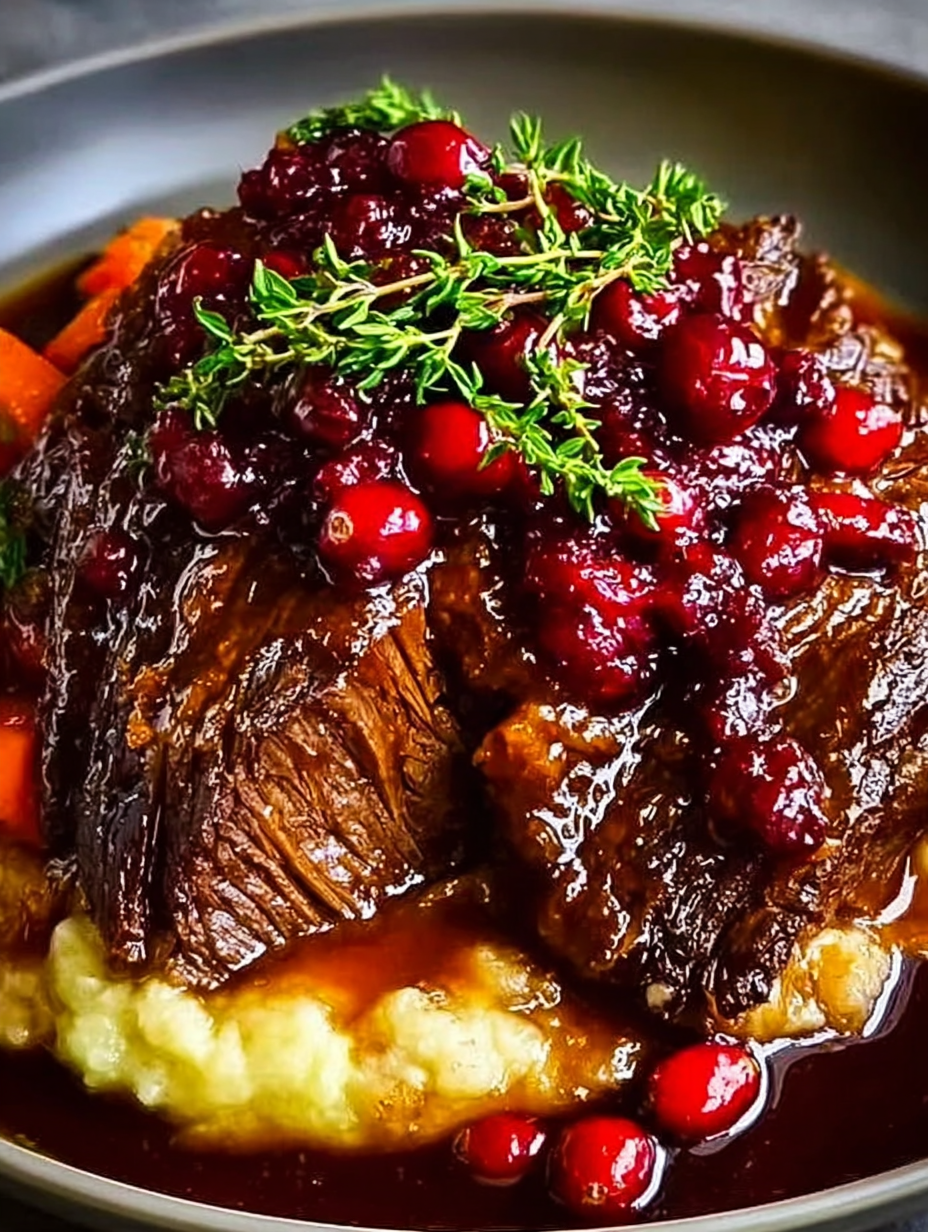
The aroma of deep, savory beef mingling with tart cranberries is the scent of a perfect evening, signaling the start of something truly special. Forget complicated meals; thisSlow-Braised Beef Roast with Cranberry Balsamic Glazerecipe delivers maximum flavor for minimal fuss, proving that elegance doesn’t require exhaustion.
It’s the dish that earns you applause—a centerpiece of incredibly tender beef that practically melts when you look at it. Trust me, your guests will think you spent all day hovering over the stove, when in reality, the oven did all the heavy lifting while you relaxed.
- The resulting beef is unbelievably tender, transforming tougher cuts into luxurious, fall-apart magnificence perfect for any special occasion or cozy gathering.
- The unique cranberry balsamic glaze balances sweet, tart, and savory notes, elevating the traditional roast profile into something truly unforgettable and exciting.
- Requires minimal active prep time, relying instead on low and slow oven heat to develop deep, complex flavors effortlessly throughout the cooking process.
- Incredibly versatile, this glazed beef roast pairs beautifully with everything from creamy mashed potatoes to bright, crisp green vegetables and hearty grains.
The Secret to Unbelievable Tenderness: Understanding Braising
There is a common misconception that great roasts require expensive, prime cuts of meat. While a tenderloin is certainly lovely, the magic of braising allows us to take a hardworking, budget-friendly cut and transform it into the culinary equivalent of a fluffy cloud. Braising is essentially a long, slow bath in liquid. It uses moist heat to break down collagen, the tough connective tissue found heavily in cuts like chuck roast or bottom round.
When collagen heats up over several hours in a moist environment, it slowly dissolves and converts into rich, luxurious pectin. This pectin is what gives the meat that luscious, moist mouthfeel. This technique is non-negotiable for achieving that melt-in-your-mouth texture. If you try to roast these cuts quickly at high heat, they become dry and chewy. If you braise them correctly, they become buttery and phenomenal.
Choosing the Right Cut for Your Braised Beef Roast
When shopping for your beef, aim for cuts with excellent marbling and a good amount of connective tissue. These are the unsung heroes of the roasting world. Avoid lean cuts intended for grilling. Chuck roast is the champion here—it’s flavorful, well-marbled, and designed to withstand hours of cooking. If chuck isn’t available, look for a bottom round or even a shoulder cut. Always pat the meat thoroughly dry before searing; moisture inhibits the Maillard reaction, which is the necessary browning process that creates intense, savory flavor compounds.
Speaking of searing, never skip this step! It takes about ten minutes and dramatically locks in the richness. Think of searing as giving the meat its flavorful armor before it plunges into the braising liquid. If you skip the sear, you miss out on layers of nutty, deep, beefy flavor that form the foundation of this entire dish. It’s the difference between an okay roast and a legendary one.
Ingredients for Slow-Braised Beef Roast with Cranberry Balsamic Glaze
Here’s what you’ll need to make this delicious dish:
- Beef Chuck RoastAim for a 3 to 4-pound cut, preferably with good marbling, which will provide moisture and flavor during the long braise.
- Yellow Onion and CarrotsThese aromatic vegetables form the essential mirepoix base, adding foundational sweetness and depth to the braising liquid.
- Garlic ClovesUse fresh garlic, smashed slightly, to infuse the liquid with a pungent, savory aroma that complements the beef beautifully.
- Beef BrothUse low-sodium, high-quality beef broth to ensure the final product is seasoned correctly and has a rich, deep flavor.
- Tomato PasteA small amount of paste adds complexity and acidity, deepening the color and savory profile of the final gravy.
- Fresh Thyme and Bay LeavesThese herbs should be fresh for the best result, providing a classic, earthy aroma essential for a great beef roast.
- Cranberry Sauce (Jellied or Whole Berry)This is the key component for the glaze, introducing a wonderful tart sweetness that cuts through the richness of the beef.
- Balsamic VinegarHigh-quality balsamic is crucial, providing the necessary tang and viscosity to create the signature glossy, flavorful glaze.
- Brown Sugar and Dijon MustardThese two ingredients help balance the acidity of the balsamic and cranberries, adding depth and a slight sharpness to the glaze.
The full ingredients list, including measurements, is provided in the recipe card directly below.
How to Make Slow-Braised Beef Roast with Cranberry Balsamic Glaze
Follow these simple steps to prepare this delicious dish:
Step 1: Sear the Beef to Build Flavor
Preheat your oven to 325°F (160°C). Season the beef roast generously on all sides with kosher salt and black pepper. In a large Dutch oven or oven-safe pot, heat two tablespoons of cooking oil over medium-high heat until shimmering. Carefully sear the roast for 3-4 minutes per side until a deep, dark brown crust forms. Remove the beef and set it aside.
Step 2: Sauté the Aromatics and Build the Base
Reduce the heat to medium. Add the chopped onions and carrots to the same pot, scraping up any browned bits from the beef (this is flavor gold!). Sauté until the vegetables soften, about 5-7 minutes. Add the smashed garlic cloves and the tomato paste, stirring constantly for one minute until the paste darkens slightly. This step activates the flavor of the paste.
Step 3: Begin the Braise
Return the beef roast to the pot. Pour in the beef broth until it comes about halfway up the sides of the roast; it should not fully submerge the beef. Add the fresh thyme sprigs and bay leaves. Bring the liquid to a gentle simmer on the stovetop, then cover the pot tightly with a lid.
Step 4: The Low and Slow Cooking Process
Transfer the covered pot to the preheated oven. Braise the beef for 3 to 4 hours. The beef is done when it is fork-tender, meaning a fork can easily slide into the meat and twist away a piece without resistance. The exact time depends on the thickness of your roast, so check for tenderness, not just internal temperature.
Step 5: Prepare the Cranberry Balsamic Glaze
Once the roast is tender, carefully remove it from the pot and transfer it to a cutting board, tenting it loosely with foil to rest. Skim off any excess fat from the surface of the braising liquid. In a small saucepan, combine one cup of the skimmed braising liquid, the cranberry sauce, balsamic vinegar, brown sugar, and Dijon mustard. Bring this mixture to a boil, then reduce the heat and simmer rapidly for 10-15 minutes until the glaze thickens to a syrupy consistency.
Step 6: Glaze and Serve
Slice the rested beef against the grain or shred it completely, depending on your preference. Return the beef pieces to the pot containing the reduced braising liquid, or arrange them on a platter. Drizzle the warm, glossy cranberry balsamic glaze generously over the beef before serving.
Transfer to plates and drizzle with sauce for the perfect finishing touch, perhaps alongside creamy polenta.
Mastering the Glaze: Achieving Perfect Balance
The cranberry balsamic glaze is the element that transforms this from a standard beef dinner into a memorable culinary event. The key to its success lies in balancing the intensely rich, savory flavor of the beef with a bright, acidic, and slightly sweet counterpoint. If your glaze seems too sweet, a splash of apple cider vinegar or lemon juice can instantly correct it. If it is too tart, a pinch more brown sugar will mellow the edge.
A common mistake people make is not reducing the glaze enough. The reduction process concentrates the flavors and creates that beautiful, sticky viscosity that coats the meat so well. If you lift a spoon out of the glaze and it drips off too quickly, it needs more time on the stove. Aim for a texture that slowly coats the back of a spoon.
Tips for Maximum Glaze Flavor
- Don’t Be Shy with Balsamic:Use a good quality balsamic vinegar. The flavor profile of cheap vinegar will be sharp and thin, whereas a quality product offers a rounded, complex sweetness.
- The Mustard Secret:Dijon mustard isn’t just for sandwiches; in glazes and sauces, it acts as an emulsifier and flavor enhancer. It binds the sweet and sour elements while adding a necessary subtle sharpness.
- Using the Pan Drippings:Always, always use the braising liquid as the base for the glaze. This liquid is packed with pectin and concentrated beef flavor, lending the glaze an unmatched richness you cannot replicate with just broth or water.
If you prefer a thicker, richer gravy to serve on the side, you can whisk one tablespoon of cornstarch mixed with one tablespoon of cold water into the remaining braising liquid after you skim the fat. Simmer for a minute or two until it reaches your desired gravy consistency.
Pairing Perfection: Side Dishes for Slow-Braised Beef Roast
When you have a dish as deeply flavored and satisfying asSlow-Braised Beef Roast with Cranberry Balsamic Glaze, your side dishes should either offer textural contrast or absorb the luscious sauce. Since the beef is so tender, you want something that provides a sturdy base.
Creamy mashed potatoes are a classic for a reason, acting like fluffy sponges for that glorious glaze and pan juices. However, if you are looking for a slightly more sophisticated pairing, consider a light, flavorful grain.
Elevated Side Dish Suggestions
For a beautiful color contrast and light sweetness, try roasted butternut squash with sage. Its mild sweetness harmonizes perfectly with the tartness of the cranberry glaze. Alternatively, whipped sweet potatoes offer a similar flavor profile but with a lighter texture.
Don’t forget the greens! A crisp, lightly steamed green vegetable cuts through the richness beautifully. Consider sautéed green beans tossed with toasted almonds, or perhaps charred Brussels sprouts kissed with a drizzle of honey. The slight bitterness and crunch of these vegetables provide the ideal balance needed to complete the meal, preventing the whole plate from feeling too heavy.
Ultimately, this roast is a showstopper that requires surprisingly little effort once it hits the oven. It is the perfect recipe for entertaining, allowing you to focus on your guests while the deep, rich aromas fill your kitchen, promising an exquisite dining experience.
Storing and Reheating Tips for Braised Beef
Leftovers of thisSlow-Braised Beef Roast with Cranberry Balsamic Glazeare truly a gift, often tasting even better the next day after the flavors have fully melded. Store the beef and the remaining sauce together in an airtight container in the refrigerator for up to four days. If the glaze is thick, the meat will stay incredibly moist.
To reheat, the best method is to gently warm the beef and glaze together in a small saucepan over low heat on the stovetop. If you notice the sauce has thickened too much overnight, add a splash of water or extra beef broth to loosen it up. Avoid reheating in the microwave unless absolutely necessary, as high heat can dry out the edges of the beautifully braised beef. This slow reheating process ensures the beef retains all of its tenderness and juicy moisture, making your second meal as satisfying as the first.
The aroma of deep, savory beef mingling with tart cranberries is the scent of a perfect evening, signaling the start of something truly special. Forget complicated meals; thisSlow-Braised Beef Roast with Cranberry Balsamic Glazerecipe delivers maximum flavor for minimal fuss, proving that elegance doesn’t require exhaustion.
It’s the dish that earns you applause—a centerpiece of incredibly tender beef that practically melts when you look at it. Trust me, your guests will think you spent all day hovering over the stove, when in reality, the oven did all the heavy lifting while you relaxed.
- The resulting beef is unbelievably tender, transforming tougher cuts into luxurious, fall-apart magnificence perfect for any special occasion or cozy gathering.
- The unique cranberry balsamic glaze balances sweet, tart, and savory notes, elevating the traditional roast profile into something truly unforgettable and exciting.
- Requires minimal active prep time, relying instead on low and slow oven heat to develop deep, complex flavors effortlessly throughout the cooking process.
- Incredibly versatile, this glazed beef roast pairs beautifully with everything from creamy mashed potatoes to bright, crisp green vegetables and hearty grains.
The Secret to Unbelievable Tenderness: Understanding Braising
There is a common misconception that great roasts require expensive, prime cuts of meat. While a tenderloin is certainly lovely, the magic of braising allows us to take a hardworking, budget-friendly cut and transform it into the culinary equivalent of a fluffy cloud. Braising is essentially a long, slow bath in liquid. It uses moist heat to break down collagen, the tough connective tissue found heavily in cuts like chuck roast or bottom round.
When collagen heats up over several hours in a moist environment, it slowly dissolves and converts into rich, luxurious pectin. This pectin is what gives the meat that luscious, moist mouthfeel. This technique is non-negotiable for achieving that melt-in-your-mouth texture. If you try to roast these cuts quickly at high heat, they become dry and chewy. If you braise them correctly, they become buttery and phenomenal.
Choosing the Right Cut for Your Braised Beef Roast
When shopping for your beef, aim for cuts with excellent marbling and a good amount of connective tissue. These are the unsung heroes of the roasting world. Avoid lean cuts intended for grilling. Chuck roast is the champion here—it’s flavorful, well-marbled, and designed to withstand hours of cooking. If chuck isn’t available, look for a bottom round or even a shoulder cut. Always pat the meat thoroughly dry before searing; moisture inhibits the Maillard reaction, which is the necessary browning process that creates intense, savory flavor compounds.
Speaking of searing, never skip this step! It takes about ten minutes and dramatically locks in the richness. Think of searing as giving the meat its flavorful armor before it plunges into the braising liquid. If you skip the sear, you miss out on layers of nutty, deep, beefy flavor that form the foundation of this entire dish. It’s the difference between an okay roast and a legendary one.
Ingredients for Slow-Braised Beef Roast with Cranberry Balsamic Glaze
Here’s what you’ll need to make this delicious dish:
- Beef Chuck RoastAim for a 3 to 4-pound cut, preferably with good marbling, which will provide moisture and flavor during the long braise.
- Yellow Onion and CarrotsThese aromatic vegetables form the essential mirepoix base, adding foundational sweetness and depth to the braising liquid.
- Garlic ClovesUse fresh garlic, smashed slightly, to infuse the liquid with a pungent, savory aroma that complements the beef beautifully.
- Beef BrothUse low-sodium, high-quality beef broth to ensure the final product is seasoned correctly and has a rich, deep flavor.
- Tomato PasteA small amount of paste adds complexity and acidity, deepening the color and savory profile of the final gravy.
- Fresh Thyme and Bay LeavesThese herbs should be fresh for the best result, providing a classic, earthy aroma essential for a great beef roast.
- Cranberry Sauce (Jellied or Whole Berry)This is the key component for the glaze, introducing a wonderful tart sweetness that cuts through the richness of the beef.
- Balsamic VinegarHigh-quality balsamic is crucial, providing the necessary tang and viscosity to create the signature glossy, flavorful glaze.
- Brown Sugar and Dijon MustardThese two ingredients help balance the acidity of the balsamic and cranberries, adding depth and a slight sharpness to the glaze.
The full ingredients list, including measurements, is provided in the recipe card directly below.
How to Make Slow-Braised Beef Roast with Cranberry Balsamic Glaze
Follow these simple steps to prepare this delicious dish:
Step 1: Sear the Beef to Build Flavor
Preheat your oven to 325°F (160°C). Season the beef roast generously on all sides with kosher salt and black pepper. In a large Dutch oven or oven-safe pot, heat two tablespoons of cooking oil over medium-high heat until shimmering. Carefully sear the roast for 3-4 minutes per side until a deep, dark brown crust forms. Remove the beef and set it aside.
Step 2: Sauté the Aromatics and Build the Base
Reduce the heat to medium. Add the chopped onions and carrots to the same pot, scraping up any browned bits from the beef (this is flavor gold!). Sauté until the vegetables soften, about 5-7 minutes. Add the smashed garlic cloves and the tomato paste, stirring constantly for one minute until the paste darkens slightly. This step activates the flavor of the paste.
Step 3: Begin the Braise
Return the beef roast to the pot. Pour in the beef broth until it comes about halfway up the sides of the roast; it should not fully submerge the beef. Add the fresh thyme sprigs and bay leaves. Bring the liquid to a gentle simmer on the stovetop, then cover the pot tightly with a lid.
Step 4: The Low and Slow Cooking Process
Transfer the covered pot to the preheated oven. Braise the beef for 3 to 4 hours. The beef is done when it is fork-tender, meaning a fork can easily slide into the meat and twist away a piece without resistance. The exact time depends on the thickness of your roast, so check for tenderness, not just internal temperature.
Step 5: Prepare the Cranberry Balsamic Glaze
Once the roast is tender, carefully remove it from the pot and transfer it to a cutting board, tenting it loosely with foil to rest. Skim off any excess fat from the surface of the braising liquid. In a small saucepan, combine one cup of the skimmed braising liquid, the cranberry sauce, balsamic vinegar, brown sugar, and Dijon mustard. Bring this mixture to a boil, then reduce the heat and simmer rapidly for 10-15 minutes until the glaze thickens to a syrupy consistency.
Step 6: Glaze and Serve
Slice the rested beef against the grain or shred it completely, depending on your preference. Return the beef pieces to the pot containing the reduced braising liquid, or arrange them on a platter. Drizzle the warm, glossy cranberry balsamic glaze generously over the beef before serving.
Transfer to plates and drizzle with sauce for the perfect finishing touch, perhaps alongside creamy polenta.
Mastering the Glaze: Achieving Perfect Balance
The cranberry balsamic glaze is the element that transforms this from a standard beef dinner into a memorable culinary event. The key to its success lies in balancing the intensely rich, savory flavor of the beef with a bright, acidic, and slightly sweet counterpoint. If your glaze seems too sweet, a splash of apple cider vinegar or lemon juice can instantly correct it. If it is too tart, a pinch more brown sugar will mellow the edge.
A common mistake people make is not reducing the glaze enough. The reduction process concentrates the flavors and creates that beautiful, sticky viscosity that coats the meat so well. If you lift a spoon out of the glaze and it drips off too quickly, it needs more time on the stove. Aim for a texture that slowly coats the back of a spoon.
Tips for Maximum Glaze Flavor
- Don’t Be Shy with Balsamic:Use a good quality balsamic vinegar. The flavor profile of cheap vinegar will be sharp and thin, whereas a quality product offers a rounded, complex sweetness.
- The Mustard Secret:Dijon mustard isn’t just for sandwiches; in glazes and sauces, it acts as an emulsifier and flavor enhancer. It binds the sweet and sour elements while adding a necessary subtle sharpness.
- Using the Pan Drippings:Always, always use the braising liquid as the base for the glaze. This liquid is packed with pectin and concentrated beef flavor, lending the glaze an unmatched richness you cannot replicate with just broth or water.
If you prefer a thicker, richer gravy to serve on the side, you can whisk one tablespoon of cornstarch mixed with one tablespoon of cold water into the remaining braising liquid after you skim the fat. Simmer for a minute or two until it reaches your desired gravy consistency.
Pairing Perfection: Side Dishes for Slow-Braised Beef Roast
When you have a dish as deeply flavored and satisfying asSlow-Braised Beef Roast with Cranberry Balsamic Glaze, your side dishes should either offer textural contrast or absorb the luscious sauce. Since the beef is so tender, you want something that provides a sturdy base.
Creamy mashed potatoes are a classic for a reason, acting like fluffy sponges for that glorious glaze and pan juices. However, if you are looking for a slightly more sophisticated pairing, consider a light, flavorful grain.
Elevated Side Dish Suggestions
For a beautiful color contrast and light sweetness, try roasted butternut squash with sage. Its mild sweetness harmonizes perfectly with the tartness of the cranberry glaze. Alternatively, whipped sweet potatoes offer a similar flavor profile but with a lighter texture.
Don’t forget the greens! A crisp, lightly steamed green vegetable cuts through the richness beautifully. Consider sautéed green beans tossed with toasted almonds, or perhaps charred Brussels sprouts kissed with a drizzle of honey. The slight bitterness and crunch of these vegetables provide the ideal balance needed to complete the meal, preventing the whole plate from feeling too heavy.
Ultimately, this savory beef dish is a showstopper that requires surprisingly little effort once it hits the oven. It is the perfect recipe for entertaining, allowing you to focus on your guests while the deep, rich aromas fill your kitchen, promising an exquisite dining experience.
Storing and Reheating Tips for Braised Beef
Leftovers of thisSlow-Braised Beef Roast with Cranberry Balsamic Glazeare truly a gift, often tasting even better the next day after the flavors have fully melded. Store the beef and the remaining sauce together in an airtight container in the refrigerator for up to four days. If the glaze is thick, the meat will stay incredibly moist.
To reheat, the best method is to gently warm the beef and glaze together in a small saucepan over low heat on the stovetop. If you notice the sauce has thickened too much overnight, add a splash of water or extra beef broth to loosen it up. Avoid reheating in the microwave unless absolutely necessary, as high heat can dry out the edges of the beautifully braised beef. This slow reheating process ensures the beef retains all of its tenderness and juicy moisture, making your second meal as satisfying as the first.
The Accidental Discovery of Sunshine on a Plate

I stumbled upon this recipe during a pantry panic—the fridge looked like a post-apocalyptic wasteland, save for a forgotten beef roast and some stray cranberries. Necessity, paired with desperation and a bottle of balsamic, birthed this masterpiece. It’s the kind of unexpected flavor explosion that changes rainy days into pure sunshine.
I confess, my relationship with the slow cooker used to be purely transactional: dump ingredients, walk away, pray for edible results. But the universe demands more than mediocrity, especially when you’re dealing with a large chunk of beef that promises either culinary triumph or three days of shoe leather. This recipe, the magnificent Slow-Braised Beef Roast with Cranberry Balsamic Glaze, changed everything. It took that tough, unassuming cut of meat and transformed it into something fork-tender, swimming in a tangy, sweet, and deeply savory sauce that is pure holiday magic, even on a Tuesday.
My initial attempt was meant only to salvage dinner. I had invited my notoriously critical in-laws over, and the original dinner plan had spontaneously combusted (metaphorically, thank goodness). I grabbed a jar of dried cranberries meant for holiday baking, added a generous amount of balsamic vinegar, and hoped for the best. What emerged hours later was a complex, rich aroma that silenced my usually loud kitchen—and more importantly, silenced my father-in-law, who simply requested seconds. This dish isn’t just a meal; it’s a reputation enhancer, a culinary superhero wrapped in a blanket of irresistible glaze.
The Secrets to Irresistibly Tender Beef
Selecting the Perfect Cut for Braising
When preparing a glorious pot roast like this, the cut of beef truly matters. Forget the expensive, lean steaks; we are looking for the hardworking hero cuts—the ones that benefit immensely from a long, slow bath. A chuck roast is your best friend here. It has beautiful marbling (fat) and connective tissue (collagen) that, when cooked low and slow for hours, melts into the meat, creating that legendary tenderness we crave. If chuck isn’t available, a shoulder clod or a brisket flat will also happily soak up the deep flavors of the cranberry balsamic reduction. Think of the braising liquid as a luxurious spa treatment for tough meat; the longer it soaks, the happier and more relaxed (tender) the beef becomes.
The beauty of the slow cooker—or a Dutch oven in a low oven—is that it does 90% of the work. Your job is simply to set the stage. We layer flavors, starting with a deep, dark sear on the exterior of the beef, ensuring a complex, crusty foundation. Next, we build the glaze, which balances the sharpness of the balsamic and the tartness of the cranberries with a touch of sweetness. This balance is critical; it’s what prevents the glaze from being too overwhelming and ensures it complements the robust beef flavor perfectly.
Ingredients for the Tender Beef Pot Roast
For the Braising Beef
- 3–4 pound beef chuck roast, trimmed lightly
- 2 tablespoons olive oil
- 1 large yellow onion, roughly chopped
- 4 cloves garlic, minced
- 1 teaspoon dried thyme
- 1 teaspoon dried rosemary
- Salt and black pepper to taste
- 2 cups robust beef broth (low sodium preferred)
- 1 bay leaf
For the Cranberry Balsamic Glaze
- 1 cup dried cranberries
- 1 cup high-quality balsamic vinegar
- 1/2 cup brown sugar or maple syrup
- 1 tablespoon Worcestershire sauce (ensure compliant ingredients)
- 1 teaspoon Dijon mustard
- 1 tablespoon cornstarch mixed with 2 tablespoons cold water (for slurry)
Step-by-Step Culinary Journey
Preparing the Roast and Glaze Foundation
Generously season the beef roast on all sides with salt, pepper, thyme, and rosemary. In a large pot or Dutch oven, heat the olive oil over medium-high heat until shimmering. Sear the beef until a dark brown crust forms, about 3 to 4 minutes per side. This crucial step develops flavor deep into the meat. Remove the beef and set it aside.
Add the chopped onions to the same pot and sauté them, scraping up any delicious browned bits from the bottom (that’s flavor gold!). Cook until the onions soften, about 5 minutes, then stir in the minced garlic for one minute until fragrant.
Now, let’s build the magical glaze. In a bowl, whisk together the balsamic vinegar, brown sugar (or maple syrup), Worcestershire sauce, and Dijon mustard. Pour this mixture into the pot along with the beef broth and dried cranberries. Bring the liquid to a simmer, stirring well.
Perfecting the Cooking Process
First, sear the beef aggressively on all sides to lock in those deep, savory flavors; this step is non-negotiable. Next, whisk the cranberry balsamic glaze ingredients together. Finally, settle the roast into your slow cooker, pour the liquid gold over it, and forget about it for six blissful hours.
The Long, Slow Wait
Carefully place the seared beef back into the pot, ensuring the liquid comes up at least halfway—or transfer everything to a slow cooker. Add the bay leaf. Cover tightly. If using a slow cooker, cook on low for 6 to 8 hours or on high for 3 to 4 hours, until the beef shreds easily with a fork. If using a Dutch oven, bake in a 325°F (160°C) oven for 3.5 to 4.5 hours.
Once the beef is perfectly tender, remove it from the pot and let it rest on a cutting board, covered loosely. Skim any excess fat from the surface of the braising liquid. Bring the remaining liquid to a boil on the stovetop. Slowly whisk in the cornstarch slurry and let the sauce bubble and thicken for about two minutes. You want a glossy, rich sauce, not a gluey mess.
Shred the beef or slice it thickly against the grain. Pour that rich, shiny cranberry balsamic glaze generously over the beef before serving. This slow-cooked beef dinner is fantastic served over mashed potatoes, creamy polenta, or even alongside roasted root vegetables to soak up every drop of that irresistible sauce.
Add Your Touch
Swap out the beef roast for turkey breast or lamb shoulder if you prefer; the glaze works magic on everything. You can enhance the depth by adding a spoonful of dark molasses or substituting balsamic vinegar for balsamic to brighten the tang. Try adding dried blueberries for an extra fruity burst.
Tips for a Flawless Roast
- Invest heavily in the initial sear; a deep, dark crust creates essential savory notes that will define the complexity of your finished braise.
- Resist the urge to check the roast constantly; lifting the lid releases crucial heat and steam, slowing the cooking process and potentially drying the meat.
- Always allow the finished roast to rest for 15 minutes before shredding, ensuring the juices redistribute back into the meat for maximum moisture and flavor.
Storing & Reheating
Store leftovers in an airtight container in the fridge for up to four days. To reheat, shred the beef and warm it gently in a saucepan with a little extra broth and glaze liquid to prevent drying. Avoid microwaving, as it makes the tender beef tough.
My sister once doubled the cranberries because she thought I had miswritten the recipe; the resulting sweet-tart glaze was so intensely flavorful, it quickly became our new family tradition.
Conclusion for Slow-Braised Beef Roast with Cranberry Balsamic Glaze
The journey to creating a tender, flavorful beef roast doesn’t require culinary acrobatics; it requires patience and a killer glaze. ThisSlow-Braised Beef Roast with Cranberry Balsamic Glazeproves that the simplest ingredients, when given time and care, can yield extraordinary results. We learned that a good sear is the foundation of flavor and that a balance of tart cranberries and tangy balsamic creates a depth of flavor that is truly remarkable. Whether you are hosting a formal dinner or simply seeking comfort food on a chilly evening, this recipe delivers maximum impact with minimal fuss. Embrace the slow cooking process, trust the transformation, and prepare for endless compliments on this impressive dish.
Print
Slow-Braised Beef Roast with Cranberry Balsamic Glaze
Achieve meltingly fork-tender beef! Our 5-hour slow-braised chuck roast, simmered in savory broth and onions, is perfected by a vibrant cranberry glaze.
- Total Time: 35 minutes
- Yield: 4 servings 1x
Ingredients
- 3 to 4 lb boneless beef chuck roast
- 2 tablespoons olive oil
- 1 1/2 cups beef broth (low sodium)
- 1 large yellow onion, roughly chopped
- 1 cup fresh or frozen cranberries
- 1/2 cup balsamic vinegar
- 1/4 cup packed brown sugar
- Salt and freshly ground black pepper, to taste
Instructions
- Step 1: Preheat oven to 325°F (160°C). Generously season the beef roast on all sides with salt and pepper. Heat the olive oil in a Dutch oven over medium-high heat and sear the roast for 3-4 minutes per side until deeply browned, then remove the roast and set aside.
- Step 2: Add the chopped onion to the Dutch oven and sauté for 3 minutes until softened. Return the seared roast to the pot and pour the beef broth around the sides. Cover the Dutch oven tightly and place it in the preheated oven to braise for 4 to 5 hours, or until the beef is fork-tender.
- Step 3: One hour before the roast is finished, prepare the glaze. Combine the cranberries, balsamic vinegar, and brown sugar in a small saucepan over medium heat. Bring to a simmer, then reduce the heat and cook for 15-20 minutes, stirring occasionally, until the mixture has reduced and thickened into a syrupy glaze.
- Step 4: Carefully remove the tender beef roast from the Dutch oven and place it on a cutting board. Tent loosely with foil. Discard the braising liquid or reserve it for another use (optional: skim excess fat).
- Step 5: Shred the beef using two forks, or slice against the grain if preferred. Transfer the shredded beef back into the now-empty Dutch oven or a serving platter, and drizzle the cranberry balsamic glaze liberally over the entire roast before serving.
Notes
- Store leftover shredded beef and glaze separately in airtight containers; the roast keeps beautifully in the refrigerator for up to 4 days, allowing the flavors to deepen.
- To reheat without drying, place the beef in a covered baking dish with a splash of reserved beef broth or water, warming slowly in a 300°F oven until hot, then reapply the glaze.
- For a comforting meal, serve this rich, tangy roast over creamy polenta or garlic mashed potatoes, using the residual braising onions (if reserved) as a flavorful side condiment.
- Do not rush the searing process; achieving a deep, dark crust is essential, as this rich Maillard reaction provides the foundational complexity for the finished braise.
- Prep Time: 15 minutes
- Cook Time: 20 minutes
- Method: Stovetop
- Cuisine: American






Leave a Comment